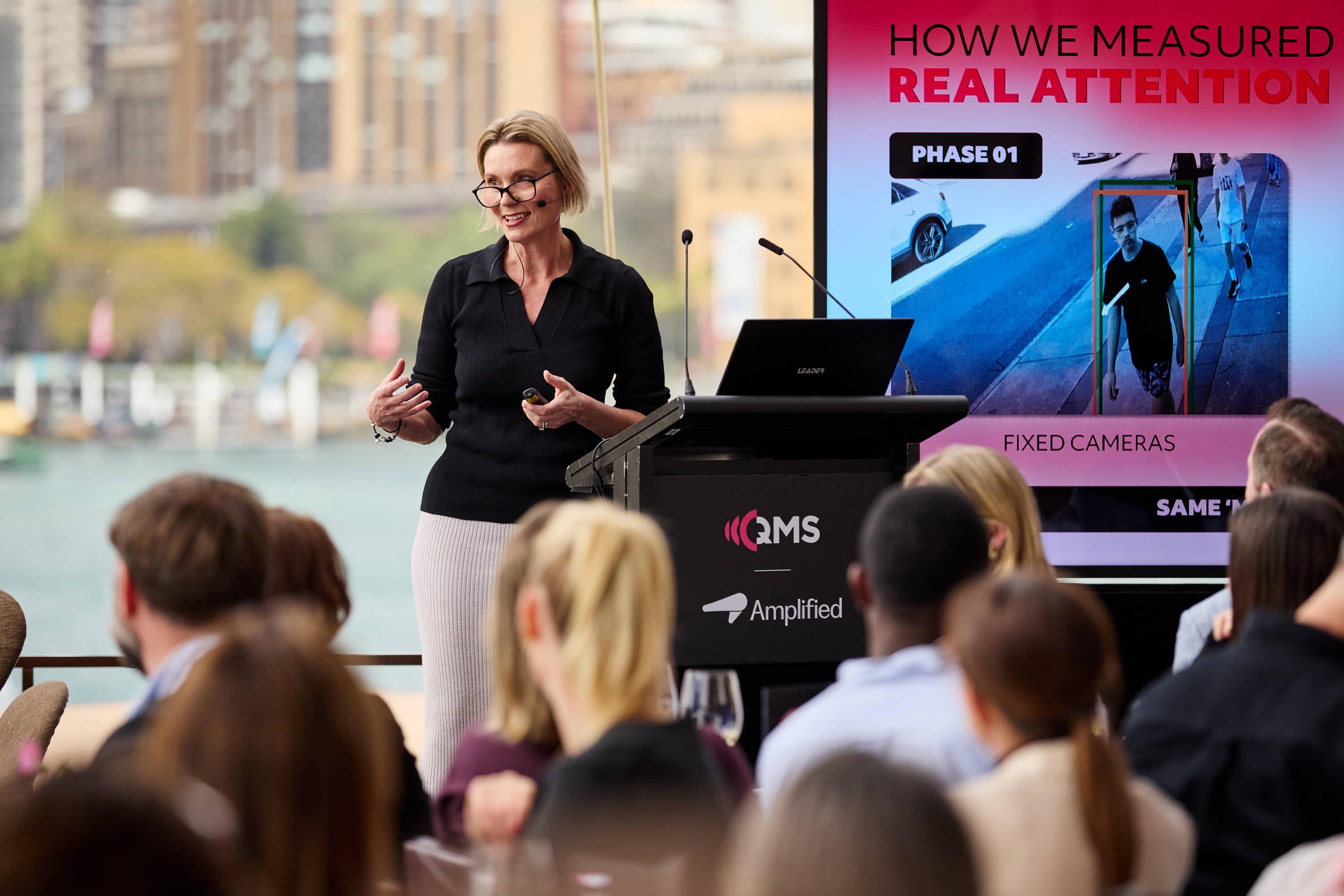

Digital out-of-home advertising may begin producing measurable brand and sales effects after roughly one second of active attention, according to new research commissioned by Australian media owner QMS and conducted with attention-measurement company Amplified.
The headline is striking, but advertisers should not translate it into “one second is all a billboard needs.” The more useful conclusion is that DOOH can create a long opportunity to be seen while requiring only a short active glance to begin generating an effect. Site selection, time in view and unmistakable branding still need to work together.
The study at a glance
The research expands a QMS attention study from 2024 by adding pedestrian and vehicular journeys across two very different OOH environments. The distinction matters: someone waiting or walking near a street-furniture panel has a different viewing opportunity from a driver approaching a large-format roadside screen.
- Footage analysed: More than 400 hours
- Fieldwork period: 9 days
- Campaigns represented: More than 200
- Biometric ad views: More than 12,000
- Participants: 300
- Environments: Large-format roadside DOOH and City of Sydney street furniture
- Reported DOOH effect threshold: Around 1.0 second of active attention
- Comparison cited for traditional digital: Around 2.5 seconds
- Average attention footprint: street furniture: 24.2 seconds
- Average attention footprint: roadside: 13.9 seconds
What “one second” actually means
The reported threshold refers to active attention, not total time spent near a screen. QMS says measurable brand-equity and sales responses started to appear at around one active second, compared with a roughly 2.5-second threshold cited for traditional digital channels.
That does not mean every one-second exposure works. It does not guarantee an outcome for every category, creative or placement. It also does not mean an advertiser should fill a ten-second DOOH slot with a message that takes ten seconds to understand.
Instead, it gives planners a useful design constraint: the identity and central idea should be recoverable from a brief glance. Additional viewing time can deepen the message, but it should not be required to decode the advertiser.
The planning implication: buy viewing opportunity, not screen count
Two digital screens can have the same dimensions and loop length yet offer very different communication value. A planner should examine:
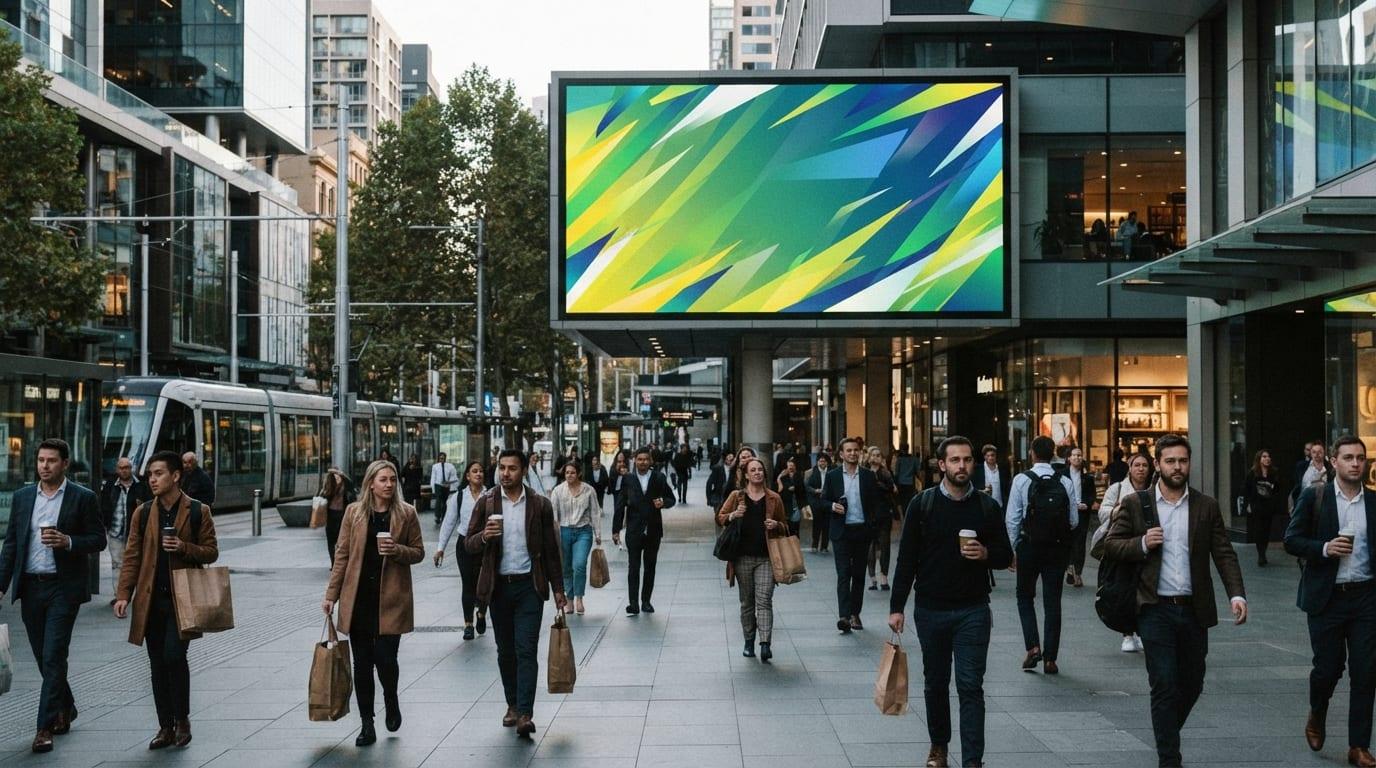
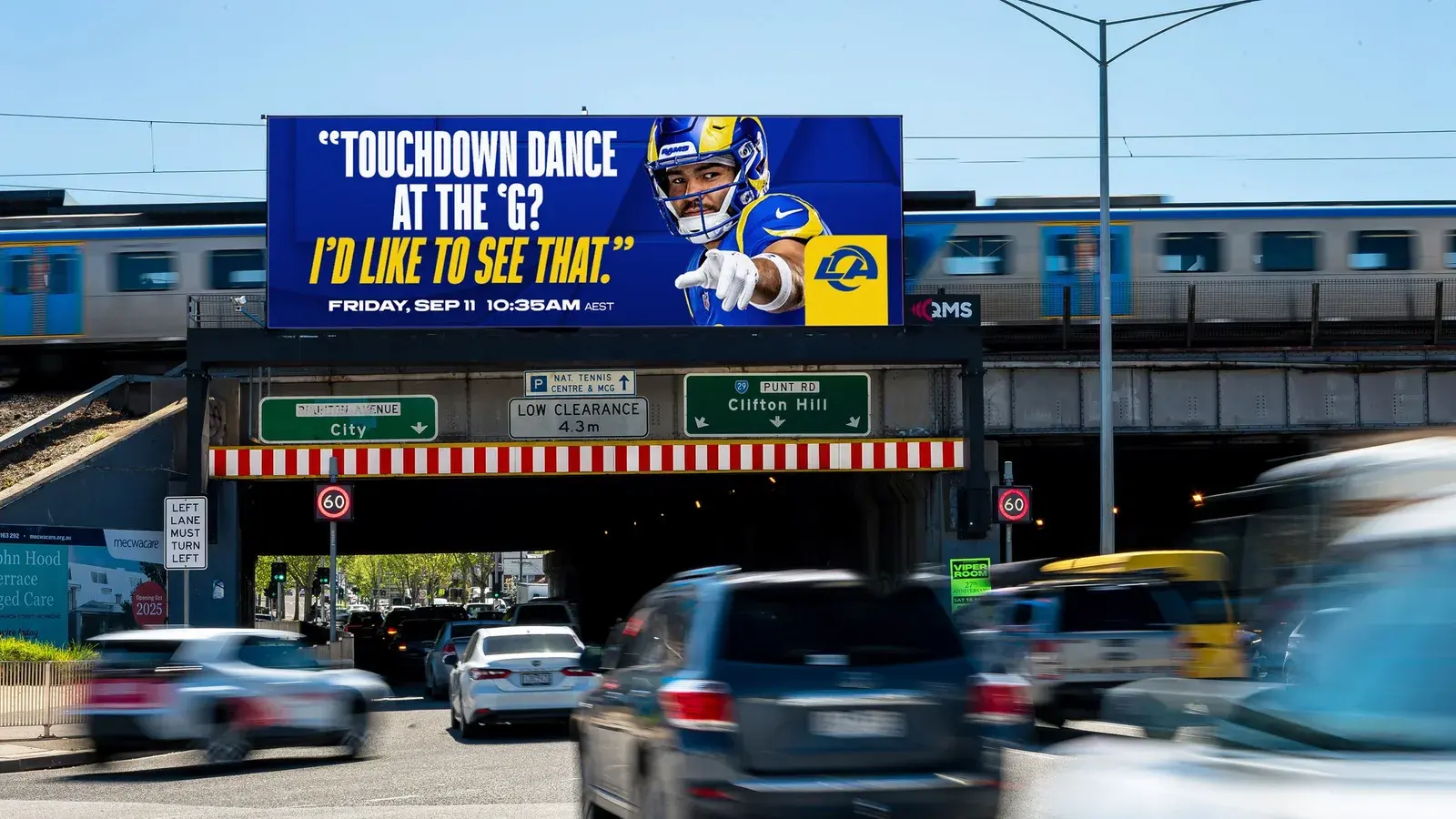
A large roadside screen may create fewer but visually dominant encounters. Street furniture may offer closer viewing, pedestrian dwell and repeated exposures. Neither is automatically better; the correct mix depends on whether the campaign needs rapid fame, local repetition, directional response or a more detailed product message.
- Approach angle and direction of travel
- Typical speed and whether traffic stops
- Viewing distance and physical obstructions
- Pedestrian dwell time
- Screen share of voice and loop length
- Illumination and visual competition
- The number of meaningful opportunities to see the brand
Creative still determines who receives the credit
The study’s most commercially important point may be that attention and attribution are separate problems. An execution can earn a glance but fail to make the viewer remember the advertiser.
For DOOH creative, that means:
“Good creative” should not be interpreted as visual complexity. The highest-performing solution may be a product, a recognizable color, a short line and a large brand cue.
- Show the brand early and prominently.
- Use distinctive brand assets rather than relying only on a logo in a corner.
- Build around one dominant idea.
- Keep essential copy readable during a short active glance.
- Use motion to reveal or reinforce, not to hide the message until the final frame.
- Test the work at realistic size, distance and exposure duration.
How advertisers should use the finding in a media plan
The finding is best used to improve a plan, not to justify DOOH in isolation.
An advertiser should still ask how the research transfers to its own market. The fieldwork covered QMS environments in Australia; thresholds may vary by asset, audience, creative, context and measurement design. The results are evidence for planning, not a universal guarantee.
- Format mix: Combine high-impact roadside screens with closer, higher-dwell street furniture where both roles are needed
- Site selection: Prioritize locations with a credible viewing opportunity, not merely high modeled traffic
- Creative: Make brand and proposition legible within the first active glance
- Flighting: Use frequency and geographic coverage to compound memory over time
- Measurement: Separate served plays, modeled impressions, attention and business outcomes
- Optimization: Compare creative and placement performance rather than treating all DOOH impressions as equivalent
A stronger DOOH brief
Instead of asking only for the cheapest CPM, ask a planning partner to show:
That makes attention a practical input rather than another impressive statistic in a sales deck.
- Which formats provide the required viewing opportunity
- How the site mix supports the campaign objective
- The expected reach and frequency methodology
- The loop, spot length and estimated share of voice
- Creative-safe areas and legibility requirements
- Whether third-party delivery or outcome measurement is available
- Which assumptions are modeled rather than directly observed
 Los Angeles