

1 October 2026 edition | Los Angeles, United States
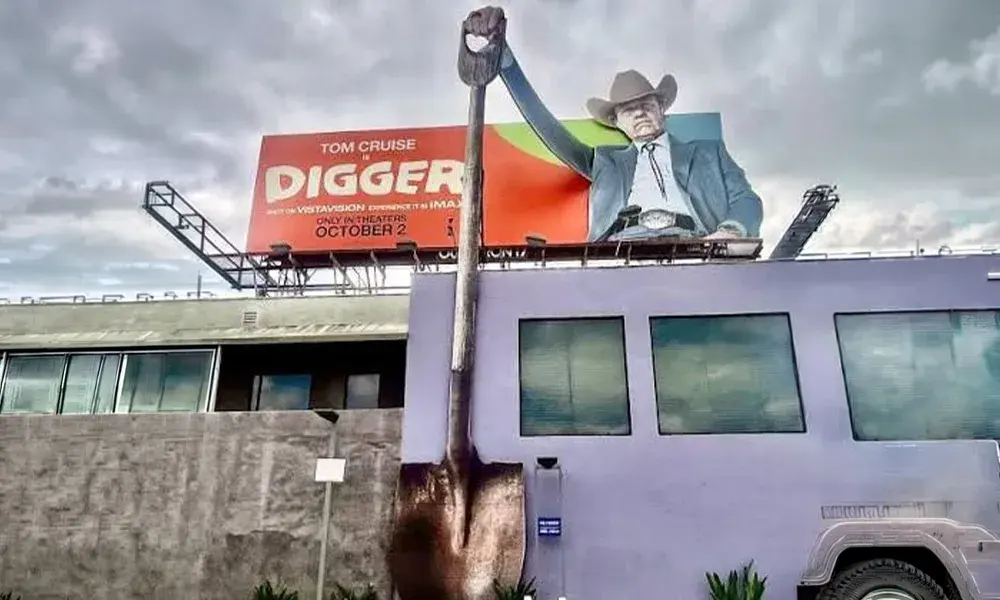
The outdoor campaign for Digger has turned a Sunset Boulevard billboard into an installation, using an oversized shovel extension to carry the creative beyond the advertising surface.
Media4Growth’s 28 September report describes artwork for the Tom Cruise film with a physical shovel dropping into the space beneath the hoarding. The treatment creates the impression that the character and prop have broken out of the conventional billboard frame.
OOH Today’s creative roundup, updated 28 September, also features the Sunset Boulevard execution and associates it with OUTFRONT Media. The available coverage does not provide independently verified audience attention, campaign cost or box-office attribution.
The prop carries the idea into the street
BillboardGuide’s analysis: A physical extension gives a billboard a second visual dimension. The audience can notice the shape of the object before reading the printed artwork, while the main image explains how that object connects to the campaign.
That relationship is central to the concept. An extension works best when it helps communicate a recognisable idea, rather than merely making the structure larger. Here, the shovel links the title and the physical treatment through one visible motif.
BillboardGuide’s Los Angeles advertising guide provides context for evaluating entertainment placements across the market. A proposed campaign should still identify the exact site and jurisdiction, rather than treating every Sunset Boulevard placement as the same buying opportunity.
Budget the installation as part of the campaign
Bespoke production requires a different brief from a standard artwork change. Advertisers need to understand fabrication, installation access, structural review, maintenance and removal alongside the media booking.
The production timeline should connect those tasks to the campaign’s intended public opening. A visually ambitious idea has limited value if the approved installation cannot be completed within the useful promotional window.
Compare the role of the extension with other OOH formats. A single distinctive installation may serve a launch objective, while additional conventional placements could support broader coverage. Those roles should be specified separately in the plan and budget.
Design for the view on site and the camera
A campaign photograph can make a physical extension look compelling from one angle. The everyday audience may see the structure from a different approach, at a different speed or with other objects in the foreground.
Review the principal sightlines before approving the creative. The brand or title should remain legible when the object attracts attention, and the installation should make visual sense from the intended audience position.
BillboardGuide’s creative checklist can support that review. Record on-site delivery and online distribution separately if campaign footage is used in social channels or publicity. A widely shared video demonstrates distribution of the documentation; it does not independently establish the number of people who encountered the original billboard.
The execution offers a clear example of physical OOH extending a campaign’s visual language. Its commercial effectiveness remains a separate question requiring campaign-specific evidence.