
30 September 2026 edition | London, United Kingdom
BackLite UK has announced upgrades to eight large-format LED advertising sites in its Landscape Gallery portfolio, covering gateways and commuter routes across London. The announcement offers advertisers a reason to revisit the specifications of familiar roadside inventory before their next campaign.
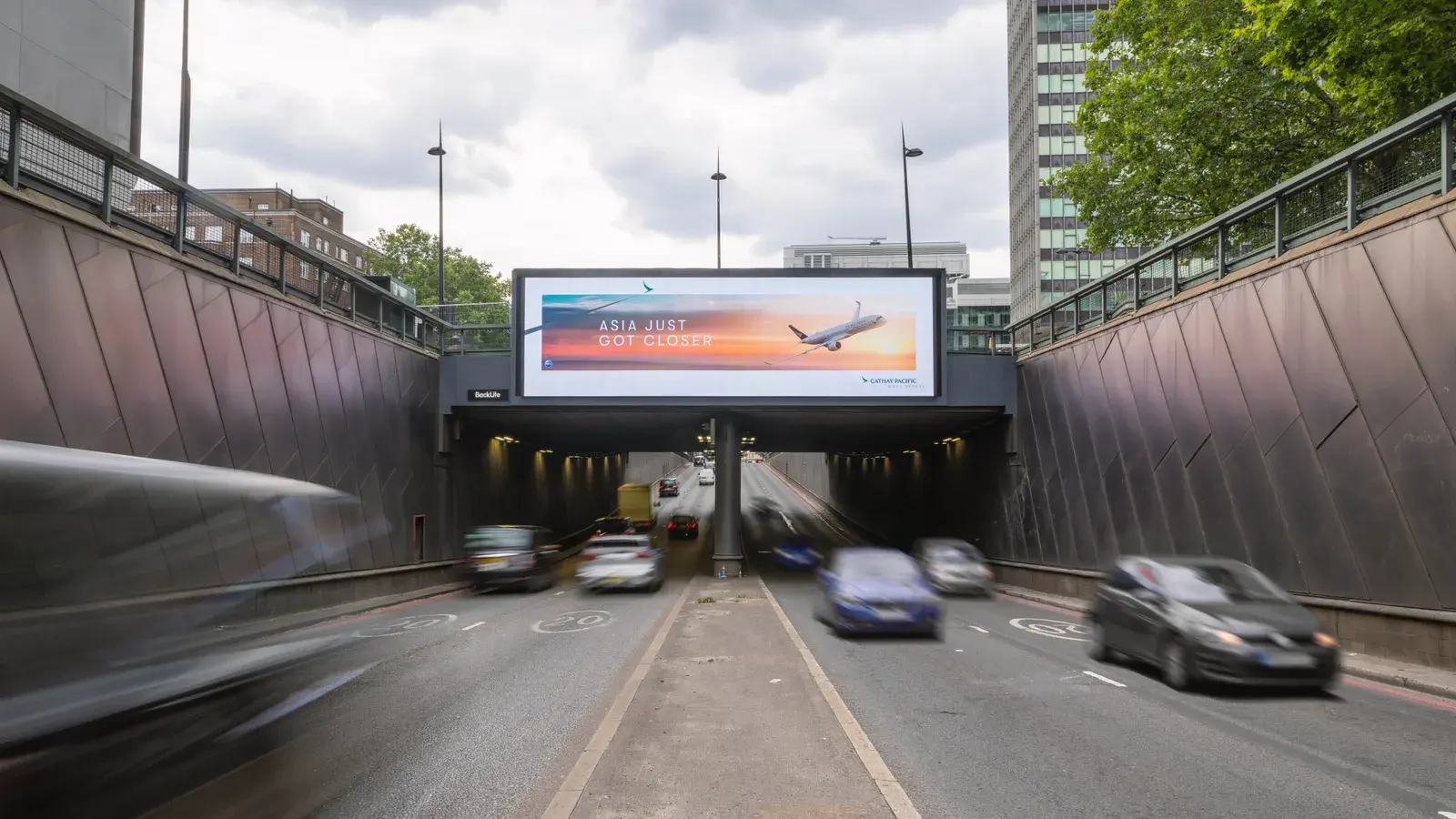
In its 29 September announcement, BackLite UK identifies Daktronics Outdoor Blue technology with a 10mm pixel pitch and a 1,440 × 280-pixel resolution. It says the work was undertaken with site owner Wildstone.
The locations are Leytonstone Panoramic, Euston Underpass, Sun in the Sands in Greenwich, Trinity Way in Wandsworth, Malden Way in Merton, Parkway Heathrow, Western Gateway in Ealing and Wembley Way. This article reports the announcement; the publication date should not be interpreted as the installation date of every screen.
Why the London locations matter
BillboardGuide’s analysis: A network description is a starting point for planning, but individual locations determine how an advertiser’s message meets its audience. A screen on an airport approach and one on a suburban commuter route may serve different campaign objectives, even when sold within the same portfolio.
Buyers should request a map of the proposed sites alongside travel direction, visibility, operating hours and the audience estimates used in the proposal. Those details help establish whether a package supports broad city coverage, a particular catchment or repeated exposure along selected journeys.
BillboardGuide’s London advertising guide provides a useful starting point for placing these sites within a wider city plan. A city-level brief should still lead to a site-level decision.
Design for the panoramic canvas
The reported resolution describes a very wide creative surface. Advertisers should obtain the current production specification before adapting existing artwork, including the accepted file format, duration and any restrictions on animation.
A panoramic layout gives a designer room to separate a product, headline and brand mark. It also creates a temptation to fill the available width with too many messages. For a roadside execution, the first task is to make the main idea readable during the actual viewing opportunity.
Use BillboardGuide’s creative checklist to review contrast, text size and the prominence of the brand. Test the artwork at an approximation of its real viewing distance, rather than approving it solely on a desktop monitor.
What buyers should confirm after an upgrade
Updated hardware can change the production brief, but a technical announcement alone does not establish campaign effectiveness. Request the current rate card, loop length, share of voice, reporting arrangements and installation status for each booked location.
Compare those terms with the campaign objective before choosing between roadside screens and other out-of-home advertising formats. If the aim is incremental reach, assess overlap with the rest of the plan. If the aim is location-specific visibility, examine the chosen routes and sightlines.
The useful next step is a current, documented buying brief. That connects the screen upgrade to decisions about placement, creative and delivery without assuming a measured sales or attention uplift.
 London