

1 October 2026 edition | Netherlands
Store-location information can influence how people respond to digital out-of-home advertising, but its position within the artwork matters, according to research published by Vistar Media with Omnicom Media and Annalect.
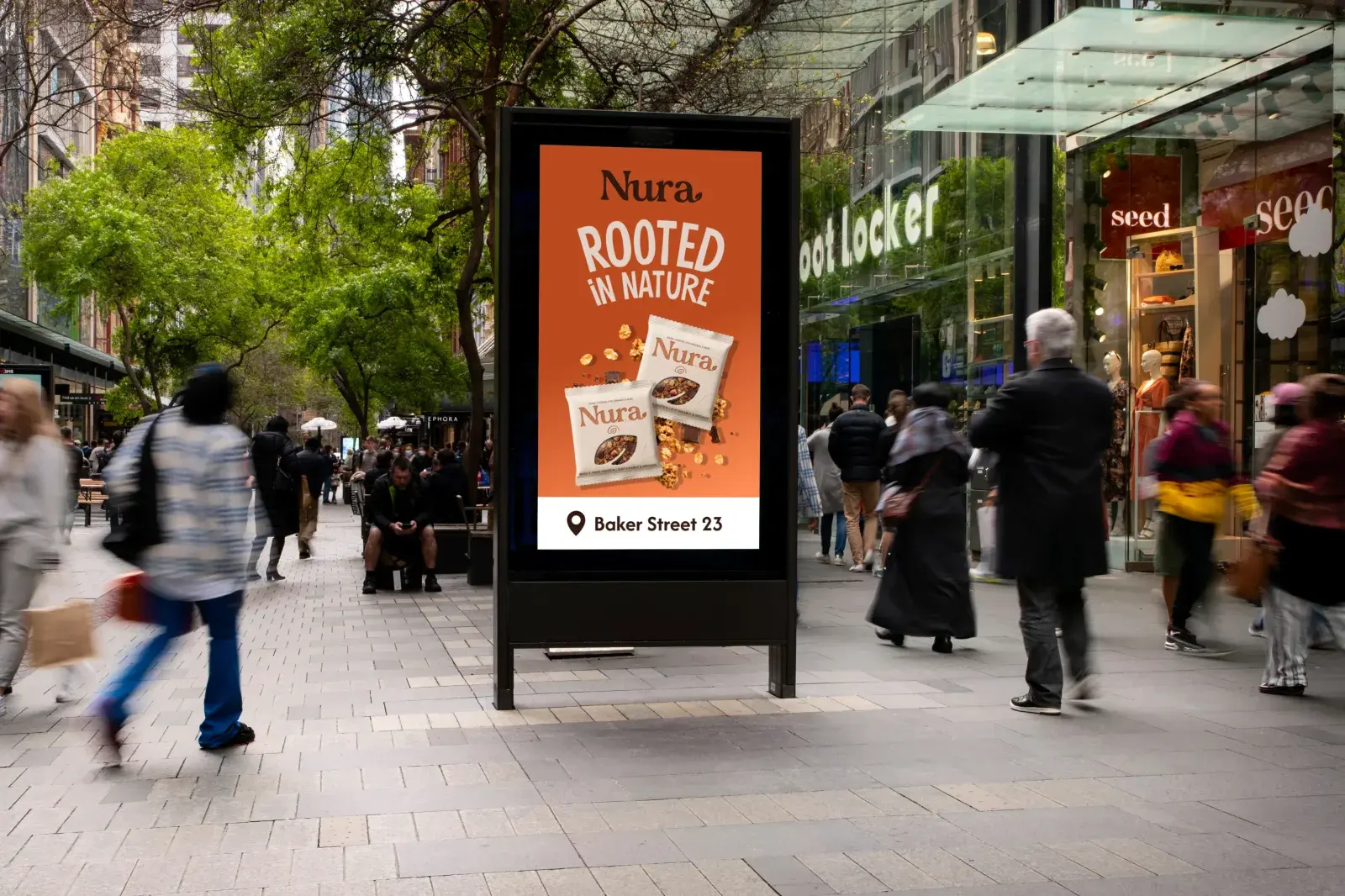
The 23 September announcement describes a forced-exposure study involving 7,200 consumers aged 18–59 in the Netherlands, conducted between February and April 2026. Participants saw vertical outdoor advertising creative with store information at the top, middle or bottom, or a control without location details.
Across the research, Vistar reports that top and bottom placements performed better than the middle. It reports a 20% purchase-intent lift versus control for CPG ads with top placement, and a 9% visit-intent lift for retail and QSR ads with bottom placement. These are reported intent measures under study conditions, not observed sales or visits from a live campaign.
A practical creative question
BillboardGuide’s analysis: The study puts a concrete design choice on the planning agenda: where should the information that helps someone find a store sit within an advertisement?
A store locator competes for space with a headline, product image and brand mark. Its usefulness depends partly on whether the audience can identify it quickly and understand the relationship between the product and the destination. Adding an address without considering the layout can make the whole message harder to read.
BillboardGuide’s creative checklist provides a starting point for reviewing that hierarchy. Test the main message and the location information together at a realistic viewing size, rather than judging either element in isolation.
Treat the results as a test direction
The research suggests useful hypotheses for creative testing. It does not establish one guaranteed layout for every screen, category or market. The tested vertical format and Dutch sample should remain visible when describing the findings.
An advertiser using horizontal roadside inventory, different language or a different shopping context should evaluate its own execution. A relevant test would hold the offer and brand assets consistent while changing the location element, with the intended response defined in advance.
BillboardGuide’s programmatic DOOH guide can help connect creative variants with a buying plan. Confirm how any changing store information is selected, checked and approved before it reaches the screens.
Intent needs a separate commercial evaluation
Purchase intent can indicate how a message is received. Actual transactions also depend on product availability, price, store access and other influences. A study result should therefore support a creative decision without becoming a forecast of sales growth.
For a live campaign, establish delivery reporting and an appropriate evaluation of the desired business outcome. Preserve the difference between estimated exposure, stated intention and observed behaviour throughout the report.
BillboardGuide’s guide to OOH metrics beyond impressions offers a broader measurement framework. The useful takeaway is to make location information a deliberate part of the creative brief, then test whether that treatment serves the advertiser’s objective.