
25 September 2026 | United States
Context Networks has selected Broadsign to support content management, advertising delivery and monetisation across its Contextual Promotions Media Network. The collaboration includes a route for eligible inventory to reach programmatic buyers through Place Exchange.
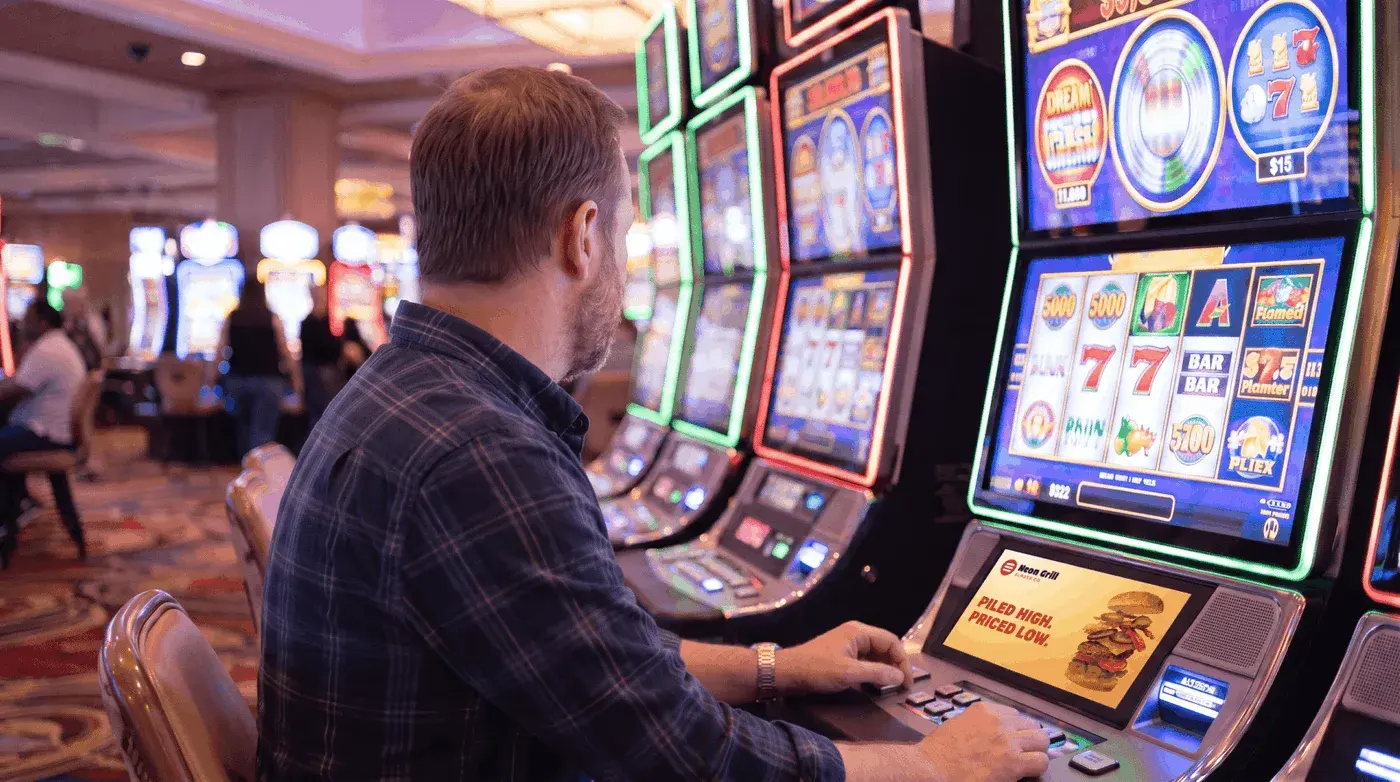
Gaming environments are the initial focus of the 24 September company announcement, followed by Invidis coverage on 25 September.
What the announced footprint means
Context Networks reports a current footprint across 14 states and 23 designated market areas, with advertising and operator content already running in distributed gaming settings. These figures describe the company’s footprint; they do not establish that every screen is available through the new programmatic connection.
The release does not identify an initial programmatically available screen count. Buyers need an eligible inventory list for their own campaign.
Venue content remains part of the screen schedule
The company announcement says operators retain governance over eligible inventory, campaign rules and house content. Paid advertising therefore needs to fit the screen’s wider operational role.
BillboardGuide’s analysis: A display inside a controlled venue is a different planning environment from a street-facing billboard. Buyers should understand where the ad appears, what surrounds it and how the operator’s own messages affect availability.
A venue label alone cannot establish attention. Request placement photographs and an explanation of the screen’s role before using dwell time or audience relevance as a reason to buy.
Our programmatic DOOH guide explains how to assess the transaction route alongside the underlying inventory.
Context needs a precise buying definition
A contextual proposal should specify which locations, times or activities make the placement relevant to the advertiser. Ask how those conditions are selected and what evidence supports the audience estimate.
Do not assume that everyone near a screen is watching it, or that every visitor belongs to the same target audience. Campaign impressions should be tied to the eligible placement and its delivery conditions, with the estimation method disclosed.
The objective also matters. A local service seeking nearby awareness may evaluate a venue differently from a national brand seeking incremental reach. Both need to define what success means before selecting the inventory.
What to establish before a campaign goes live
Request the venue and screen list, creative rules, approval process, spot duration, operating hours and reporting fields. Confirm how operator messages can interrupt or reduce the planned ad delivery and what remedy applies if contracted delivery is missed.
Design for the display’s actual size and viewing position. Artwork prepared for a roadside billboard may need substantial adaptation for a smaller venue screen. BillboardGuide’s creative checklist can support that review.
The media quote should identify fees and a consistent impression basis. Our CPM calculator helps compare proposals once those inputs have been established.
What further evidence would clarify
A detailed inventory catalogue and dated reporting examples would make the collaboration easier to evaluate for specific briefs. Campaign outcome studies would answer a separate question about effectiveness.
For now, the news is an announced connection between specialised screen environments and established advertising technology. The buying decision still depends on the actual venue, available units and commercial terms.