
Trillboards has partnered with Moving Walls to make its screen inventory accessible through programmatic DOOH workflows. The integration is another example of media-owner supply being connected to external planning and buying technology rather than sold only through direct insertion orders.
The practical value of these integrations is reduced friction: buyers can compare and activate more supply without creating a new manual workflow for every owner. The strategic question is whether standardisation also preserves the context and quality information buyers need to judge each screen. The value of the integration is operational: more supply can enter automated buying workflows. But the buyer should resist treating the screens as interchangeable rows in a platform; venue, orientation, audience and proof-of-play still matter.
For Billboard Guide, the useful way to read the story is not just as a campaign or company announcement. It is a practical example of how the outdoor medium is changing: where advertisers can appear, how inventory is packaged, what creative earns attention in public space and what evidence a buyer should request before deciding that a placement is worth the premium.
What programmatic changes — and what it does not
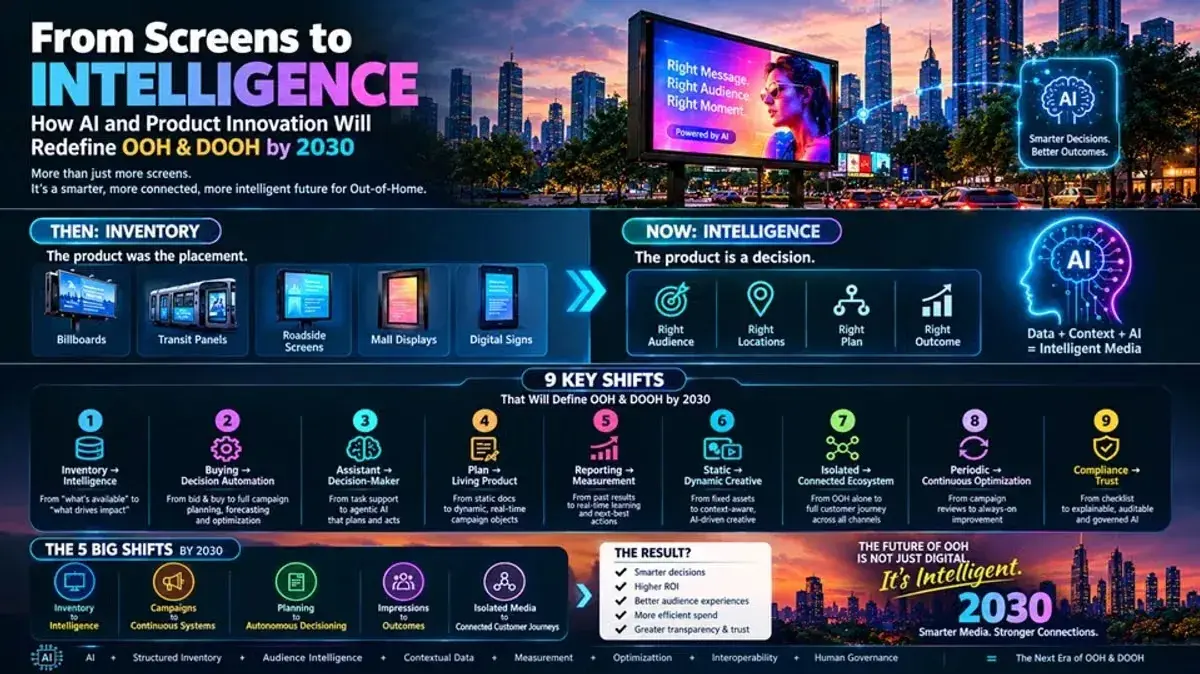
Programmatic DOOH can automate access, scheduling, bidding, targeting and reporting, but it does not remove the physical differences between screens. Two impressions bought through the same DSP can represent very different viewing environments, dwell times and creative opportunities.
What buyers should check before activating
Ask which screens and media owners are actually available, whether inventory is open auction, private marketplace or programmatic guaranteed, how impression multipliers are calculated, what proof-of-play is returned, which audience data is used and whether the campaign can be reconciled against the media owner's logs. For cross-border campaigns, also check currency, tax, content restrictions and measurement coverage by market.
Creative and pacing considerations
A programmatic workflow makes it easier to change when and where an ad appears, so creative should take advantage of that flexibility. Daypart, weather, venue type, event timing or geographic data can justify different messages. Pacing also matters: a campaign that spends too quickly may technically deliver its impressions while missing the moments the strategy was designed around.