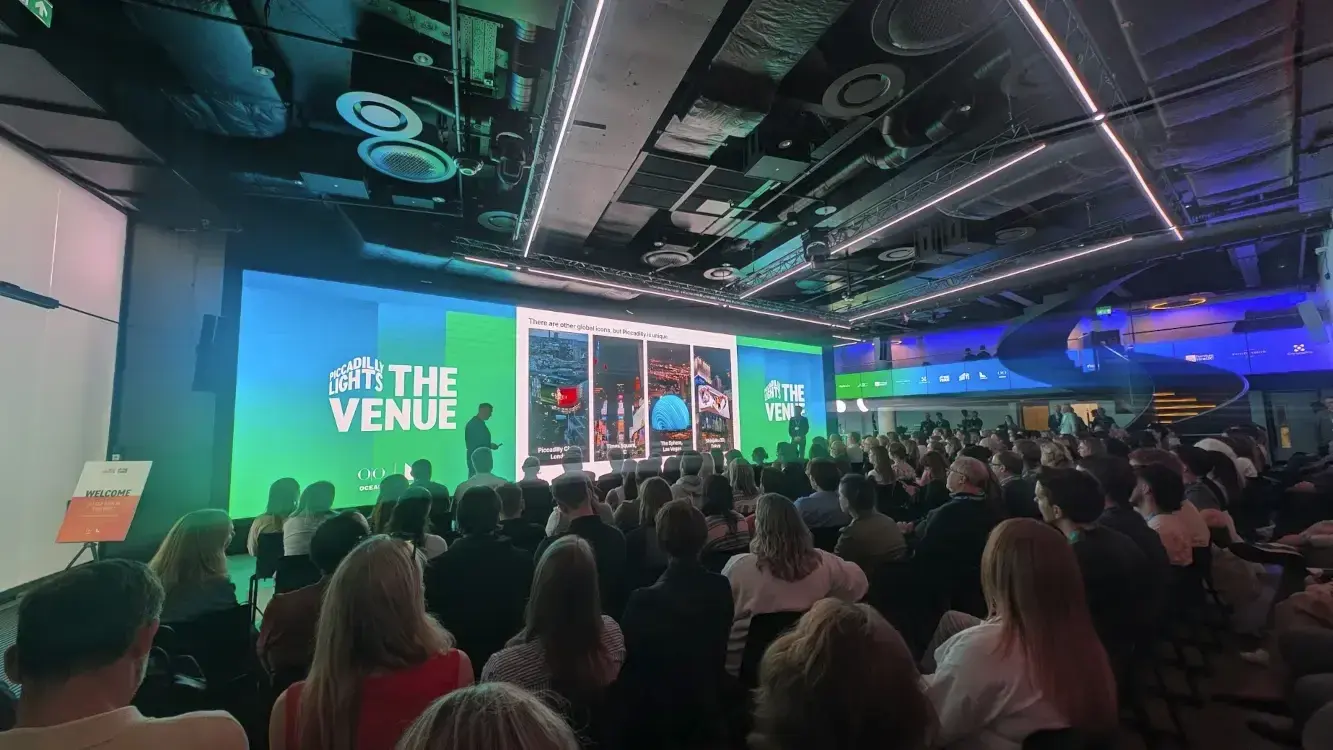

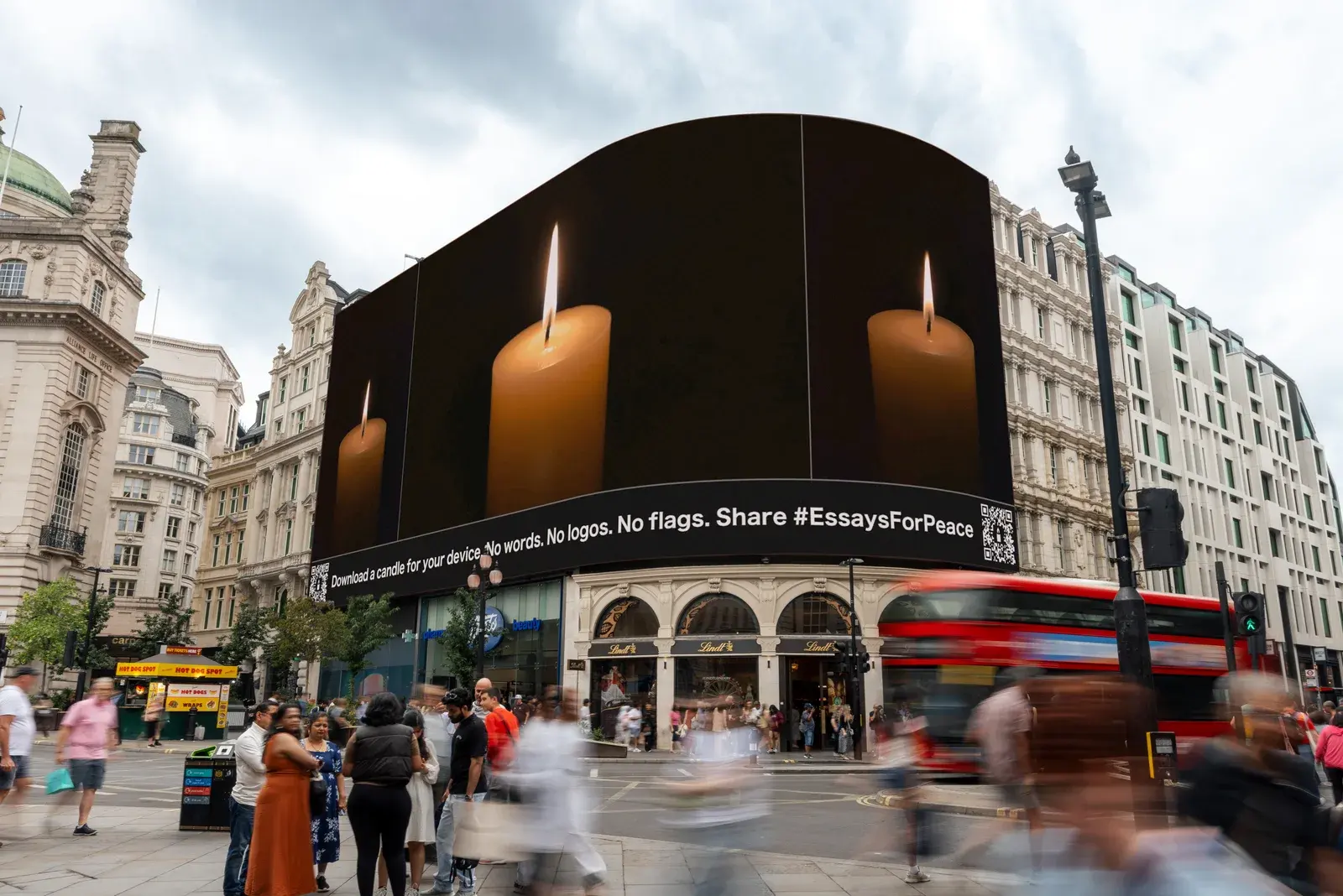
Landsec and Ocean Outdoor are presenting Piccadilly Lights and The Venue beneath it as a combined digital-and-physical advertising opportunity, according to invidis reporting published on 10 September 2026.
The report describes The Venue as a three-floor, 617-square-metre activation space. It also outlines a screen reconfiguration planned for January 2027, including an advertising segment that can remain positioned above the venue and longer full-screen takeovers.
Those screen changes are future plans as of this article’s date. Advertisers evaluating the offer need to distinguish the current booking package from the capabilities proposed for next year.
A screen can introduce the experience below it
BillboardGuide’s assessment is that the combined proposition gives advertisers a practical creative question: how should the message outside relate to the experience inside?
A public-facing execution could introduce a launch, show a product or invite participation. The venue could then provide the demonstration, sampling or interaction that a passing exposure cannot accommodate. These are potential uses of the format, rather than outcomes established by the report.
The two parts need a shared proposition. A visually striking screen campaign and an unrelated pop-up may attract separate audiences without helping either group understand the advertiser’s offer.
Plan the journey from exposure to participation
The first planning decision is the intended response. A brand seeking broad awareness might prioritize the outdoor execution and use the venue for press or invited guests. A sampling campaign needs to consider how members of the public learn where to enter and what happens when they arrive.
For a participation-led brief, the important questions include:
- Is access open to the public, booked in advance or invitation-only?
- What can visitors do inside, and how long does it take?
- Can the venue accommodate the response generated by the campaign?
- How will opening hours and any changes be communicated?
- Does the screen message remain useful when the venue is closed?
BillboardGuide’s London advertising guide provides wider market context for considering a landmark activation within a city campaign.
Production needs one schedule and clear responsibilities
A connected activation introduces dependencies across outdoor media, event operations and creative production. The brief should identify who approves each asset, who controls the launch sequence and who can make changes if the physical experience is delayed.
A demonstration or live element also needs a fallback. Buyers should agree on what the screen will show when the planned content is unavailable, and how any venue messaging will remain accurate. These are operational requirements to establish with suppliers, not confirmed features of the announced package.
For January bookings, request the specification and commercial terms that apply to the proposed reconfiguration. Creative should be produced against confirmed dimensions and scheduling rules for the actual campaign period.
Measure the screen and the experience separately
Outdoor delivery, venue attendance and commercial response answer different questions. A campaign report should make those distinctions visible before attempting to combine them into one result.
For example, an activation could record admissions, completed demonstrations or samples distributed, while its media report covers playback and estimated exposure. A sales evaluation would need an additional design that accounts for other marketing activity and existing demand.
BillboardGuide’s guide to OOH metrics beyond impressions offers context for assessing delivery and exposure quality together.
The next useful information for buyers is a confirmed campaign package: screen access, venue availability, production requirements and reporting. Brands developing a connected activation can use BillboardGuide’s media planning service to define those requirements alongside their broader London activity.
 London