
22 September 2026 | London, United Kingdom
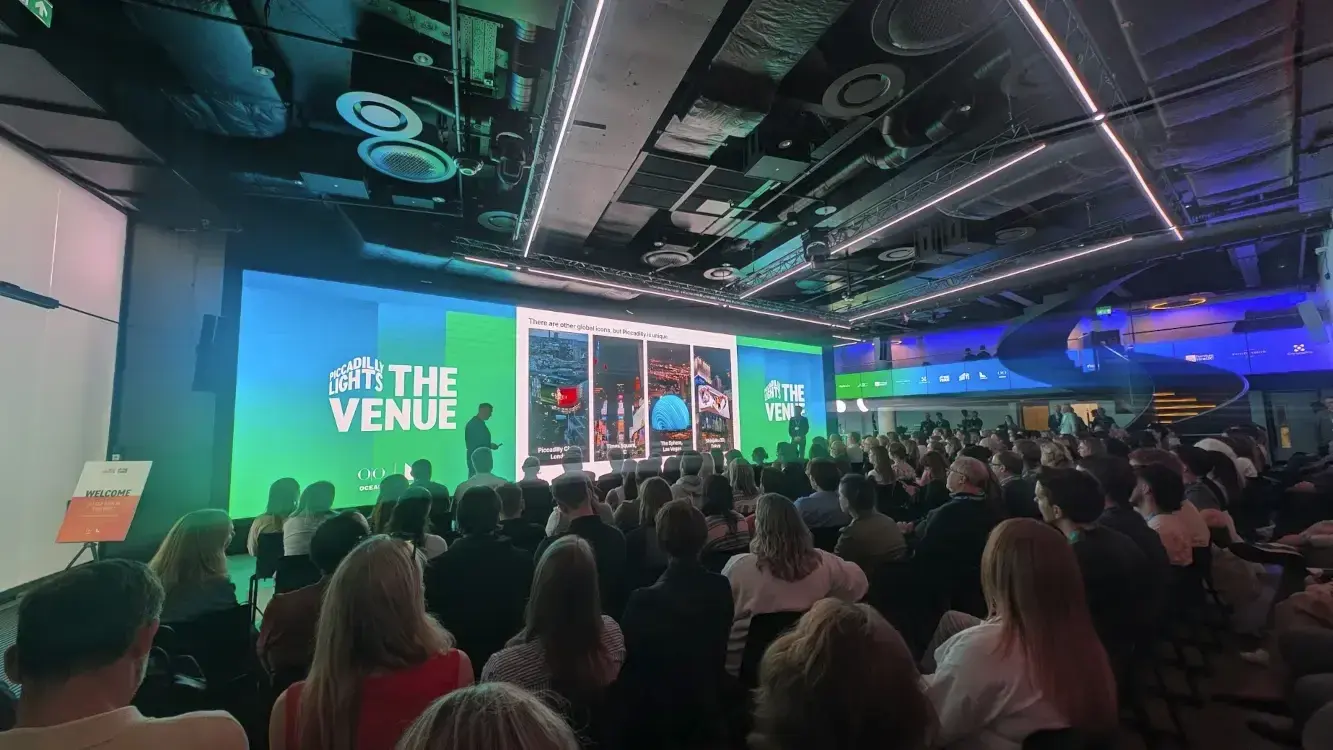
Ocean Outdoor has published details of Piccadilly Lights’ planned participation in Essays for Peace, the public-screen initiative associated with the United Nations International Day of Peace on 21 September. Its announcement describes a coordinated candle display across 350 Ocean UK screens.
What Ocean’s announcement says
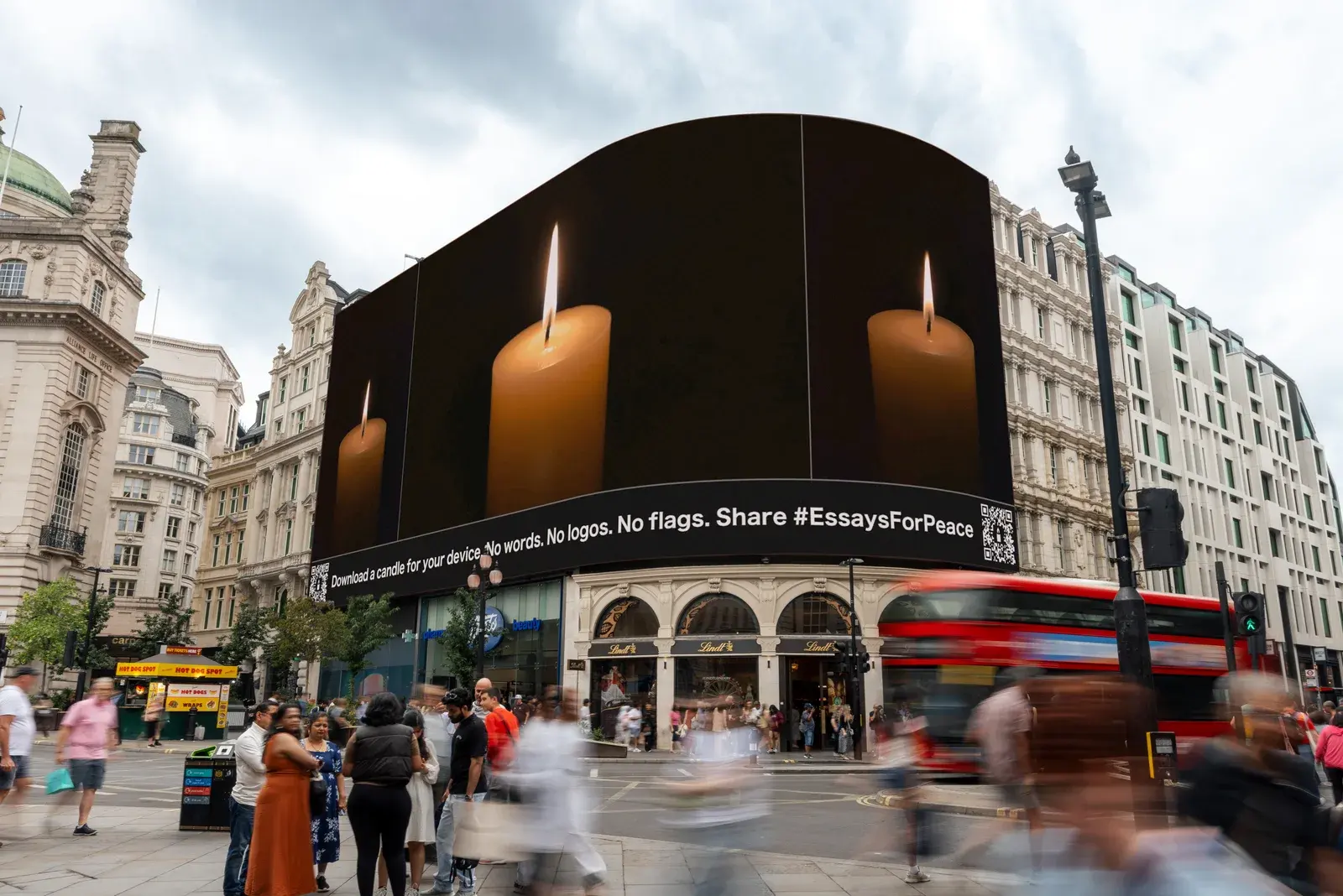
The 22 September announcement sets out a ten-minute takeover of Landsec’s Piccadilly Lights at noon, with space provided by Landsec, and one-minute displays on 349 other Ocean screens.
Although published the following day, the announcement uses future-tense language for the 21 September activation. It establishes the described participation plan; it does not provide an audited delivery report.
One image across different places
The creative is a single candle, without words, logos or flags. Ocean describes the third edition as expecting participation in more than 500 cities globally. That is a projection, not a verified final city count.
BillboardGuide’s analysis: The creative approach makes the shared visual the organising idea. It reduces the need for translated copy and lets different locations contribute to a recognisable public moment. That simplicity still requires technical care: cropping, contrast and animation should preserve the candle’s visibility on each display.
Advertisers can learn from the restraint while recognising that a commercial campaign usually needs clear brand identification. The transferable lesson is to decide which visual carries the message and remove elements that compete with it.
Our OOH creative checklist offers a practical review before artwork reaches the screen.
A landmark and a network have different roles
A named landmark can provide a focal point for photography and editorial coverage. A broader screen network brings additional locations into the execution. These roles should be planned separately, even when the artwork is shared.
The duration difference in Ocean’s plan also matters. A longer takeover at a flagship site does not mean every participating screen has the same exposure opportunity. Buyers assessing a comparable campaign should request a location-level schedule rather than treating a national screen total as a complete delivery description.
BillboardGuide’s London billboard advertising guide provides wider planning context. For another creative use of the landmark, read our earlier Piccadilly Lights location-led takeover coverage.
Documentation becomes the next step
The World Out of Home Organization’s participation guidance identifies 22–30 September 2026 as the submission window for photographs and video clips. That gives participating operators a defined period to contribute evidence from their locations.
For campaign reporting, photographs and play logs serve complementary purposes. A photograph records how an execution appeared at a place and time; logs can document scheduled playback across a wider inventory. Neither alone proves changes in public attitudes or behaviour.
A useful campaign record should distinguish the planned locations, delivered locations and any measured audience response. This makes a shared public-screen initiative easier to assess without turning anticipated participation into a reported result.
 London