
Summary
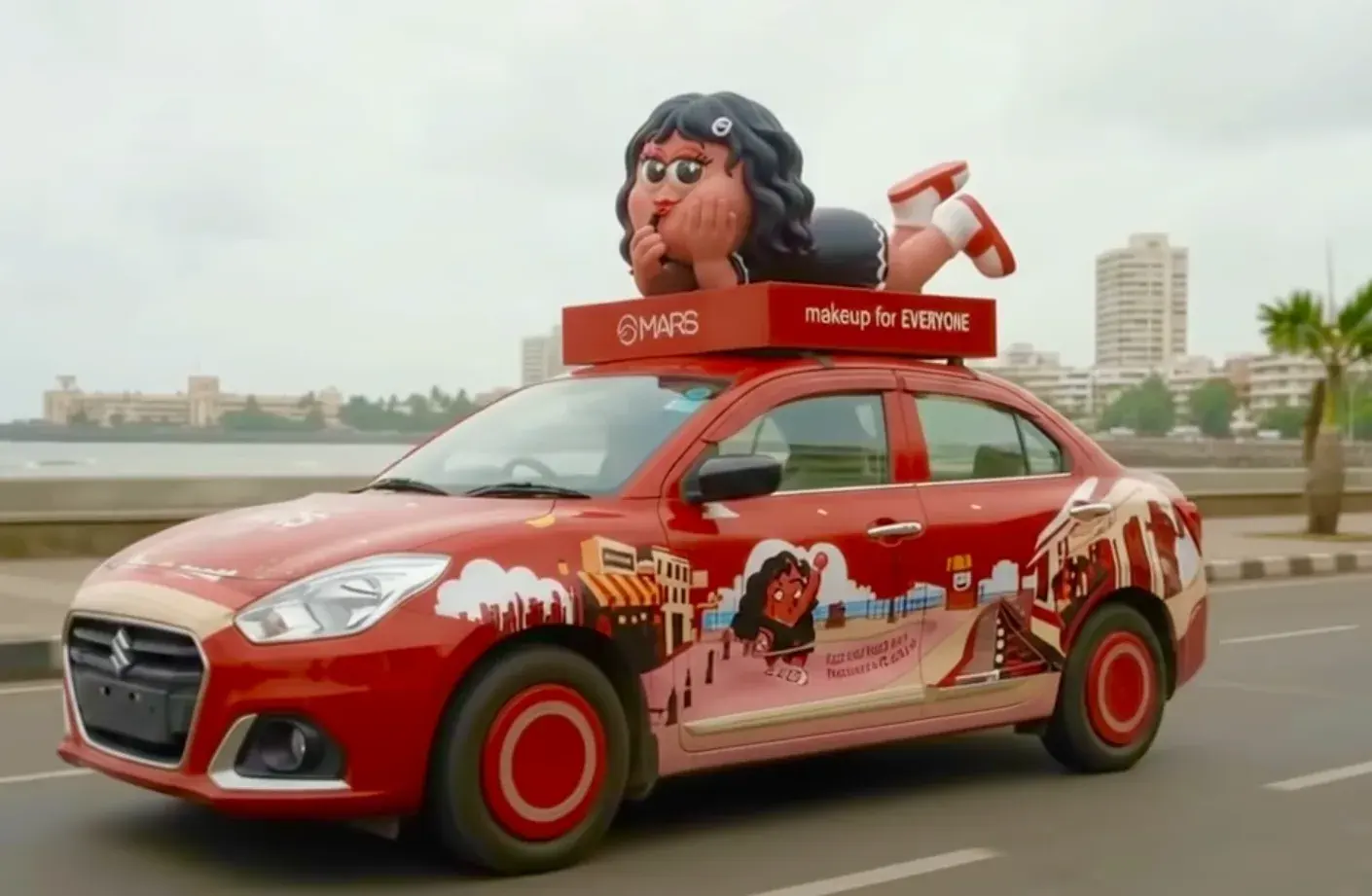
MARS Cosmetics used a wrapped vehicle topped with an oversized MARSIE mascot for a three-day Mumbai activation, blending mobile OOH with a photographable physical brand character.
What happened
MARS Cosmetics used a wrapped vehicle topped with an oversized MARSIE mascot for a three-day Mumbai activation, blending mobile OOH with a photographable physical brand character.
The underlying source identifies several details that matter for planners:
Those facts should be read in the context of the source and the specific market. Network operators, brands and technology companies frequently publish their own reach, impression, sales-lift or market-size figures. Where a number is a company claim, case-study result or forecast, Billboard Guide treats it as attributed evidence rather than a universal benchmark.
- The activation ran for three days
- A branded car carried an oversized 3D MARSIE mascot
- Mumbai locations included Marine Drive
- The source did not publish audited reach or footfall figures.
Why this matters for OOH and DOOH advertisers
The execution shows how mobile OOH can create route-based visibility and social content at the same time, especially when the physical object is distinctive enough to be recognized without lengthy copy.
The execution is most useful as a creative-planning case study rather than a template to copy literally. Its value comes from the relationship between brand asset, format and place. A large build, celebrity, special effect or local reference only improves an OOH campaign when it makes the core message faster to understand or more memorable.
The geographic context is also important. This story involves Mumbai, India, MARS Cosmetics, Marine Drive. In out-of-home media, location is part of the product itself: it shapes the likely audience, viewing speed, dwell time, competitive clutter and the cultural meaning of the placement. That is why two screens with similar technical specifications can have very different strategic value.
Media and creative implications
A buyer evaluating a similar opportunity should separate four layers of value. Media quality covers visibility, orientation, dwell time and physical context. Audience quality asks whether the people moving through the environment match the campaign objective. Creative fit asks whether the asset is readable and distinctive under real viewing conditions. Operational quality includes availability, proof-of-play or posting evidence, compliance, maintenance and reporting.
For MARS, the most relevant lesson is the connection between the media format and the proposition being communicated. Outdoor is strongest when the medium reduces explanation rather than creating more of it. A viewer should be able to identify the advertiser, understand the central idea and retain one useful memory before the exposure ends.
This is also where SEO and real-world campaign planning overlap. People searching for MARS Cosmetics Mumbai OOH are usually looking for a concrete combination of brand, format and place. Naming those entities clearly makes the article more useful to a human planner and easier for search engines and AI systems to understand without resorting to repetitive keyword stuffing.
What advertisers should ask before buying something similar
Pricing should be checked directly with the media owner or authorized sales partner because rates, minimum booking periods, programmatic availability and production requirements can change. Likewise, campaign performance should not be inferred from the creative alone: media weight, placement quality, duration, competitive activity and broader marketing support all contribute to the result.
- Start with the job of the placement—reach, fame, frequency, proximity, launch impact or response—and judge the site against that objective.
- Design for real viewing distance and speed. Outdoor hierarchy should survive a three-to-five-second glance before secondary details are added.
- Use the location as part of the idea when possible; the most memorable OOH often feels native to the route, district, venue or audience moment.
- Ask for posting or proof-of-play evidence and combine it with audience and outcome measurement appropriate to the campaign objective.
What to watch next
The next signal to watch is whether this development becomes repeatable rather than remaining a one-off announcement or creative case. For technology and network stories, that means seeing how buyers actually use the integration and how delivery is measured. For campaigns, it means whether the brand extends the idea across more locations, formats or seasonal moments. For market research, it means whether later datasets point in the same direction.
Billboard Guide will continue to track the named companies, locations and formats as they develop, particularly where they influence how advertisers can plan, buy or measure outdoor media.

 Paris
Paris