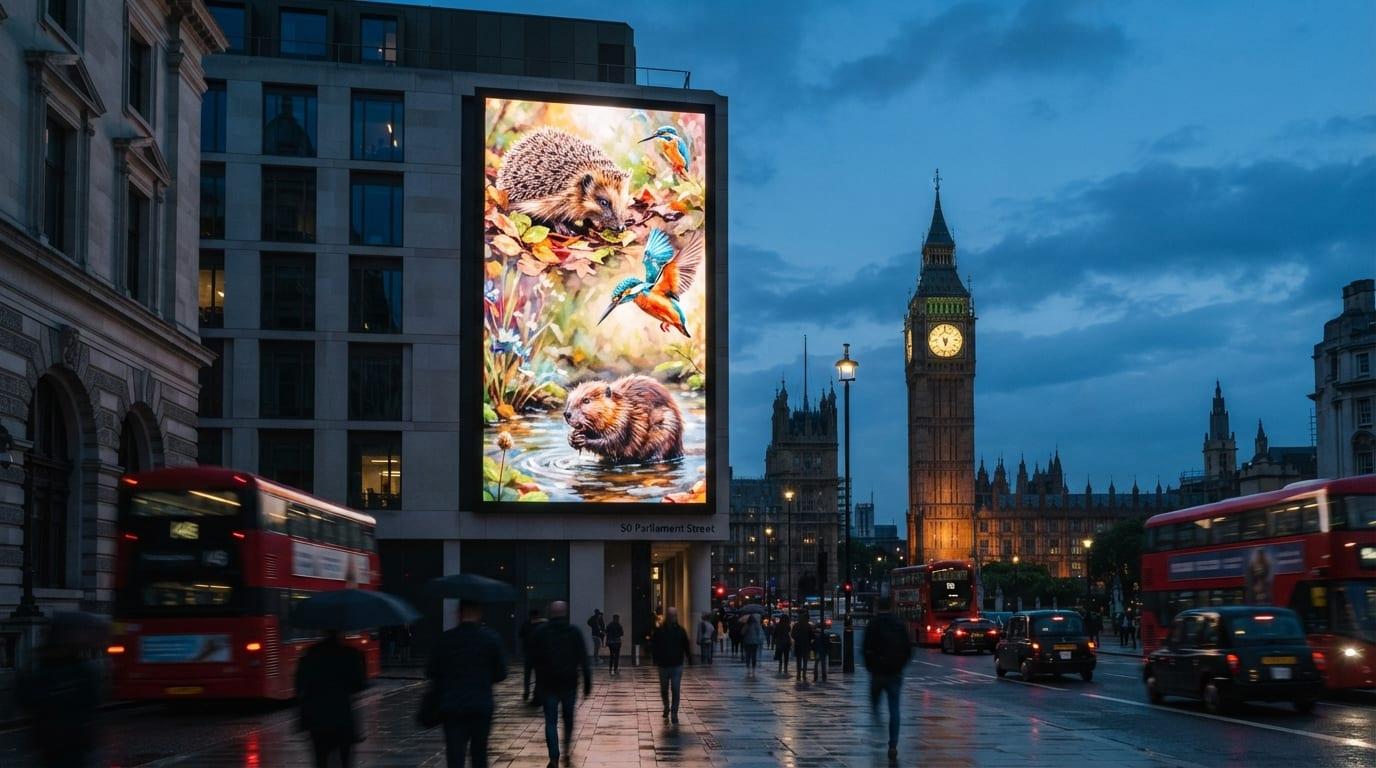

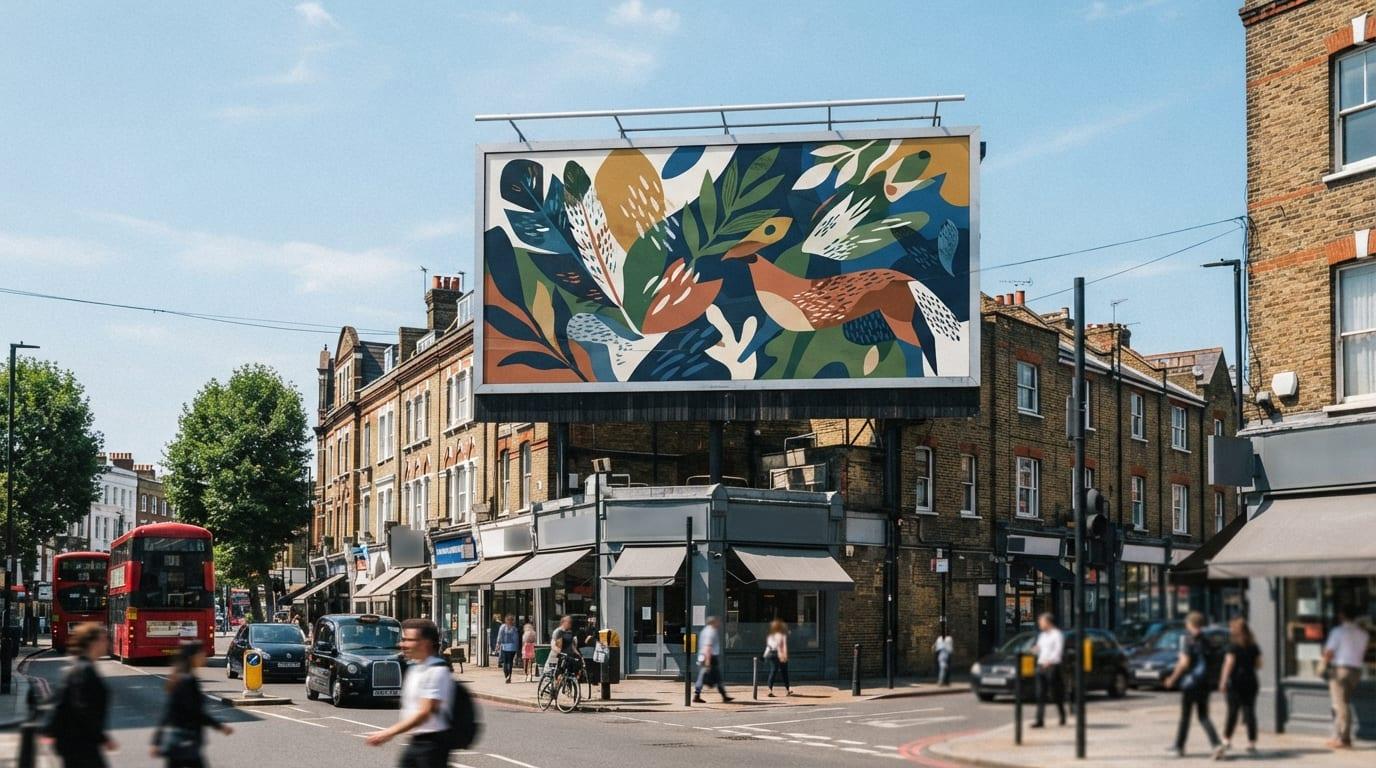
Cause-led OOH works best when the setting and the message are inseparable. That is what makes the London Wildlife Trust campaign so interesting. By putting urban wildlife at the center of the creative, the campaign encourages people to reconsider the city not only as a place for human movement and commerce, but as a shared habitat.
OOH is especially effective for this kind of message because it exists inside the public environment being discussed. A wildlife poster in a social feed would still have value, but a wildlife message on a city screen makes a stronger spatial argument. The medium and the topic reinforce one another.
For advertisers, there is a useful creative lesson here. A strong outdoor campaign often works by making the surrounding context do part of the storytelling. If the city itself is part of the message, the board does not need to explain everything. It can rely on the environment to complete the thought.
For media owners, cause campaigns also help demonstrate the public value of premium screens. They show that a digital network can host work that is informative, cultural or civic in addition to commercial. That can matter in wider conversations about the role of urban media.
The campaign is a good example of how outdoor can create empathy at city scale: by making a familiar place feel slightly different after the ad has been seen.
What this means for advertisers
The practical value of this story is not just the headline. It gives advertisers a clearer view of how OOH inventory is being packaged, how audience context affects value, and how creative and timing can materially change the effectiveness of a campaign. For Billboard Guide readers, the useful habit is to read each story as planning intelligence: what does it suggest about inventory quality, commercial timing, audience behavior or creative standards?
 London