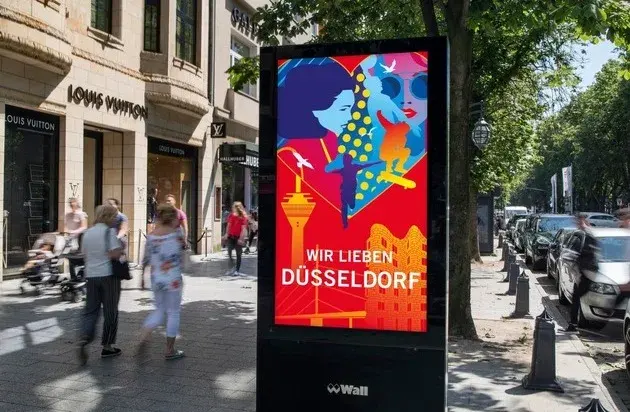

JCDecaux subsidiary Wall GmbH has secured the exclusive two-square-metre advertising contract in Düsseldorf, Germany, following a competitive tender. The agreement includes public-space advertising and placements at Rheinbahn bus and tram stops.
According to JCDecaux’s announcement dated 16 September 2026, the estate includes 965 bus shelters and 143 freestanding city information panels, with analogue and digital advertising faces. Digital screens within the panels are planned to increase from 125 to 175.
The release places further digital expansion over the coming year. It does not provide a screen-by-screen installation schedule or campaign availability calendar. The future total should therefore be read as a planned estate figure, rather than a count of immediately bookable screens.
The format scope matters as much as the city name
BillboardGuide’s interpretation is that this renewal provides continuity for a defined part of Düsseldorf’s outdoor advertising market. The two-square-metre concession should remain distinct from other formats a buyer might include in a city plan.
A campaign proposal should identify the assets covered by the purchase, their technology and the intended dates. The city name alone does not explain whether a package contains static posters, digital rotations or a combination of both.
BillboardGuide’s six-sheet and Citylight format guide provides related street-furniture planning context. Local operator specifications should govern artwork preparation for the actual Düsseldorf units.
Additional screens need an additional location brief
An expansion becomes useful to an advertiser when the proposed locations serve its audience. Buyers should ask where the new screens will sit and how they relate to the assets already operating.
For a local retail campaign, the question might be whether the additional inventory reaches relevant shopping journeys. For a commuter brief, it might be whether the proposed units strengthen coverage around the required stops and transfers.
Those are campaign-specific questions. A larger estate does not, by itself, establish incremental reach for a particular audience. The location map and audience methodology are needed to evaluate that claim.
Separate static and digital commitments
A mixed proposal should make the delivery commitment understandable for each technology. Static media needs a defined face list and posting period. Digital media needs the agreed playback or audience basis, together with the operating schedule.
The buyer should also establish how installation changes during the campaign period affect delivery. If a unit is awaiting conversion, the proposal needs to state which format will operate on the booked dates and what remedy applies if the schedule changes.
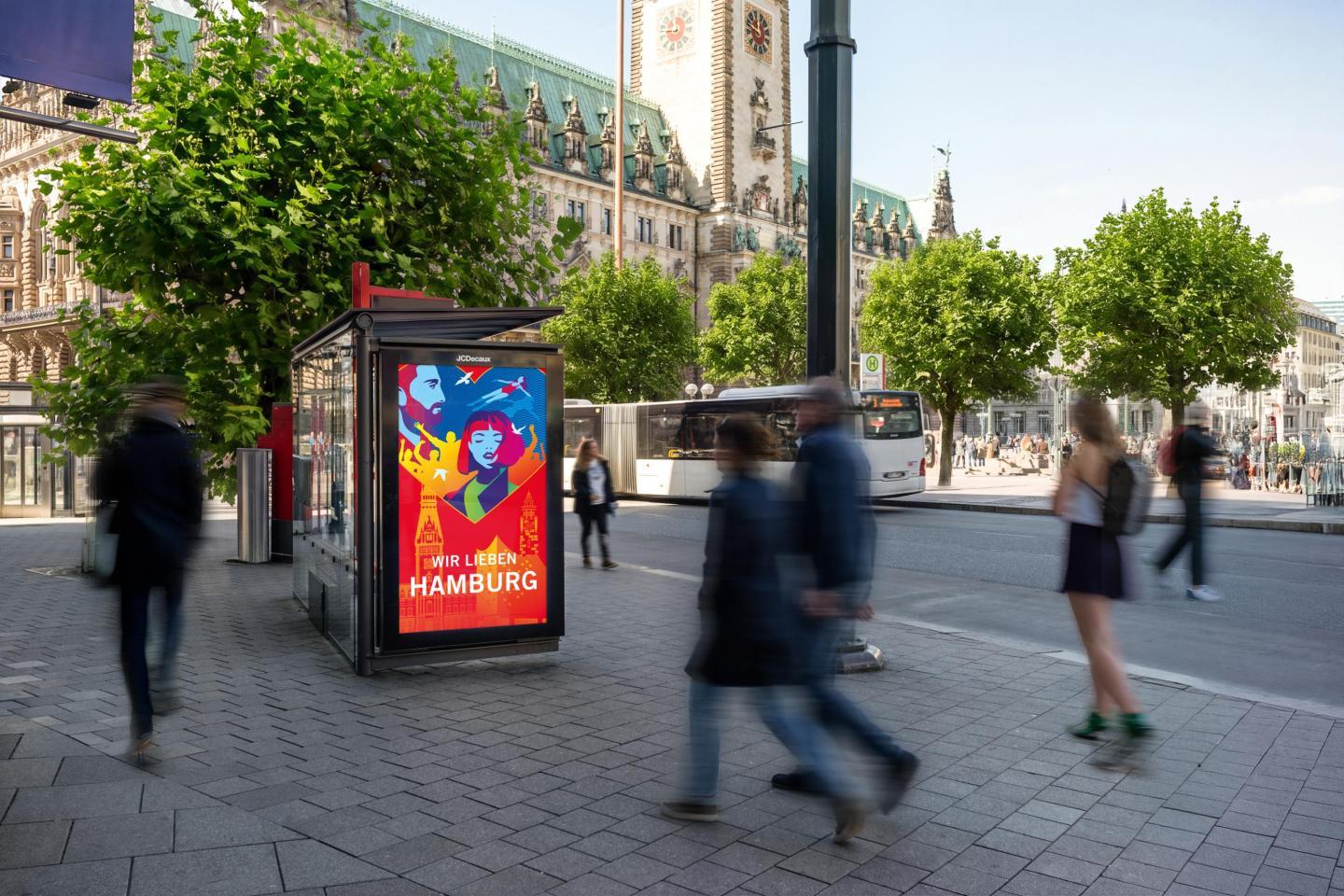
BillboardGuide’s Hamburg street-furniture contract analysis offers a separate German concession comparison. Its contract duration and infrastructure commitments should not be transferred to the Düsseldorf agreement.
Design for the encounter at each face
Street-furniture creative should be assessed in its actual viewing environment. A waiting passenger and a person passing a panel may have different opportunities to read the same advertisement.
For a comparable campaign, the production review should check the main message from the expected approach angle and distance. Digital versions also need to follow the permitted duration and motion rules of the booked inventory.
BillboardGuide’s digital billboard guide provides broader screen-buying context. The Düsseldorf announcement does not establish programmatic access, so buyers should confirm the supported transaction route separately.
Ask for delivery evidence tied to the booked assets
A useful report should reconcile the purchased inventory with what actually ran. Dated posting photographs, playback records where applicable and outage reporting help establish delivery; they do not independently prove an effect on awareness or sales.
Any incremental-reach or outcome claim needs a stated methodology and reporting period. BillboardGuide’s OOH metrics guide explains how to keep those evidence types distinct.
The renewal gives Düsseldorf buyers a specific network development to investigate. Its value for a campaign will depend on the locations available for that flight, the creative fit and the terms attached to delivery.
 London