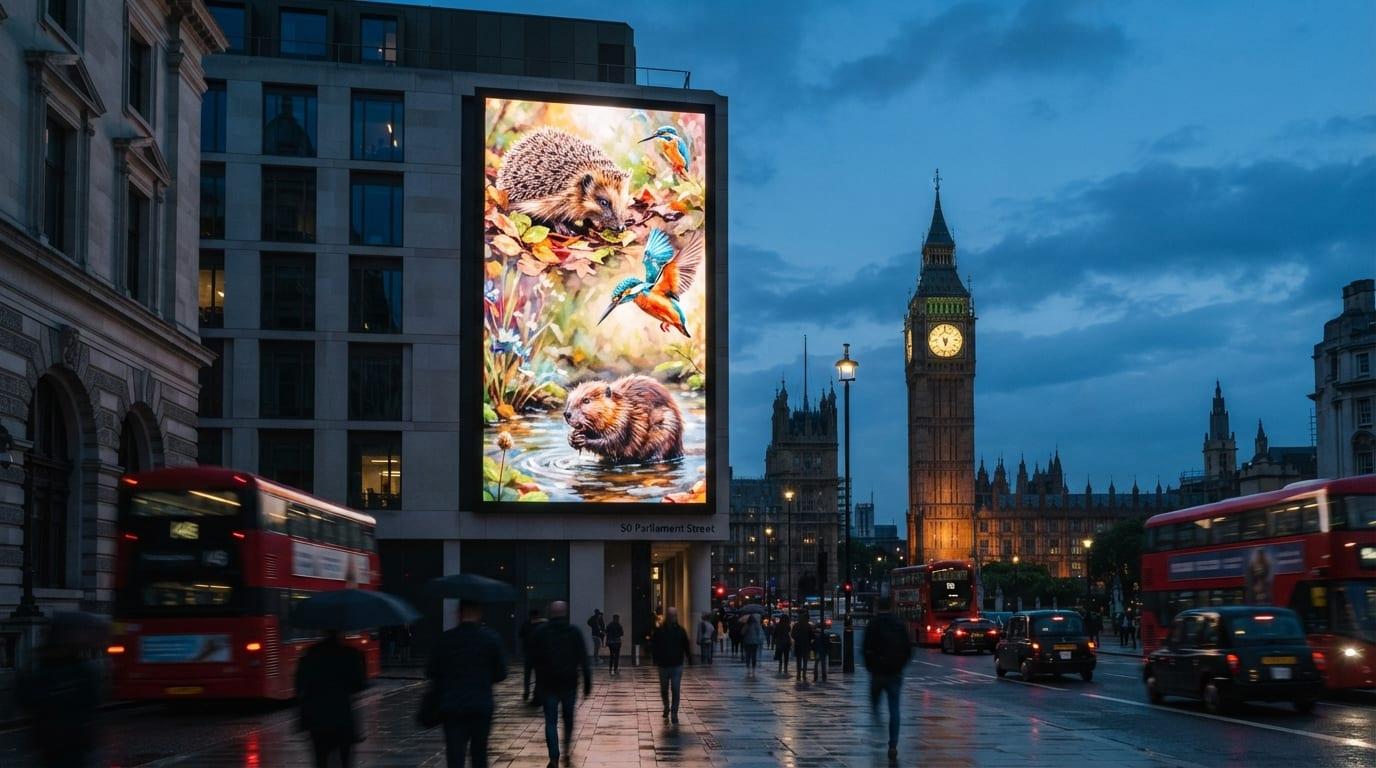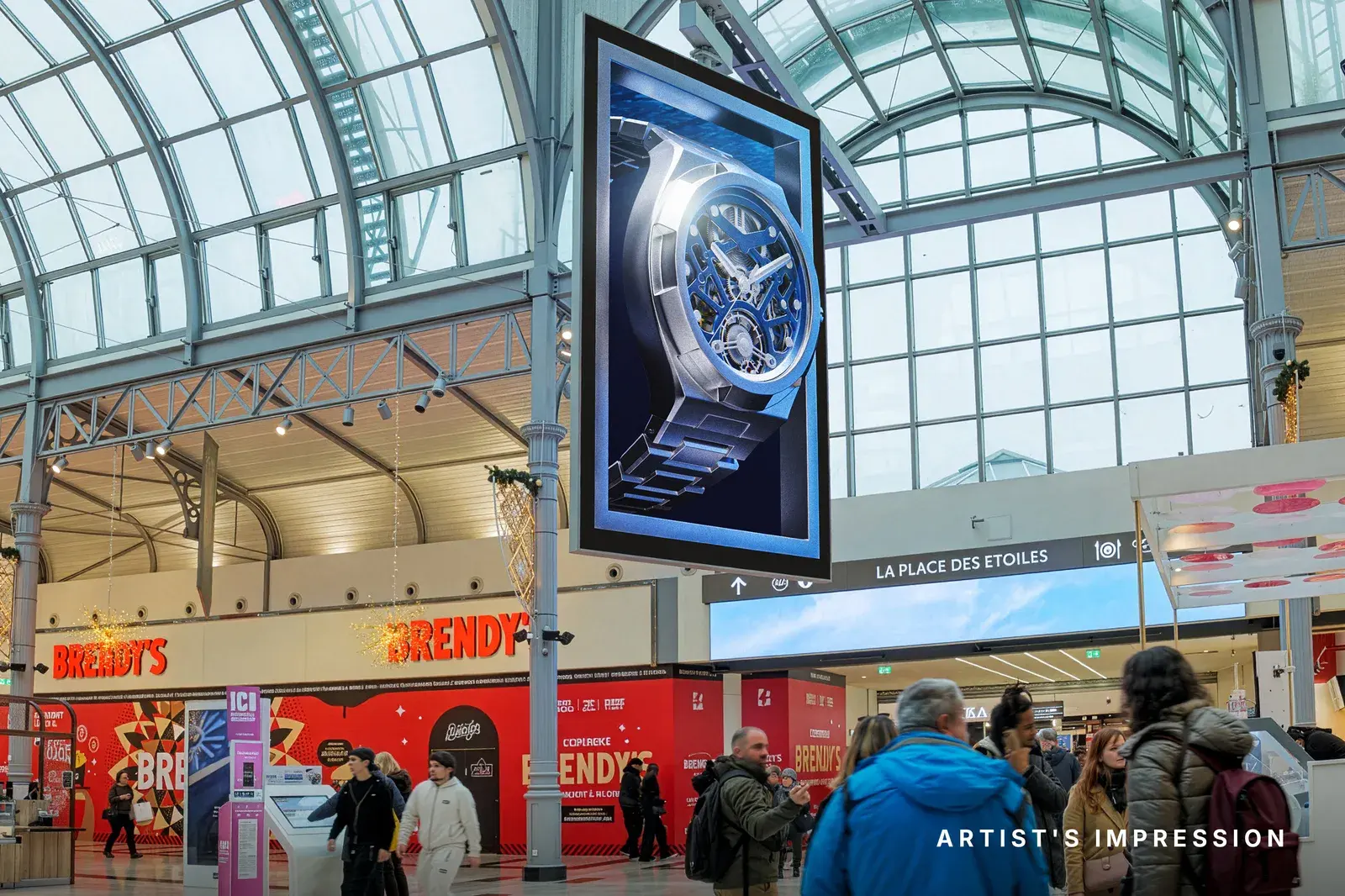
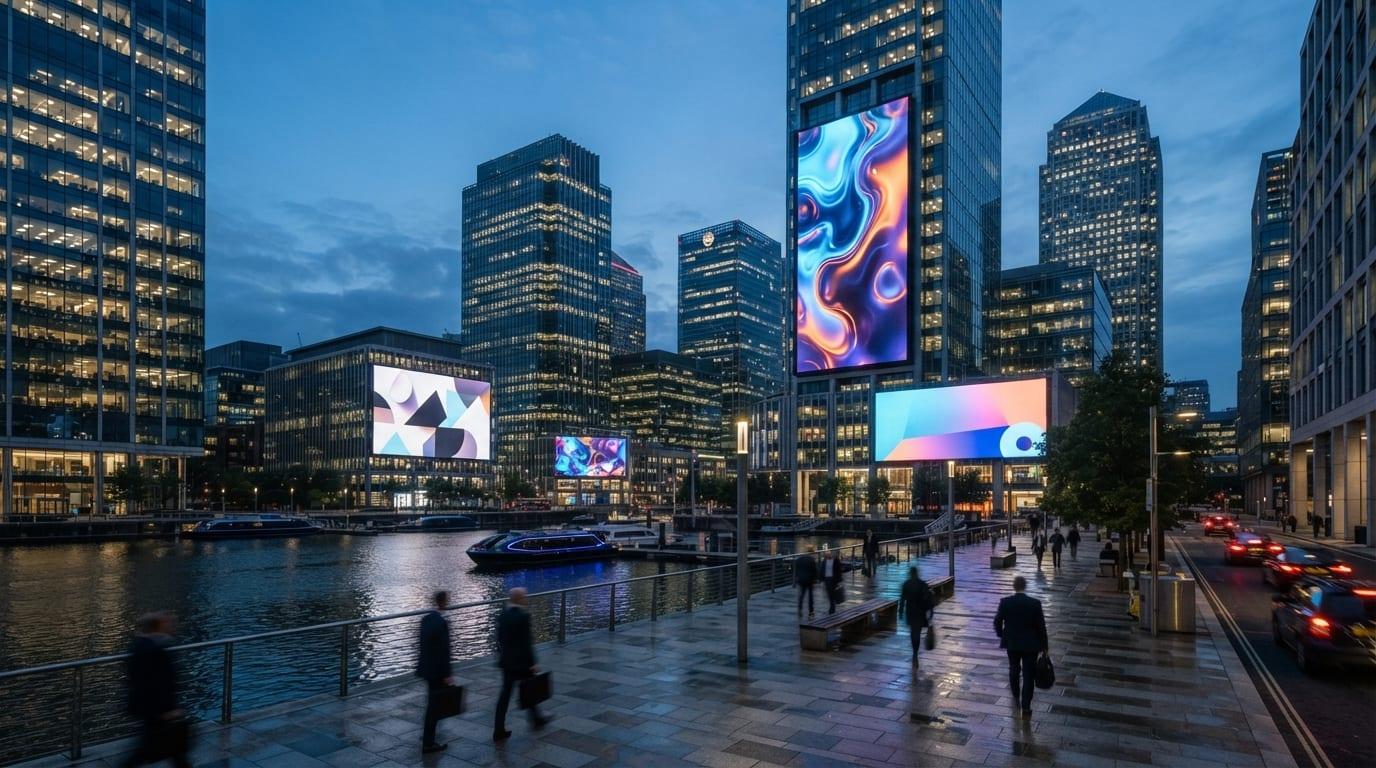

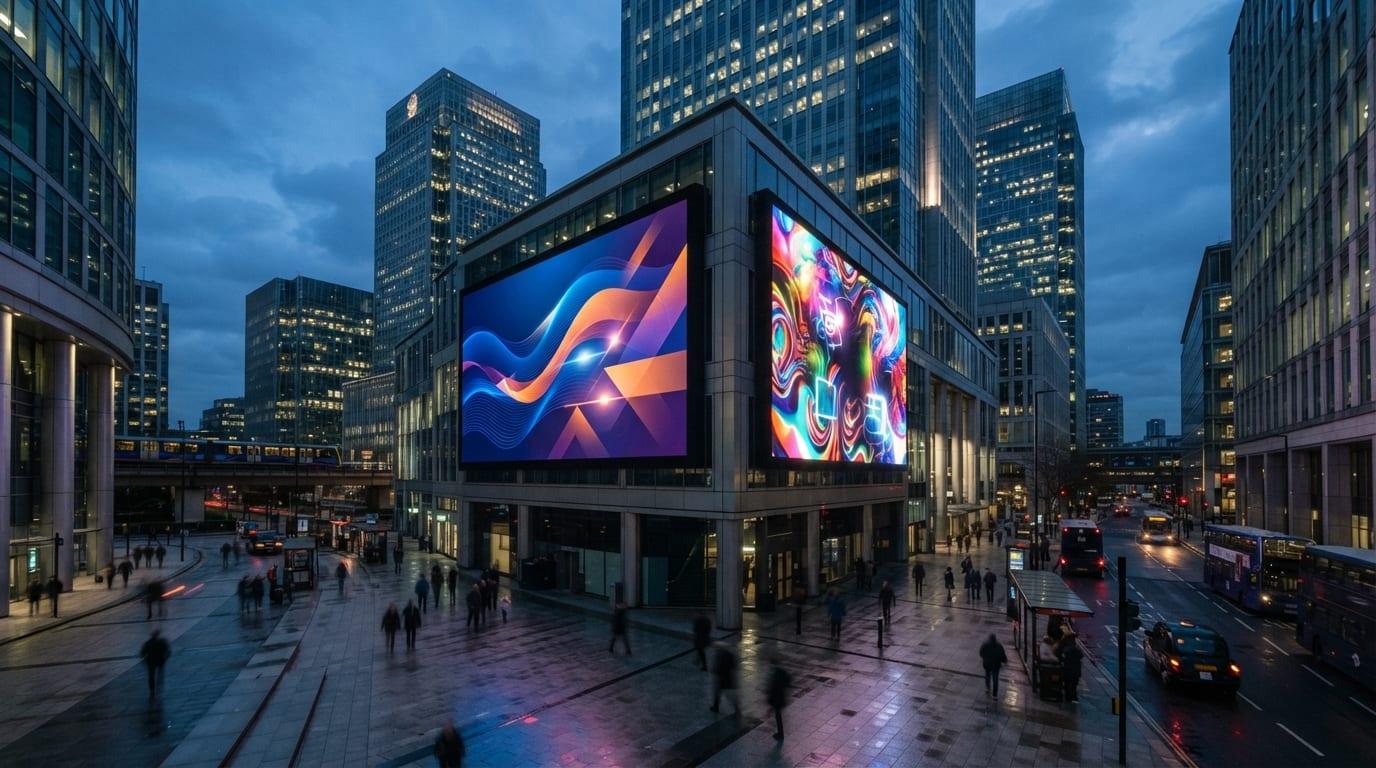
As part of its renewed Canary Wharf relationship, Ocean says it plans to broaden the existing DOOH offer with immersive experiences using technologies such as augmented reality, installations and projections, with drone shows also identified as a potential format.
That direction illustrates how premium DOOH owners are trying to sell more than screen time. The commercial product increasingly includes physical production, experiential layers and digital interaction around the location. AR, projection and drone concepts would push the estate beyond conventional screen media. The commercial implication is that premium OOH contracts increasingly include the right to produce experiences around a location, not merely sell pixels on a display.
For Billboard Guide, the useful way to read the story is not just as a campaign or company announcement. It is a practical example of how the outdoor medium is changing: where advertisers can appear, how inventory is packaged, what creative earns attention in public space and what evidence a buyer should request before deciding that a placement is worth the premium.
Where the technology could add value
The opportunity is usually not automation for its own sake. Technology is valuable when it reduces repetitive planning work, makes more variables usable or allows a creative experience that would be difficult to operate manually.
The implementation questions
Before adopting a new OOH technology, ask what data it needs, whether it integrates with existing inventory and buying systems, how decisions are audited, who owns the generated data, what happens if a live feed fails and whether the output can be independently verified. A polished demo is not the same thing as an operationally resilient campaign.
Avoiding technology-first planning
A campaign should still begin with audience, objective and environment. AR, AI, live data or automation should improve the idea or the buying decision; if the technology is removed and nothing strategically important is lost, it may be decoration rather than value.
 London