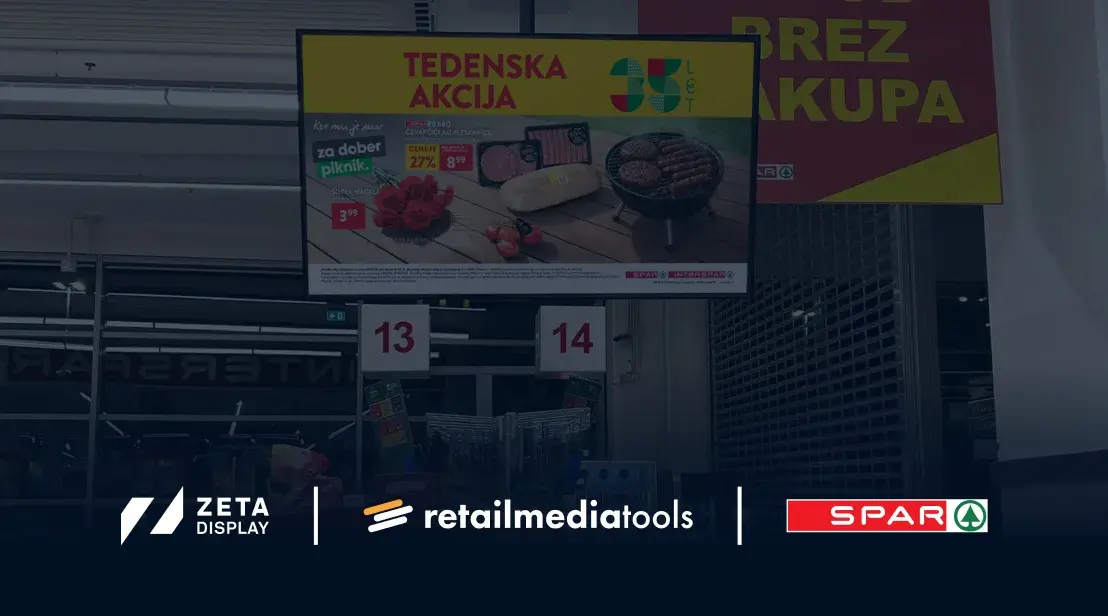

ZetaDisplay has extended its partnership with SPAR to deliver a new retail media network, according to a company announcement dated 9 September 2026.
The rollout began with a pilot and is scheduled to continue through the end of 2026. ZetaDisplay says it will install hundreds of displays and reposition existing screens. Its Austria team leads the project, and Engage Suite will power the network, including implementation across SPAR Slovenia stores.
The initiative follows ZetaDisplay’s acquisition of retailmediatools. SPAR retains authority over which brands may advertise and can also use the network for its own campaigns. Same-day invidis coverage places the rollout in Central Europe.
Turning store screens into advertising inventory
The planning change is the addition of a commercial advertising role to a store’s communications infrastructure. A retailer needs to decide how paid messages fit around pricing, product information and its own promotions. Advertisers need to understand what space and time are genuinely available to purchase.
BillboardGuide’s interpretation is that retailer control is a central part of this proposition. Brand eligibility, category restrictions and content approval should be resolved early in a brief, before creative production or budget allocation.
The announcement does not supply a complete store-by-store inventory list, public rate card or independently verified sales-lift result. Those remain questions for a buying discussion.
Placement should follow the buying task
For an advertiser, “in-store” is only the beginning of the location description. A screen near an entrance could introduce a brand; one near a relevant category could reinforce a product choice. These are potential uses, and their value depends on the actual route through the store and the product’s availability.
The media brief should connect each proposed placement with a communication task. A broad brand message and a price-led promotion may need different creative, schedules and measures of success.
BillboardGuide’s coverage of Screenverse and Retail Visions provides a related US example of grocery screens becoming accessible to advertisers. It offers context for the category, without establishing equivalent capabilities or results for SPAR.
What a useful measurement plan should contain
Buyers should separate evidence that an ad played from evidence about its audience and commercial effect. Playback records can verify delivery. Audience estimates describe potential exposure. A sales analysis needs additional information about the stores, products, comparison period and other activity that could influence purchases.
Before agreeing to a campaign, ask for:
- The participating stores, screen positions and available advertising schedule.
- The rules for brand approval and category competition.
- Reporting at store, screen and creative level.
- The audience methodology and treatment of repeat visits.
- A proposed comparison group or baseline for any sales-lift analysis.
- A clear account of promotions, pricing changes and stock availability during measurement.
BillboardGuide’s guide to OOH metrics beyond impressions offers additional context for assessing exposure quality.
Creative needs a clear retail purpose
An in-store execution should make the next decision easier. For a product campaign, that may mean recognizable packaging, a clear benefit and a precise offer. Any price or promotion needs to match the relevant store and campaign dates.
A brand that is not stocked in the store needs a different rationale for appearing there. Audience relevance may justify the placement, but the brief should explain the intended response rather than assume that proximity to a checkout creates value for every advertiser.
The next useful evidence will be the available inventory, commercial terms and campaign reporting as deployment progresses. Advertisers developing a store-focused brief can use BillboardGuide’s media planning service to define location, product and measurement requirements before comparing proposals.