
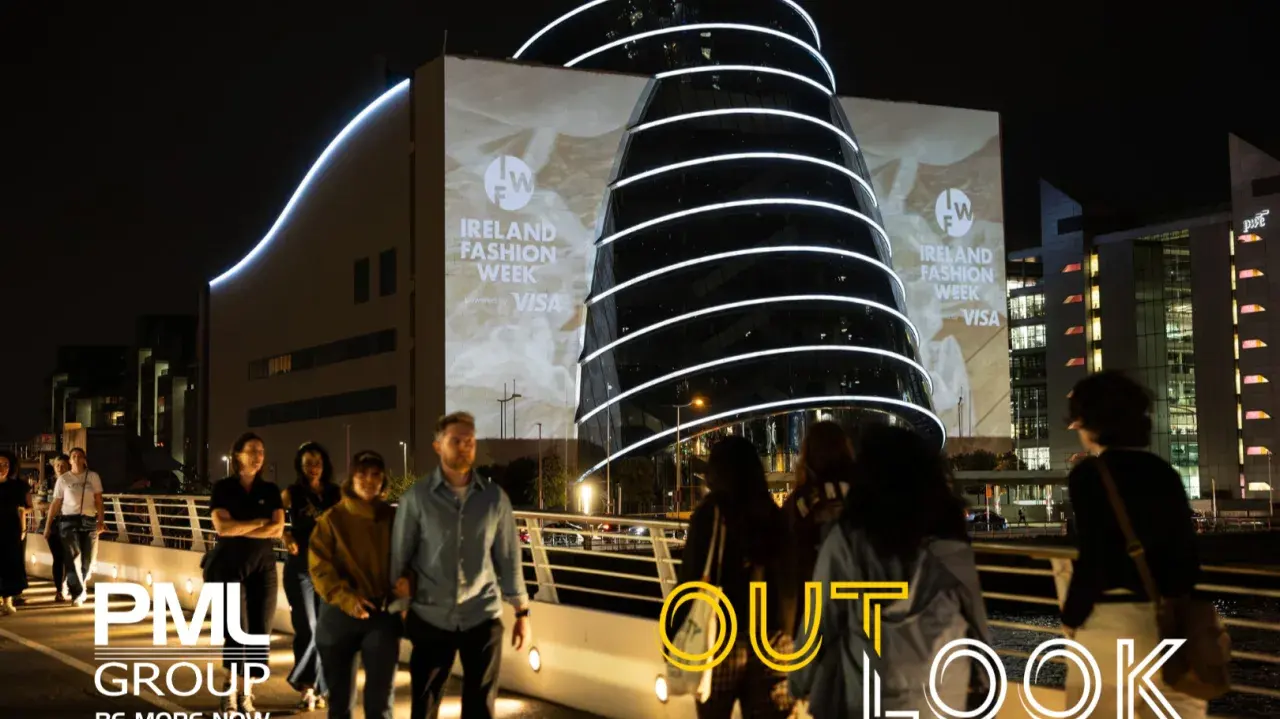

Visa is taking its Ireland Fashion Week sponsorship into Dublin’s public spaces, combining a projection on the Convention Centre Dublin with a planned digital out-of-home campaign. PML Group’s account, published on 18 September, describes an approach that connects a prominent launch moment with advertising along everyday journeys.
For event sponsors, the planning question is how to maintain recognition between an announcement and the event itself. This campaign offers a useful example of assigning different jobs to different outdoor placements.
What is confirmed about the Dublin campaign?
According to PML Group, Nightlight Screens delivered the projection on 16 September. The subsequent screen activity is scheduled for 21 September–18 October, spanning a 52-screen JCDecaux Digipanel mix, Global Gallery screens at Connolly, Tara Street and Grand Canal Dock stations, and Nightlight’s Green Screen at Stephen’s Green Shopping Centre’s Grafton Street entrance.
Ireland Fashion Week is scheduled for 7–12 October, with Visa returning as title partner. Zenith and PML planned the campaign. These are reported plans as of this edition’s date; the later screen phase has yet to begin.
A launch moment needs a follow-through plan
Billboard Guide’s analysis is that the two stages serve complementary purposes. A building projection can supply a striking image for the launch. A longer screen flight gives the sponsor more opportunities to communicate the event association as the date approaches.
That relationship depends on creative continuity. If a spectacular introduces one visual idea and smaller screens introduce an unrelated one, viewers have to rebuild the connection. Keeping the sponsor identity, event name and visual cues recognisable can make the campaign easier to understand across formats.
The assets still need individual adaptation. A photograph that works on a building may lose its focal point on a vertical panel. The campaign idea should travel, while the composition changes to suit the surface and viewing distance. BillboardGuide’s creative checklist provides a practical starting point for reviewing those adaptations.
Why the Dublin locations matter
The named sites give the media plan a specific geographic shape. Rail stations create a different encounter from a landmark façade or a shopping-centre entrance. Buyers considering a similar campaign should examine each location’s approach angles, pedestrian movement and likely viewing time.
A station placement may need to communicate while passengers walk toward a platform. A retail entrance may allow a different relationship between imagery and event information. Neither environment guarantees attention simply because a screen is present.
For sponsorship campaigns, this makes the unit list especially useful. It lets planners assess whether the selected locations support the event’s intended audience and whether enough creative information will survive a brief encounter.
How should an event sponsor measure this approach?
The public account does not provide campaign spending, verified audience delivery, ticket-sales lift or brand-lift results. Those outcomes should remain open questions.
A sensible evaluation would first check delivery: when the projection ran, which screens carried the assets and how the booked schedule was fulfilled. It would then examine the campaign objective, such as recognition of the sponsor–event relationship, qualified event-page visits or ticket interest.
Those measures should be kept distinct. A screen play confirms delivery; a rise in website traffic may have several causes. Where an effectiveness claim matters, the study needs a documented method that considers other marketing activity. BillboardGuide’s guide to evaluating OOH metrics together explains why impression totals need additional context.
What planners can take from the campaign
The useful lesson is to design the sequence before booking the individual formats. Establish what the launch should communicate, how subsequent placements will reinforce it and what the audience should do next.
For a sponsor, that might mean a consistent event association early in the flight and clearer attendance information closer to the event. This is a planning recommendation, rather than a description of unreported Visa creative changes.
The next development to watch is delivery of the scheduled city screen phase. Evidence from that flight would help assess how well the launch and everyday placements work together.