The field guideEurope
Dublin Billboard & DOOH advertising
Ireland
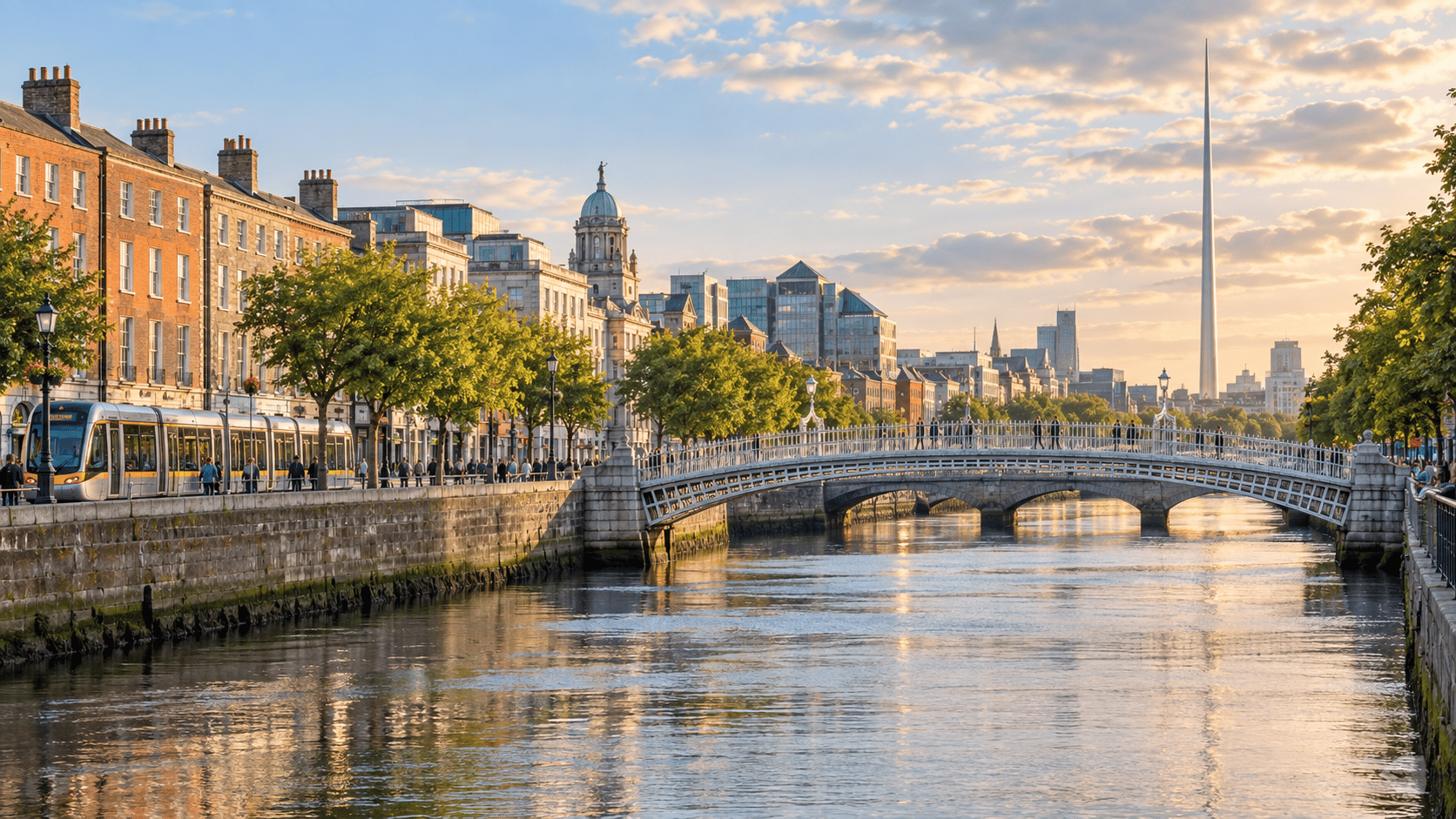
Dublin is a compact but varied OOH and DOOH market spanning classic billboards, large digital roadside screens, digital bridges, retail DOOH, rail spectaculars, Luas and bus takeovers, special builds and airport media. Public 2026 rate cards make the market unusually transparent for early-stage budget planning.
- Market
- Dublin
- Currency
- EUR
- Media landscape
- Dublin Bus, Luas, DART / commuter rail
Market overview
Dublin is one of the easier European OOH markets to research before requesting a quote because several current Irish media rate cards are public. Advertisers can combine classic 6-sheet street furniture, 48-sheet billboards, digital roadside screens, Dublin Bus, Luas, DART and rail media, with separate airport inventory at Dublin Airport.
The important planning distinction is Dublin City versus the wider Dublin advertising market. Dublin City Council covers the central city, but campaigns sold as "Dublin" can also include Dún Laoghaire-Rathdown, South Dublin and Fingal. Those areas contain major commuter routes, shopping centres, business districts and Dublin Airport, but they sit under different local authorities and should not be described as city-centre inventory.
- Research checked: 14 September 2026
- Currency: EUR
- Typical buying period: 14-day OOH cycle for many classic and transit formats
- Audience measurement: JNOR
- Programmatic DOOH: Available on selected JCDecaux inventory through VIOOH
- Linked location guide: Dublin Airport Advertising
Dublin OOH at a glance
| Planning fact | Dublin market position |
|---|---|
| Core OOH environments | Roadside, street furniture, bus, Luas, DART/rail, retail, airport, special builds and experiential |
| Main roadside/street-furniture sellers | Bauer Media Outdoor, JCDecaux, Global and specialist owners |
| Dublin Bus advertising | Global |
| Irish Rail / DART station and train advertising | Global |
| Luas advertising | Bauer Media Outdoor |
| Dublin Airport media | Sold separately by daa Media Sales |
| Standard planning cycle | 14 days for many classic/transit products |
| Official OOH audience currency | JNOR |
| Programmatic access | Selected JCDecaux digital inventory via VIOOH |
| Premium digital / spectacular examples | JCDecaux Digi96 and Digi48s, Global Digital Bridges and Transvision, dX retail screens, rail station takeovers |
| Creative innovation | 3D special builds, lenticular, lighting, dispensers, wraps, takeovers, scent/sound and interactive retail formats can be possible subject to site and approval |
| Dublin population context | 592,713 in Dublin City; 1,458,154 across Dublin's four local-authority areas in Census 2022 |
| 2025 Dublin Bus journeys | 164 million |
| 2025 Luas scale | More than 55 million journeys expected/recorded around the 2025 operating year; confirm the latest annual figure when planning |
| 2025 Dublin Airport passengers | 36.43 million |
How the Dublin outdoor advertising market works
Dublin is not dominated by one billboard owner or one transport concession. A useful media plan normally separates the market into four buying layers:
- Roadside and street furniture — classic 6-sheets, 48-sheets, 96-sheets, digital roadside screens and city-centre formats.
- Surface transport — Dublin Bus and Luas, each with different sellers and creative specifications.
- Rail — DART, commuter rail and major stations such as Connolly, Pearse and Tara Street.
- Airport and managed property — Dublin Airport and private retail/property environments, which use separate buying routes.
That fragmentation matters. A proposal saying only "Dublin transit" is not specific enough. Ask whether the inventory is on Dublin Bus, Luas, DART, commuter rail, inside stations, on vehicles, or on a digital network adjacent to the transport system.
Dublin also follows the Irish industry's two-week OOH cycle. Many rate cards are quoted per panel, per 14-day cycle, while digital products may instead be sold by a 10-second slot, plays, impressions or a network package.
Best areas for billboard advertising in Dublin
Dublin's most useful advertising environments are defined more by audience journey than by postcode.
| Area / environment | Audience and planning role | Formats to investigate | What to verify |
|---|---|---|---|
| O'Connell Street / Henry Street / north city core | Retail, tourists, office workers and heavy bus/Luas movement | Street furniture, digital panels, bus, Luas, nearby rail | Exact street, pedestrian orientation, heritage/planning constraints |
| Grafton Street / St Stephen's Green / south city core | Premium retail, tourism, hospitality and high pedestrian dwell | Luas, shelters, digital street-level formats, nearby retail media | Whether the unit is actually in the pedestrian core or on an approach street |
| Docklands / IFSC / Grand Canal Dock | Finance, technology, B2B, office commuters and events | DART/rail, digital bridges, roadside digital, place-based screens | Station versus roadside inventory; event and office-day patterns |
| Ballsbridge / Donnybrook / Ranelagh | Affluent residential, professional services, embassies and Aviva Stadium audiences | Bus shelters, roadside, Luas Green Line, local digital | Match/event timing, road direction and exact catchment |
| Amiens Street / North Strand / Drumcondra | Commuters, Croke Park audiences and north-city approaches | Rail, bus, bridge screens, roadside | Event-day traffic changes, direction of travel, rail versus roadside seller |
| Dundrum / Sandyford / south-eastern corridor | Offices, retail, affluent suburban audiences and Luas commuters | Luas Green Line, shopping-centre media, roadside | Local-authority boundary and whether the plan is sold as Dublin city or metro |
| Tallaght / Blanchardstown / Swords | Large suburban populations, retail and commuter reach | Bus, street furniture, retail, roadside | These are wider Dublin-market environments, not central Dublin |
| Dublin Airport | International travelers, business travel, tourism and returning residents | Large digital, arrivals/departures screens, sequential terminal media | Terminal, passenger stage, airline mix, direct airport buying route |
Which Dublin area is best?
There is no single best district.
For premium retail and tourism, start with the city core around Grafton Street, St Stephen's Green, O'Connell Street and Henry Street.
For B2B, finance and technology, the Docklands, IFSC and Grand Canal Dock are stronger contextual fits.
For commuter frequency, use Luas, Dublin Bus, DART and arterial roadside placements rather than paying for one prestige unit.
For mass suburban coverage, include the wider Dublin market rather than restricting the plan to Dublin City Council's boundary.
For international and business-travel audiences, use the separate Dublin Airport advertising guide.
Dublin billboard and OOH costs in 2026
Dublin has unusually useful public rate-card information. The figures below are published media rates, not negotiated quotes. Availability, volume discounts, production, installation, creative adaptation, VAT, agency fees and special-build costs can materially change the final budget.
Street furniture and roadside
| Format | Published 2026 rate | Buying basis |
|---|---|---|
| Bauer Media Outdoor Adshel | €570 | Per panel / 2-week cycle |
| Bauer Media Outdoor Adbox | €343 | Per panel / 2-week cycle |
| JCDecaux Dublin Tier 1 48-sheet | €2,087 standard / €2,445 HD | Per panel / 2-week campaign |
| JCDecaux Dublin Tier 2 48-sheet | €1,253 standard / €1,610 HD | Per panel / 2-week campaign |
| JCDecaux Metropole | €1,780 | Per unit / cycle; published rate says print inclusive |
| JCDecaux Digipanel | €1,431 | Published media rate for a 10-second slot; confirm current delivery terms |
| JCDecaux Digipole | €4,326 | Published media rate for a 10-second slot; confirm current delivery terms |
| JCDecaux Digi48 | €4,966 | Published media rate for a 10-second slot; confirm current delivery terms |
| JCDecaux Digi96 | €8,784 | Published media rate for a 10-second slot; confirm current delivery terms |
Bauer Media Outdoor's 2026 Adshel Live roadside pricing is quote-based according to the number of plays booked, with fixed and flexible packs available.
Dublin Bus advertising
Global is the sole advertising provider on Dublin Bus. Its current 2026 public rate card lists:
| Dublin Bus format | Published 2026 rate | Buying basis |
|---|---|---|
| T-Side | €734 | Per panel / 2-week cycle |
| Superside | €363 | Per panel / 2-week cycle |
| Sightline / lower rear | €155 | Per panel / 2-week cycle |
| MegaRear double-deck | €2,000 | Per bus / 2-week cycle |
| ColourBus double-deck | €3,800 | Per bus / 2-week cycle |
| A2 back-of-driver interior | €46 | Per panel / 2-week cycle |
Global says the Dublin Bus fleet exceeds 1,000 buses and covers more than 100 routes across the Greater Dublin Area. That makes bus useful when a campaign needs repeated exposure beyond the central shopping streets.
DART and rail advertising
Global also holds the advertising rights across Iarnród Éireann stations and trains, including DART.
| Rail format | Published 2026 rate | Buying basis |
|---|---|---|
| CommuterPoint | €315 | Per panel / 2-week cycle |
| CommuterSquare | €1,250 | Per panel / 2-week cycle |
| Commuter Card | €26 | Per panel / 2-week cycle |
| Digital dPoD | €775 | 10-sec slot / 2-week cycle |
| Transvision | €4,600 | 10-sec slot / 2-week cycle |
| Digital Gallery | €5,800 | 10-sec slot / 2-week cycle |
Global's digital rail galleries include major Dublin stations such as Connolly, Pearse, Tara Street and Grand Canal Dock, giving advertisers a different audience context from roadside inventory.
Luas advertising
Bauer Media Outdoor sells advertising across Dublin's Luas network. The system has two lines and 67 stops, and Bauer reports more than two million passengers per OOH cycle.
| Luas format | Published 2026 rate | Buying basis |
|---|---|---|
| Luas Column | €767 | Per panel / 2-week cycle |
| Tram Domination with Skyline — Green Line | €19,451 | Per tram / 2-week cycle |
| Tram Domination with Skyline — Red Line | €17,242 | Per tram / 2-week cycle |
| Full Tram Wrap — Green Line | €120,426 | Per tram / 6 cycles |
| Full Tram Wrap — Red Line | €118,379 | Per tram / 6 cycles |
| Tram Centres — Green / Red | €50,705 / €44,272 | Per tram / 2-week cycle |
| Tram Sides — Green / Red | €73,857 / €63,243 | Per tram / 2-week cycle |
| Interior strapline | €78.75 | Per unit / month |
| Interior portrait panel | €110.25 | Per unit / month |
Production is not necessarily included. Full and partial wraps need longer creative and installation lead times than ordinary digital or poster campaigns.
What can different Dublin OOH budgets buy?
These examples use published 2026 rate-card prices to show scale only. They are not recommended packages or live quotes, and they exclude production, VAT and any negotiated discount.
Around €5,000Media only
At list rate, €5,000 could roughly cover:
- 8 Bauer Adshel panels for one 2-week cycle: €4,560, or
- 6 Dublin Bus T-Sides for one 2-week cycle: €4,404, or
- a mix of local 6-sheets and bus formats concentrated around one catchment.
For a local business, concentrated frequency around a store, venue or commuter corridor is usually more useful than spreading a small budget across all of Dublin.
Around €15,000Media only
A €15,000 budget can begin to combine environments. One illustrative list-rate combination would be:
- 12 Adshel panels: €6,840
- 8 Dublin Bus T-Sides: €5,872
- 7 commuter rail panels at €315: €2,205
Total media at published rate: €14,917 before production and VAT.
The practical value is not the exact mix; it is that a mid-five-figure Dublin campaign can build frequency across street, bus and rail rather than relying on one large-format face.
€50,000+Media only
At this level, a buyer can consider premium Luas executions, larger digital roadside formats, wider street-furniture coverage and rail digital.
For example, a Green Line Luas Tram Domination has a published 2026 media rate of €19,451 for two weeks, leaving room for a supporting city-centre or commuter network. Full wraps are a different budget class because the published six-cycle media rate is above €118,000 before production.
Use the Billboard CPM Calculator to compare proposals only after the seller supplies campaign-level impressions for the same dates, units and share of voice.
Digital and programmatic DOOH in Dublin
Dublin has a meaningful digital OOH layer across roadside, city-centre, rail, retail and airport environments.
Bauer Media Outdoor operates Adshel Live roadside digital screens and sells dynamic, data-led campaigns. Global operates digital rail products including dPoDs, Transvision screens and Digital Galleries.
In February 2026, VIOOH and JCDecaux Ireland announced programmatic access to JCDecaux's Irish digital inventory. The national integration covers 288 digital screens and 311 million monthly viewable impressions across roadside, shopping-centre and retail environments, including Dublin.
That does not mean every Dublin JCDecaux screen is automatically available for every programmatic campaign.
For a city campaign, screen-level transparency matters more than a national programmatic inventory headline.
Digital OOH in Dublin: the main screen networks
Dublin should not be planned as a market where "digital billboard" means one product. The city has several distinct DOOH environments with very different viewing conditions, buying models and creative possibilities.
JCDecaux Digipanels: city-centre pedestrian DOOH
JCDecaux's Digipanels form an on-street digital network in central Dublin using 86-inch 4K LCD screens. Current locations highlighted by JCDecaux include high-visibility retail streets such as Mary Street, Henry Street, South King Street and Suffolk Street, together with slower-moving traffic environments including Aungier Street, Baggot Street and Camden Street.
These are useful for:
- retail launches;
- entertainment and event campaigns;
- city-centre commuter reach;
- contextual creative;
- dayparted messaging;
- campaigns where pedestrian proximity matters more than long-distance impact.
Because the audience can be physically close to the screen, Digipanels can support more visual detail than a high-speed roadside billboard, but the first message should still be readable immediately.
JCDecaux Digipoles: premium roadside digital
The Digipole network consists of standalone 8 m² digital screens positioned on major routes. JCDecaux lists high-profile Dublin locations including Amiens Street, Donnybrook, Merrion Road, Malahide Road, Naas Road, Shelbourne Road and Swords Road.
These behave more like premium roadside billboards than city-centre kiosks. They are best used for:
- brand fame;
- automotive;
- finance;
- telecoms;
- entertainment;
- retail;
- event-driven campaigns;
- directional or time-sensitive messaging where permitted.
The campaign brief should specify whether the goal is broad city coverage or domination of one commuter corridor. Buying ten screens spread across Dublin is not the same strategy as owning repeated touchpoints on one route.
JCDecaux Digi48s: large digital roadside canvases
JCDecaux's Digi48 network has expanded to seven high-profile Dublin locations. The current locations listed by the media owner are:
- Clonliffe Road;
- Donnybrook;
- Kimmage;
- Loughlinstown;
- Milltown;
- North Circular Road;
- Macken Street.
These are among the most useful formats for advertisers looking for a large digital canvas without moving into a bespoke spectacular. They support dynamic content and can be used for contextual messaging, changing offers, countdowns, live data and different creative by time of day, subject to the media owner's technical rules.
Dublin's Digi96 at Annesley Bridge
Dublin's first digital 96-sheet launched in October 2025 at Annesley Bridge, Dublin 3. JCDecaux describes it as a 12-metre-wide digital canvas positioned for traffic travelling from North Strand towards Fairview.
This is one of Dublin's clearest examples of a roadside digital spectacular: substantially larger than standard street furniture and suited to simple, high-impact creative.
Global Digital Bridges
Global's current digital format guide identifies four Digital Bridge locations in Dublin:
- North Strand;
- Pearse Street;
- Drumcondra;
- Amiens Street.
Bridge formats can behave like urban gateways. Their strength is not just screen size: they can dominate a road corridor because the structure sits directly in the driver's field of view.
They are particularly relevant to launches, entertainment, sport, automotive and other campaigns where visual impact is more important than detailed copy.
Global Digital 48s
Global's June 2026 digital guide identifies five Dublin Digital 48 locations:
- East Wall North;
- East Wall South;
- John's Road;
- Lansdowne;
- Bath Avenue.
As with JCDecaux Digi48s, buyers should ask for the exact face, travel direction and audience rather than comparing "Digital 48" products only by nominal format size.
Spectacular OOH in Dublin
Dublin does not have a Times Square-style concentration of giant LED façades. Planning policy, heritage areas and the physical form of the city make that kind of continuous screen district unrealistic.
But Dublin does have spectacular OOH. It simply appears in different forms: isolated large-format roadside sites, major classic canvases, transport takeovers, wrapped trams, station domination, digital bridges, large retail screens and bespoke special builds.
For planning purposes, "spectacular" should mean an execution that creates disproportionate visual impact, not only a giant digital screen.
Digi96 — Annesley Bridge
The 12-metre-wide Digi96 at Annesley Bridge is currently one of the most obvious large digital roadside opportunities in Dublin.
Best use cases:
- major launches;
- film and streaming releases;
- telecoms;
- automotive;
- sports sponsorship;
- high-impact brand campaigns.
It is still roadside inventory, so spectacular creative should remain simple. A giant screen does not make small text readable from a moving vehicle.
240-sheet billboards
JCDecaux states that its 240-sheet format is the largest billboard format available in the Irish market. A 240-sheet consists of five 48-sheet panels in a row.
JCDecaux lists two Dublin locations:
- Terenure Road
- Ranelagh Road
These are classic rather than digital spectaculars, but the uninterrupted physical scale can create more visual dominance than many digital screens.
A 240-sheet is a strong candidate for:
- oversized product photography;
- minimalist brand creative;
- extensions outside the normal artwork area where approved;
- special builds;
- launch creative designed to be photographed and shared.
Platinum Squares
JCDecaux's Platinum Square uses two 48-sheets stacked vertically and is positioned in selected high-profile Dublin city-centre environments.
The format is useful when vertical scale matters or when the creative concept can exploit the relationship between upper and lower panels. It can also provide a better canvas for special-build concepts than a standard single 48-sheet.
96-sheet billboards
A classic 96-sheet combines two 48-sheets side by side. It remains relevant for brand-fame campaigns even as digital inventory grows.
For campaigns that do not need animation, a well-positioned 96-sheet can offer:
- continuous share of voice;
- no loop dilution;
- very large brand presence;
- the ability to use physical extensions and special treatments, subject to approval.
Luas full wraps as moving spectaculars
A full Luas wrap is effectively a moving city-scale canvas.
Bauer Media Outdoor's 2026 rate card lists six-cycle media rates above €118,000 before production for a full tram wrap, putting the format firmly into major-launch territory.
Unlike a static spectacular, a wrapped tram moves across multiple districts. The trade-off is that the advertiser cannot guarantee that every impression occurs at one landmark location.
For the right launch, the combination of:
- vehicle exterior;
- doors;
- windows where permitted;
- interior formats;
- station media;
- social/experiential activation
can turn a tram into a broader brand takeover rather than just transit advertising.
Station takeovers, rail specials and experiential OOH
One of the most interesting parts of Dublin's market is that spectacular activity is not limited to roadside billboards.
Global's 2026 rail format guide explicitly presents Rail Innovations and Specials including:
- Connolly Entrance Takeover;
- Amplify Heuston;
- Connolly Lenticular Tunnel Wrap;
- Connolly Tunnel Wrap with scent;
- Connolly Tunnel Wrap with sound;
- Pearse Underpass;
- Pearse Underpass dPod Wrap;
- extended Heuston glass-panel treatments;
- Tara Gallery Takeover.
These should be treated as bespoke opportunities, not guaranteed off-the-shelf inventory. Availability, production, installation, station operations, safety approvals and campaign timing need to be confirmed with the media owner.
Why station domination can outperform a single billboard
A station takeover can combine multiple media surfaces into one environment:
- entrance branding;
- tunnel wraps;
- platform screens;
- dPods;
- Transvision;
- floor or glass treatments where approved;
- experiential staff or sampling;
- sound, scent or other sensory elements on approved bespoke executions.
That can create a much stronger sense of ownership than buying one large screen.
It is especially useful for:
- entertainment premieres;
- gaming;
- technology launches;
- FMCG sampling;
- financial brands;
- tourism;
- major sports partnerships.
Experiential and sampling
High-dwell environments such as rail stations, shopping centres and managed private property can support experiential activity more naturally than a roadside billboard.
Possible campaign layers can include:
- sampling;
- brand ambassadors;
- QR or NFC interaction;
- competitions;
- photo moments;
- interactive screens;
- product demonstrations;
- social amplification.
Do not assume these rights are included with a media booking. Staffing, insurance, security, sampling permissions, power, storage and property approval can all be separate.
Retail DOOH in Dublin
Retail should be treated as its own DOOH channel rather than a smaller version of roadside.
Global dX
Global's dX network includes some of the largest digital OOH screens in Irish shopping centres. Dublin-area locations in the current network include:
- Dundrum Town Centre;
- Pavilions Shopping Centre;
- Ilac Centre;
- The Square Tallaght.
The value of these screens is dwell and purchase context rather than roadside reach.
Global dPods
Global's retail dPods support full-motion, animated, dynamic and interactive content across premium mall environments.
This makes retail one of the more flexible Dublin environments for:
- motion creative;
- interactive campaigns;
- retail launches;
- proximity messaging;
- sequential creative;
- product demonstrations;
- campaigns intended to influence consumers close to purchase.
JCDecaux iVision
JCDecaux operates 70-inch digital iVision screens in Irish shopping centres. Dublin locations shown in the current portfolio include Blanchardstown, St Stephen's Green, Jervis and Omni Park.
Tesco Digiscreens
JCDecaux also operates digital screens at Tesco stores, using Tesco Clubcard data powered by dunnhumby to support audience targeting.
Dublin-area examples listed by JCDecaux include:
- Ballybrack;
- Cabra;
- Ballyfermot;
- Swords.
This is closer to retail media / shopper DOOH than traditional billboard advertising and should be evaluated against purchase missions rather than citywide awareness alone.
3D, anamorphic and special-build opportunities
Dublin is capable of more creative OOH than a standard poster or ten-second digital loop.
JCDecaux's Irish Innovate operation explicitly promotes:
- 3D special builds;
- lighting techniques;
- lenticular effects;
- dispensers;
- physical extensions and other bespoke treatments.
Global's rail portfolio also demonstrates lenticular, sound, scent and takeover executions.
Can you run an anamorphic 3D billboard in Dublin?
Potentially, but buyers should not assume that every Dublin digital screen supports a convincing anamorphic execution.
Anamorphic creative works best when:
- the screen geometry is suitable;
- the main viewing position is predictable;
- the creative is rendered for that viewpoint;
- the media owner approves the content;
- playback and loop timing are controlled;
- the execution complies with road-safety and brightness/motion requirements.
A flat roadside screen seen from multiple changing angles may be less suitable than a screen with a predictable pedestrian viewpoint.
Do not market something as "3D" purely because the artwork has perspective. The value comes from the illusion working from the real viewing position.
Dynamic creative in Dublin DOOH
Digital inventory becomes much more useful when the campaign is designed around context rather than simply displaying the same static artwork on a screen.
Depending on network and approval, useful Dublin triggers can include:
- time of day;
- day of week;
- weather;
- temperature;
- live sports data;
- countdowns;
- store or venue proximity;
- product feeds;
- availability;
- transport context;
- event schedules;
- location-specific creative.
A coffee brand, for example, could use morning commuter creative on Baggot Street and later switch to afternoon messaging. A sports sponsor could change copy around a match window near Lansdowne or Drumcondra. A retailer could vary messaging between city-centre and suburban shopping environments.
The campaign should always have a fallback creative in case an external data feed fails.
DOOH buying models: fixed loop, plays and programmatic
Do not compare digital quotes until the buying model is clear.
Dublin digital inventory can be sold in several ways:
| Buying model | What it means | Main question |
|---|---|---|
| Fixed slot / loop | Your creative occupies a defined position in a repeating loop | What is the spot length, loop length and SOV? |
| Fixed plays | A defined number of plays is delivered | Over what hours and screens are plays distributed? |
| Network package | Multiple screens are bundled for a campaign period | Is delivery equal across all screens? |
| Impression-based | Delivery is priced or guaranteed against modeled impressions | Which audience methodology is being used? |
| Programmatic DOOH | Eligible impressions/screens are transacted through an SSP/DSP | Which screens, deal type, floor, targeting and reporting apply? |
| Bespoke takeover | A site/environment is dominated for an agreed period | What physical/digital surfaces and production are included? |
For programmatic buying, do not accept "Dublin DOOH" as enough detail. Ask for screen IDs, venue types, approximate locations, operating hours, minimum bid/floor, deal type, creative restrictions and reporting granularity.
Which Dublin OOH format should you use?
| Campaign objective | Formats to investigate first |
|---|---|
| Citywide fame | Digi48, Digi96, Digital 48s, Digital Bridges, 48/96 sheets |
| One iconic high-impact execution | Digi96, 240-sheet, Platinum Square, full Luas wrap, station takeover |
| Retail launch | Digipanels, dX, dPods, iVision, Tesco Digiscreens |
| Commuter frequency | Dublin Bus, Luas, DART/rail, Digipoles, Digital Bridges |
| B2B / office audience | Docklands rail, Macken Street, Grand Canal, selected city-centre digital |
| Entertainment launch | Large digital, rail takeover, city-centre DOOH, Luas wrap |
| Contextual / dynamic campaign | Digipanels, Digipoles, Digi48, Adshel Live, eligible programmatic DOOH |
| Shopper conversion | Retail dX/dPods, iVision, Tesco Digiscreens, shopping-centre media |
| Experiential / sampling | Rail specials, shopping centres, private managed property |
| Airport / international audience | Dublin Airport terminal and approach media |
Transit advertising in Dublin
Dublin Bus
Dublin Bus is useful for broad city and suburban coverage because the fleet moves through the Greater Dublin Area rather than staying inside the central business district. Exterior formats are best for roadside reach; interior formats add dwell but require creative designed for passengers rather than passing traffic.
Bus plans should specify route logic, not just quantity. Ask whether buses are depot-allocated, whether specific corridors can be weighted, and what happens if vehicles move between routes.
Luas
Luas gives advertisers both fixed and moving inventory. The Green Line connects the city centre with south-side residential, retail and office areas; the Red Line links the city centre with major western corridors and the Docklands.
Columns and internal formats can build frequency at specific stops. Tram wraps behave more like mobile spectaculars: they generate exposure among passengers, pedestrians and motorists but are less geographically fixed.
DART and rail
DART and commuter rail are strong for north-south coastal and suburban journeys, while Connolly, Pearse, Tara Street and Grand Canal Dock provide central high-dwell environments.
Do not treat "rail" as a single product. A commuter card inside a train, a platform poster, a Transvision screen and a ten-screen Digital Gallery all have different viewing distances, dwell and creative requirements.
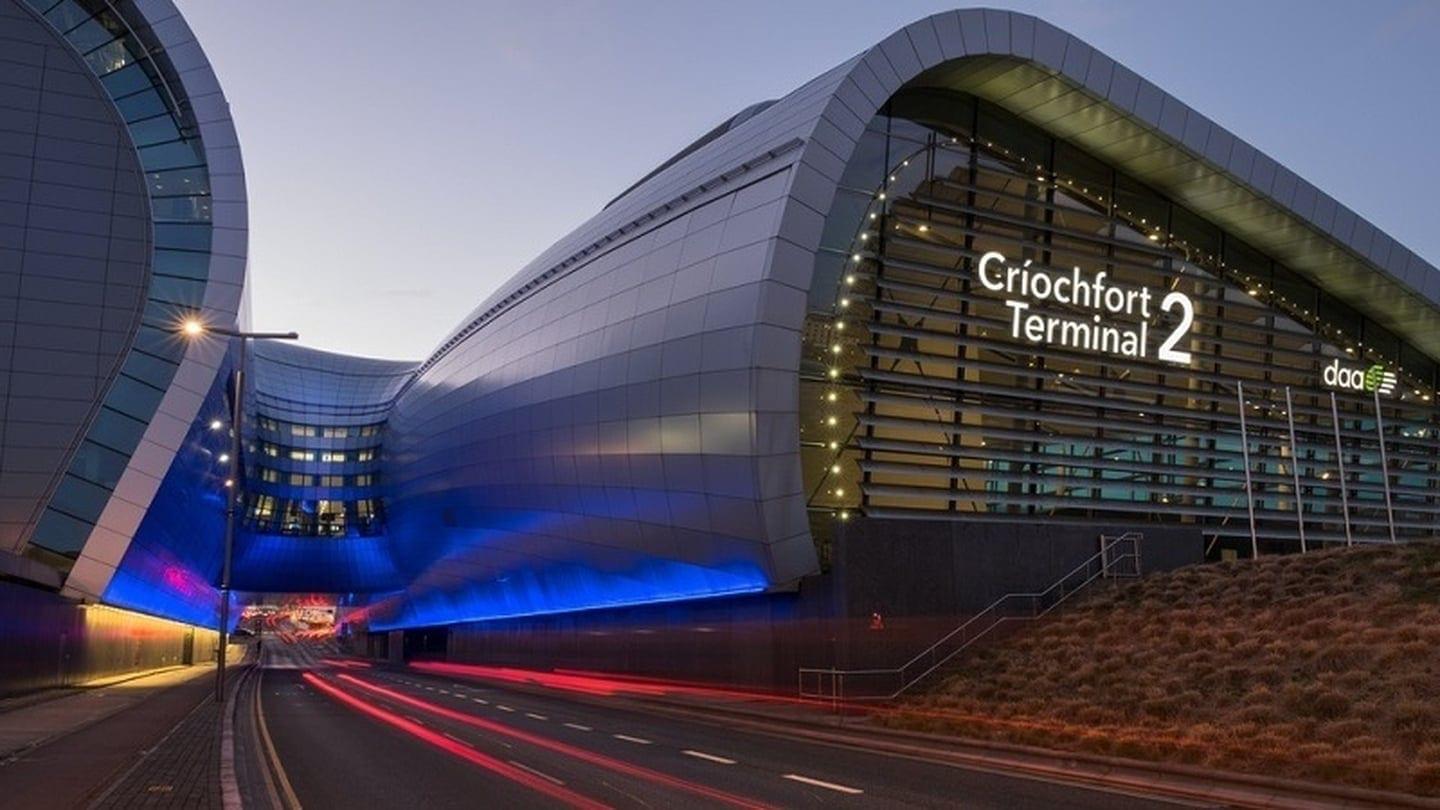
Dublin Airport advertising
Dublin Airport is a separate media environment from the city.
The airport handled 36.43 million passengers in 2025, its busiest year on record. Dublin Airport sells terminal media through daa Media Sales, rather than through the main city roadside or transit concessions.
Billboard Guide has a separate location guide covering verified products, passenger stages, costs and the official buying route:
Read the Dublin Airport Advertising guide →
Do not combine airport impressions with city roadside impressions unless the proposal explains the measurement basis for both.
Audience measurement in Ireland
JNOR — Joint National Outdoor Research — is the Irish industry's independent audience measurement system for OOH.
JNOR can report reach and frequency for individual formats and multi-format campaigns. Its methodology uses travel-survey information and classified media-owner inventory, taking factors such as poster size, campaign duration, seasonality and environment into account.
When comparing Dublin proposals, ask whether the audience figure is:
- JNOR reach;
- JNOR impressions/opportunities to see;
- traffic circulation;
- footfall;
- media-owner modeled impressions;
- digital plays; or
- a custom data estimate.
Those numbers are not interchangeable.
A useful proposal should state the exact panels/screens, campaign dates and audience methodology rather than giving one generic "Dublin reach" figure.
Local advertising rules in Dublin
Dublin is not a free-form billboard market.
The Dublin City Development Plan 2022–2028 includes an Outdoor Advertising Strategy that evaluates commercial advertising according to the sensitivity and character of the surrounding area.
Appendix 17 uses a six-zone framework:
- Zone 1 — highly sensitive / Georgian areas: strong presumption against outdoor advertising.
- Zone 2 — significant retail and commercial areas: advertising may be considered subject to tighter development controls.
- Zone 3 — radial routes into and out of the city: managed outdoor advertising can be considered.
- Zone 4 — waterways, coast and high-amenity areas: strong presumption against advertising.
- Zone 5 — strategic development and regeneration areas: advertising may form part of new streetscapes where appropriately designed.
- Zone 6 — predominantly residential areas: advertising is generally visually inappropriate, although some commercial land uses may have potential.
This makes location validation especially important. A map pin in "Dublin" does not prove that a new advertising structure is permissible.
For ordinary campaigns on existing media-owner inventory, the seller normally manages the structure and relevant permissions. Custom walls, hoardings, projections, special builds and new structures can require additional planning or property approval.
Regulated categories
Ireland also has category-specific advertising restrictions that directly affect OOH planning.
Alcohol: alcohol advertising is prohibited in or on public service vehicles, at public transport stops and stations, and within 200 metres of schools, crèches and local-authority playgrounds.
Vapes / nicotine-inhaling products: advertising restrictions introduced in 2024 include public service vehicles and stops/stations, plus locations within 200 metres of schools.
Gambling: Ireland's Gambling Regulation Act created a new regulatory framework and gives the Gambling Regulatory Authority of Ireland powers over the place, timing and manner of gambling advertising. Check the current GRAI rules and media-owner policy before booking.
Regulated-category campaigns should be cleared against both law and the current media owner's own copy policy.
Creative guidance for Dublin
Dublin has several very different viewing environments, so one master creative should not be forced into every format.
Roadside and bus exteriors
Use:
- one message;
- immediate brand recognition;
- large type;
- strong contrast;
- minimal legal copy;
- a layout that survives rain, grey daylight and traffic clutter.
A T-Side or 48-sheet is seen in motion. It is not the place for a paragraph.
Street furniture
6-sheet panels and digital shelters are closer to pedestrians and can carry slightly more information, but the hierarchy should still be immediate. If the campaign is driving to a nearby shop or event, location-specific copy can add value.
Rail and Luas
Station dwell allows more detail than roadside. Use sequential storytelling only when the booked screen sequence is guaranteed. Interior rail or tram formats can support longer copy because the audience is captive, but text still needs a clear first-read layer.
Digital
Ask whether motion is accepted and whether the product supports:
- multiple creatives;
- time-of-day rotation;
- countdowns;
- weather or contextual triggers;
- dynamic feeds;
- programmatic activation.
Do not design motion before confirming the operator's technical and content rules.
Seasonality and campaign timing
Dublin demand changes significantly around events and retail periods.
March
St Patrick's Festival and St Patrick's Day bring large visitor numbers, city-centre activity and temporary traffic changes. Premium central inventory should be planned early.
Rugby, GAA and major concerts
Aviva Stadium, Croke Park and large music events can materially change movement around Ballsbridge, Drumcondra, Docklands and transport hubs. If an event is essential to the brief, contract the relevant dates rather than assuming a general city package captures the audience.
Summer
Tourism, festivals and airport traffic increase the value of central visitor routes and travel environments.
September
The return of universities, schools and office routines can strengthen commuter frequency after summer.
November–December
Retail and Christmas activity creates heavy demand around shopping streets, malls, city-centre transport and suburban retail corridors.
For any event-led campaign, ask what happens if transport disruption, a road closure, screen outage or event cancellation changes delivery.
How far in advance should you book?
For ordinary static panels and standard digital campaigns, start several weeks ahead.
Allow more time for:
- Luas or bus wraps;
- custom installations;
- special builds;
- regulated categories;
- premium Christmas dates;
- St Patrick's period;
- campaigns tied to a major match or concert;
- creative that requires operator or property-owner approval.
JCDecaux's general Irish guidance recommends booking non-digital campaigns at least two weeks before posting, but that should be treated as a minimum rather than an ideal planning window.
How to buy billboard advertising in Dublin
- Define the audience journey. Choose city core, commuter corridors, suburban retail, transport or airport before choosing formats.
- Request a geocoded inventory list. Ask for exact addresses, coordinates, orientation and product names.
- Separate Dublin City from Greater Dublin. Do not accept suburban inventory represented as central-Dublin coverage.
- Normalize the quote. Compare media period, number of panels, production, VAT, SOV, digital plays and audience delivery.
- Check the measurement source. Prefer JNOR where available; otherwise ask for methodology.
- Validate the site. Review recent photographs, viewing angle, obstructions, illumination and operating hours.
- Preflight creative. Use the owner's current artwork template and copy policy.
- Agree proof and make-goods. Static campaigns need proof-of-posting; digital campaigns need proof-of-play and an outage policy.
Questions to ask a Dublin media owner
- Is every proposed unit inside Dublin City, or does the package include wider Dublin suburbs?
- Which company owns or represents each format today?
- Is the price per panel, per cycle, per screen, per slot, per play or per impression?
- Does the quote include print, installation and creative adaptation?
- Is VAT included?
- Which audience figure applies to my exact campaign dates and units?
- Is the audience figure from JNOR?
- For digital, what are the spot length, loop, plays and effective share of voice?
- Can the screens be bought programmatically?
- What category restrictions apply?
- What proof-of-posting or proof-of-play will I receive?
- What is the make-good policy for outages or substitutions?
- Are event dates, Christmas or other high-demand periods priced differently?
Sources and methodology
This guide was researched on 14 September 2026 using current media-owner pages, public 2026 rate cards, official transport data, Dublin City Council planning material, Irish government guidance and official population/airport statistics.
Rate-card figures are early planning references, not quotes. Actual transaction prices can change with availability, campaign weight, negotiated discounts, production, installation, taxes, special builds, digital delivery and seasonality.
Landmark locations in Dublin
Explore the advertising environment, inventory and booking routes at these locations.
Market reference
- City
- Dublin
- Region
- Europe
- Country code
- IE
- Landmark guides
- 1
- Country
- Ireland
- City population
- 592,713 — Census 2022
- Wider Dublin population
- 1,458,154 — Census 2022
- Primary OOH cycle
- 14 days
- Audience measurement
- JNOR
- Main city transit
- Dublin Bus, Luas, DART / commuter rail
- Airport
- Dublin Airport
- Programmatic DOOH
- Selected inventory available
- Linked Billboard Guide landmark
- Dublin Airport Advertising
Questions & answers
How much does billboard advertising cost in Dublin?
Published 2026 rate cards show a wide range. Bauer Adshel panels are listed at €570 per panel for two weeks, while JCDecaux Dublin Tier 1 48-sheets are listed at €2,087 standard or €2,445 HD per panel for a two-week campaign. Premium digital, rail and full-transit executions cost more. These are rate-card figures, not guaranteed transaction prices.
How much does a digital billboard cost in Dublin?
There is no single digital-billboard price. JCDecaux's published 2026 media rates include €1,431 for a Digipanel 10-second slot, €4,326 for a Digipole, €4,966 for a Digi48 and €8,784 for a Digi96. Confirm the campaign period, plays, operating hours and SOV for the exact screen before comparing the figures.
How much does Dublin Bus advertising cost?
Global's 2026 public rate card lists Dublin Bus T-Sides at €734, Supersides at €363, Sightlines at €155, MegaRears at €2,000 and ColourBus double-decks at €3,800, generally on a two-week cycle. Production and VAT may be additional.
How much does Luas advertising cost?
Bauer Media Outdoor's 2026 rate card lists a standard Luas Column at €767 per panel for two weeks. A Tram Domination with Skyline is €19,451 on the Green Line and €17,242 on the Red Line for two weeks. Full wraps are published at more than €118,000 for six cycles before production.
Can Dublin billboards be bought programmatically?
Yes, selected digital inventory can. JCDecaux Ireland joined the VIOOH programmatic marketplace in February 2026, with inventory across Dublin and other Irish cities. Availability should be verified at screen level because not every digital face or media owner is necessarily available through the same programmatic route.
Who sells advertising on Dublin Bus?
Global is the sole provider of advertising on Dublin Bus.
Who sells advertising on DART and Irish Rail?
Global is the sole provider of advertising across Iarnród Éireann stations and trains, including DART.
Who sells advertising on Luas?
Bauer Media Outdoor sells Luas advertising, including columns, internal formats and tram wraps.
Who sells Dublin Airport advertising?
Dublin Airport terminal media is sold separately by daa Media Sales. See Billboard Guide's Dublin Airport Advertising guide.
What is the best area for billboard advertising in Dublin?
For retail and tourism, start with the city core. For B2B and technology, examine the Docklands, IFSC and Grand Canal Dock. For repeated commuter reach, combine bus, Luas, rail and arterial roadside. For suburban scale, include the wider Dublin market. The best area depends on the audience journey, not on which district has the most famous name.
Can alcohol brands advertise on Dublin public transport?
No. Irish law prohibits alcohol advertising in or on public service vehicles and at public transport stops or stations, among other location restrictions.
Are there spectacular billboards in Dublin?
Yes, although Dublin's spectacular market looks different from Times Square or Piccadilly Circus. Examples include the 12-metre Digi96 at Annesley Bridge, JCDecaux 240-sheet billboards at Terenure Road and Ranelagh Road, Platinum Squares, Digital Bridges, full Luas wraps and bespoke rail-station takeovers.
What is Dublin's largest billboard format?
JCDecaux describes the 240-sheet as the largest billboard format available in the Irish market. It consists of five 48-sheet panels in a row, with Dublin sites listed at Terenure Road and Ranelagh Road.
Where are Dublin's large digital billboards?
Major large-format digital roadside inventory includes JCDecaux Digi48s at locations such as Donnybrook, Macken Street, Clonliffe Road and North Circular Road, the Digi96 at Annesley Bridge, and Global Digital 48s at locations including East Wall, John's Road, Lansdowne and Bath Avenue.
Does Dublin have digital bridge advertising?
Yes. Global's June 2026 digital guide lists four Dublin Digital Bridge locations: North Strand, Pearse Street, Drumcondra and Amiens Street.
Can brands take over a Dublin rail station?
Bespoke station domination is possible subject to availability and approval. Global's 2026 rail guide presents opportunities such as Connolly Entrance Takeover, Amplify Heuston, tunnel wraps, underpass treatments and Tara Gallery Takeover.
Is there retail DOOH in Dublin shopping centres?
Yes. Global's dX and dPod networks cover major retail environments including Dundrum Town Centre, Pavilions, Ilac Centre and The Square Tallaght. JCDecaux also operates digital retail screens in centres including Blanchardstown, St Stephen's Green, Jervis and Omni Park.
Can a Dublin OOH campaign use 3D or special builds?
Yes, subject to format and approval. JCDecaux Innovate specifically offers 3D special builds, lighting, lenticular effects, dispensers and other bespoke treatments. Rail environments can also support takeovers and special treatments. Anamorphic digital creative should be validated for the exact screen geometry and viewer position before production.
Source references
- Bauer Media Outdoor — Luas Advertising
- Bauer Media Outdoor — Adshel
- Bauer Media Outdoor — Adshel Live
- MediaLive — Bauer Media Outdoor 2026 rates
- MediaLive — JCDecaux 2026 rates
- MediaLive — Global 2026 rates
- Global Ireland — Dublin Bus advertising
- Global Ireland — Rail advertising
- Global Ireland — Digital rail formats
- Transport for Ireland — 2025 passenger journeys
- Transport for Ireland — Luas network and passenger context
- JCDecaux Ireland — JNOR
- VIOOH — JCDecaux Ireland programmatic partnership
- Dublin City Council — Dublin City Development Plan 2022–2028
- Dublin City Council — Advertising and Signage Strategy, Appendix 17
- Department of Health — alcohol advertising restrictions
- Department of Health — nicotine/vape advertising restrictions
- CSO — Census 2022 Dublin population
- Dublin Airport — 2025 passenger record
- Billboard Guide — Dublin Airport Advertising
- JCDecaux Ireland — Digital formats
- JCDecaux Ireland — Large Format
- JCDecaux Ireland — Innovate / special builds
- Global Ireland — Digital Format Guide, June 2026
- Global Ireland — Rail Format Guide, June 2026
- Global Ireland — Retail Format Guide, June 2026
- Global Ireland — Production specifications
Pricing figures on this site are illustrative planning estimates, not quotes: rates vary by operator, market, availability, timing, and campaign requirements, so confirm current terms directly with the media owner before committing budget. Last updated Sep 14, 2026. Report a correction.
Campaign planning
Plan your campaign in Dublin.
Share your audience, dates and budget. A planning partner can confirm suitable formats, current availability and pricing.