
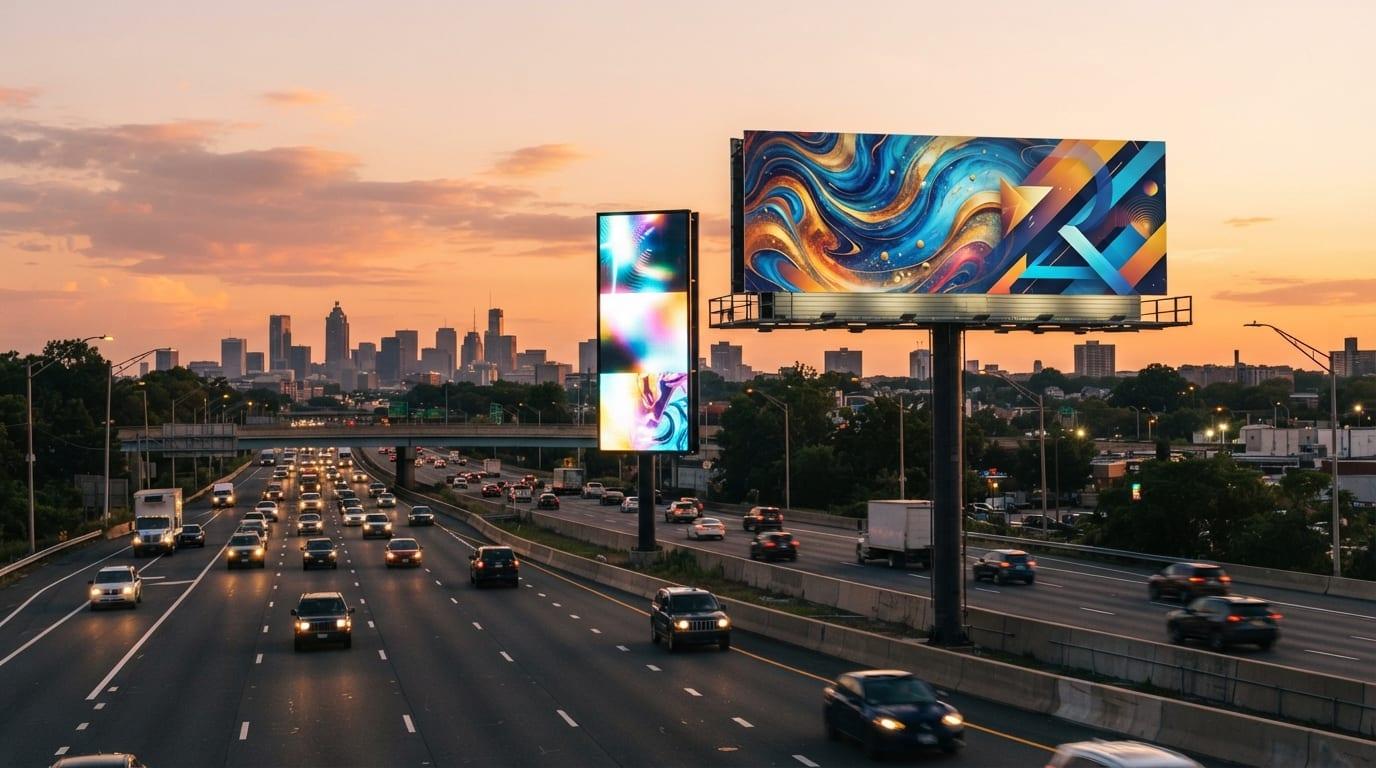

Lamar’s latest quarterly report underlines something the outdoor industry has been saying for years: when brands want public visibility at scale, billboards remain a resilient part of the mix. The company reported $616.7 million in second-quarter net revenues, up 6.5% year over year, while adjusted EBITDA rose 9.0% to $303.4 million. Management also said results exceeded expectations and raised full-year AFFO guidance.
Strong operator results do not automatically mean every billboard market is booming, but they do offer a useful signal. Lamar’s footprint covers a huge cross-section of the U.S. market, from major metropolitan corridors to regional and local environments. When that scale produces growth, it suggests continued advertiser appetite across both national and local categories.
There is also a strategic takeaway in the company’s commentary. Lamar pointed to customers’ desire to connect with audiences and deliver resonant messages, which speaks to a broader truth about OOH: the medium remains valuable because it cannot be skipped, paused or blocked. In periods when digital media becomes more fragmented or harder to trust, that reliability matters.
For advertisers, the numbers are important less because of investor sentiment and more because they show operators are still investing in the medium. A healthy operator is better positioned to maintain inventory quality, add digital capability, improve proof-of-play systems and support more sophisticated planning conversations. The state of the operator affects the buyer experience.
The longer-term implication is that billboard performance should continue to be judged as part of a wider media system. The best outdoor campaigns are not isolated. They work because they reinforce search, social, retail, event and brand activity. Results like Lamar’s suggest that advertisers still see enough value in that role to keep allocating meaningful budgets.
What this means for advertisers
The practical value of this story is not just the headline. It gives advertisers a clearer view of how OOH inventory is being packaged, how audience context affects value, and how creative and timing can materially change the effectiveness of a campaign. For Billboard Guide readers, the useful habit is to read each story as planning intelligence: what does it suggest about inventory quality, commercial timing, audience behavior or creative standards?