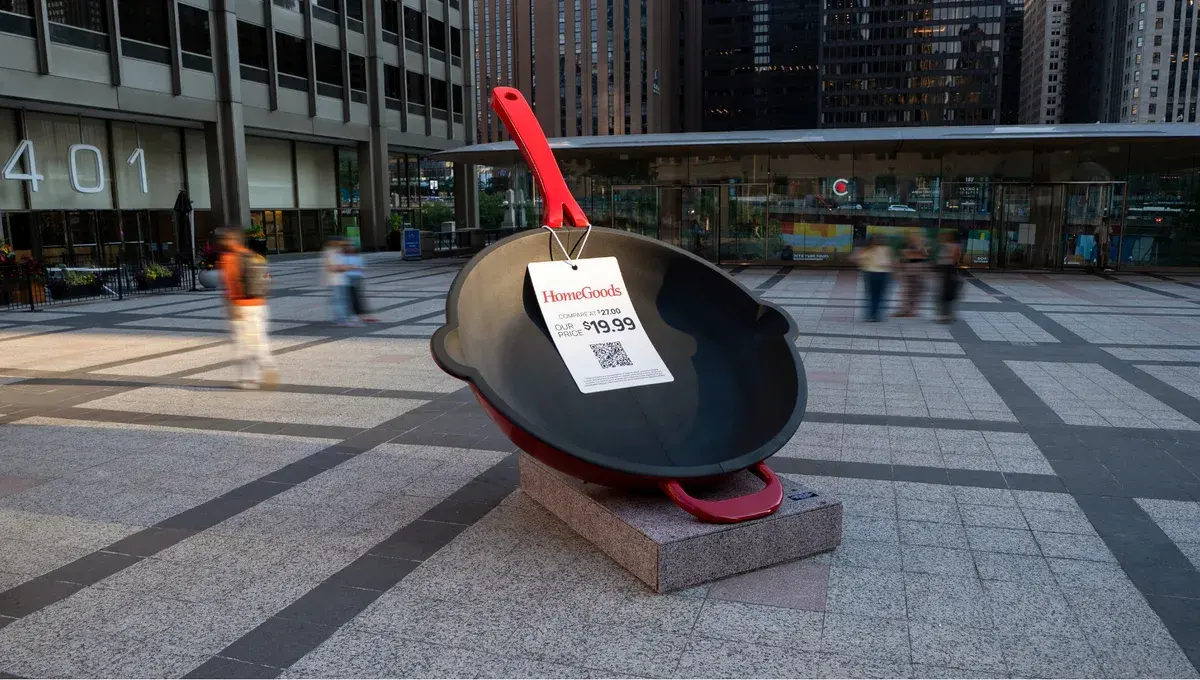

HomeGoods and agency Fallon have brought oversized home-product installations to Chicago’s Pioneer Court for a physical extension of the retailer’s “Never Shop the Same” platform. The reported activation runs from 9 to 13 September 2026, making this edition date its scheduled final day.
The campaign entry on Bestads describes a public experience built around everyday products at an unexpected scale, with participation and HomeGoods tote bags connecting the installation to the retailer.
Little Black Book’s campaign coverage adds the response mechanism: suspended HomeGoods tags carry QR codes that lead to a landing page and a $5 Lyft discount code for a ride to a nearby HomeGoods store. This describes the reported activation offer, rather than an ongoing promotion.
A retail proposition becomes a physical encounter
BillboardGuide’s interpretation is that the installation gives a shopping proposition a form people can encounter outside the store. Scale creates the interruption; familiar home products provide the connection to what HomeGoods sells.
That distinction matters when commissioning experiential outdoor advertising. A large object can attract attention while leaving its commercial purpose unclear. The creative brief should explain why the chosen object belongs to the retailer and which part of the shopping experience it represents.
For another brand, the useful question is whether the build makes its proposition easier to remember. Simply enlarging a product does not answer that question. Branding, object selection and the invitation to participate need to work together.
The QR tag connects spectacle with a destination
Here, the reported tag mechanic gives interested visitors a next step toward a store. It also retains a retail cue: a product tag becomes the interface between the installation and a mobile response.
A comparable activation should test that entire journey before opening. Can a visitor identify the tag, understand the benefit and reach the landing page without staff explaining each step? Does the destination page clearly describe eligibility, expiry and participating locations?
The practical implication is that the mobile experience belongs in the production brief alongside the physical build. An impressive installation cannot compensate for an unclear offer or an unavailable destination.
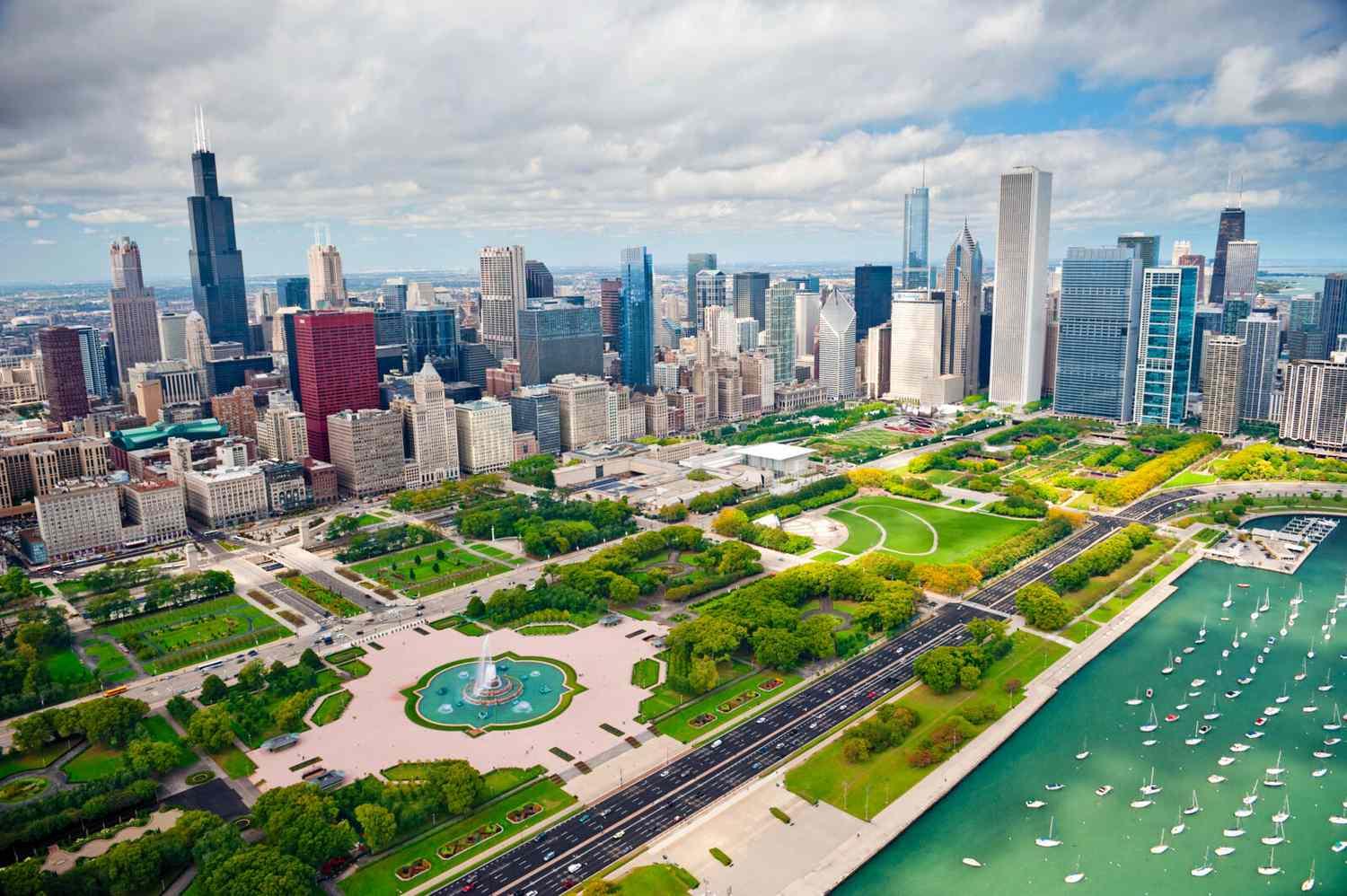
Chicago planning starts with the exact location
Pioneer Court is the named activation site; the source does not establish a citywide media rollout. Advertisers should distinguish a specific public experience from a broader outdoor coverage plan.
BillboardGuide’s Chicago billboard advertising guide provides a starting point for comparing local environments. For an installation, the proposal should additionally specify the usable footprint, access times, staffing, photography positions and how visitors move around the build.
A store-directed activation also needs a credible destination plan. The nearest participating store, its opening hours and the travel required are more useful operational details than a general claim about reaching shoppers across Chicago.
Evaluate participation and store response separately
Photographs, QR scans, discount use and store visits describe different stages of a response. They should be reported separately rather than added together as a single engagement total.
For a similar campaign, planners could compare the number of people approaching the installation with completed scans, then assess eligible redemptions and any independently measured incremental visits. A scan alone does not establish that somebody travelled to a store or made a purchase.
These are suggested evaluation methods, not reported HomeGoods results. The reviewed coverage provides no independently verified sales lift or audience total. BillboardGuide’s guide to OOH metrics beyond impressions explains why delivery and commercial effects need different evidence.
The campaign offers a concrete planning example: a physical retail idea, a recognizable interaction point and a named destination can form one outdoor journey. Brands developing a comparable activation can use BillboardGuide’s media planning service to align the site, response mechanism and reporting brief.
 Chicago