
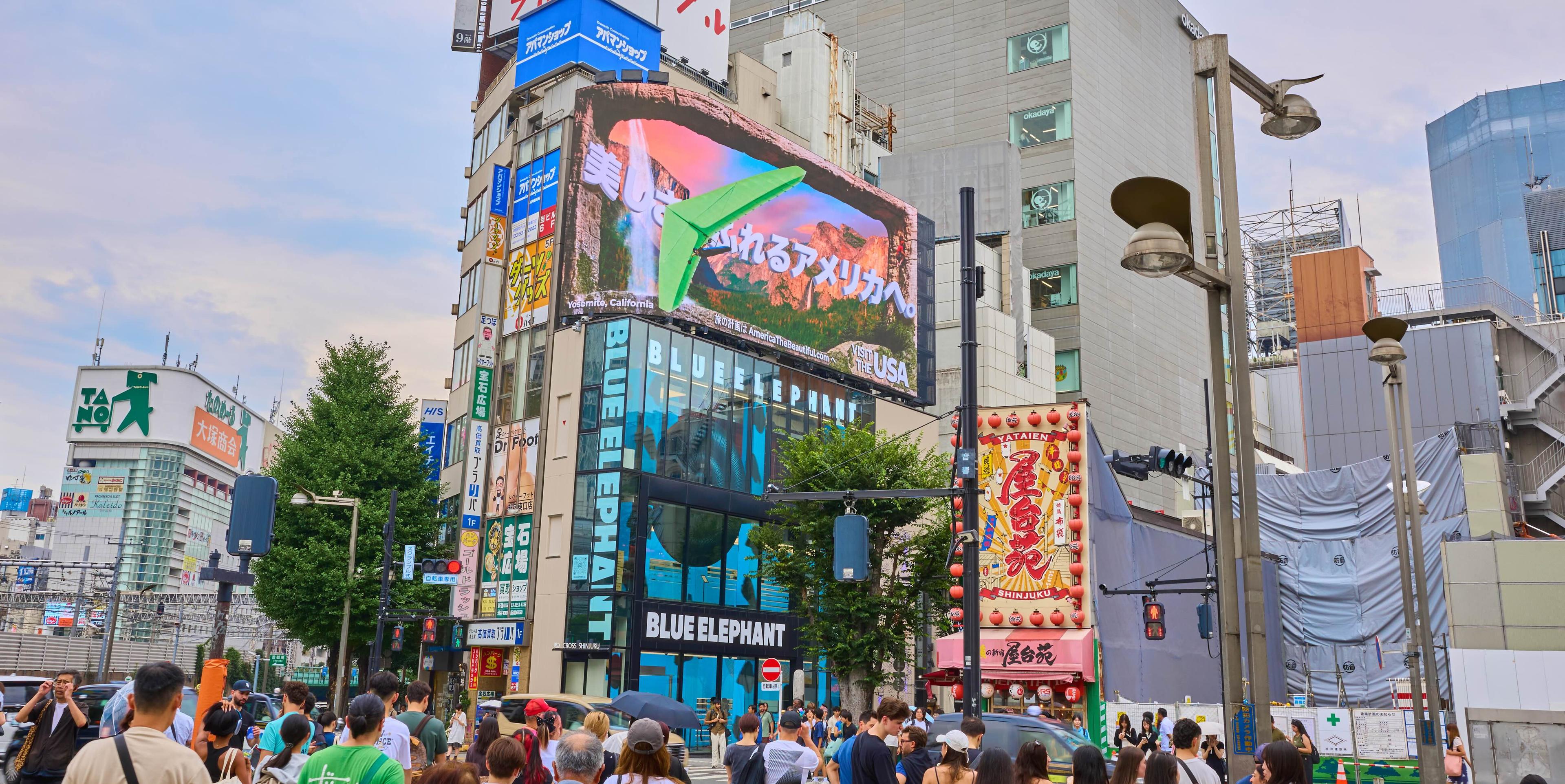

Brand USA's first out-of-home campaign in Japan used a layered Tokyo plan rather than relying on one famous screen. Transit corridors supplied repetition, central business locations added professional reach, Shibuya provided scale and cultural visibility, and Cross Shinjuku Vision carried the campaign's three-dimensional hero execution.
The final placement in the announced schedule, 109 Forum Vision in Shibuya, was due to complete its flight on August 11. That makes the end of the rollout a useful point to examine how the media architecture worked.
The campaign shows how a destination brand can balance three different goals: reach prospective travellers, support travel-trade activity and create a visual asset capable of generating wider attention beyond the paid screen.
The complete Tokyo placement plan
Brand USA's announcement identifies six placement groups across Tokyo.
The campaign used the line “America the Beautiful Awaits” and directed audiences to U.S. travel-planning websites. Brand USA says it was the organisation's first OOH campaign in Japan since opening its local office in 2012.
- Tokyo Maru-Vision: Two units, 100% share of voice - July 6–August 2, 2026
- Otemachi Tower Vision: 15-second spot - July 13–26, 2026
- J-AD Vision, Tokyo Station Keiyo Passageway: Ten panels, 15-second spots - July 6–August 2, 2026
- Shinagawa Station J-AD Vision Free Passage Package: 22 double-sided digital screens, 15-second spots - July 13–26, 2026
- Cross Shinjuku Vision: Curved roadside screen, 3D 15-second execution - July 13–August 9, 2026
- 109 Forum Vision, Shibuya: Large horizontal digital screen, 30-second spots - July 13–August 11, 2026
Why Tokyo Station and Shinagawa play different roles
Transit inventory is sometimes treated as one undifferentiated category. This campaign demonstrates why the specific station and passenger context matter.
Tokyo Station is a national and metropolitan interchange with a large mix of commuter, business, retail and intercity movement. A ten-panel passageway sequence can create repeated exposure during a defined pedestrian route rather than a single glance at one screen.
Shinagawa Station was strategically closer to the hotel used for Brand USA's Japan Sales Mission. The 22-screen free-passage package could therefore reach ordinary station users while also reinforcing the destination message around a real trade event involving U.S. tourism organisations and Japanese travel professionals.
The placement did more than buy a large station audience. It connected consumer-facing media with the physical setting of Brand USA's industry activity.
That is a useful principle for conference, trade and B2B campaigns: the best nearby OOH is not necessarily the closest screen. It is the inventory that intersects the journeys participants, partners and the wider target audience actually take.
Cross Shinjuku Vision supplied the campaign's hero moment
Cross Shinjuku Vision is a curved digital screen known internationally for forced-perspective and anamorphic creative. Brand USA used the format for a 15-second three-dimensional execution featuring a U.S. national-park landscape.
The role of this placement was different from the station networks. It offered:
For tourism marketers, 3D should not be treated as an effect added after media selection. The creative concept must be developed for the screen's geometry, main viewing zone and surrounding architecture.
A national park is well suited to the technique because depth, scale and movement support the product idea. A complicated itinerary or long list of destinations would be far less effective on the same canvas.
- A recognisable Tokyo media landmark
- A pedestrian viewing environment
- A canvas suited to depth and landscape imagery
- A campaign asset likely to be photographed and shared
- A direct connection between physical spectacle and destination desire
Shibuya extended fame and duration
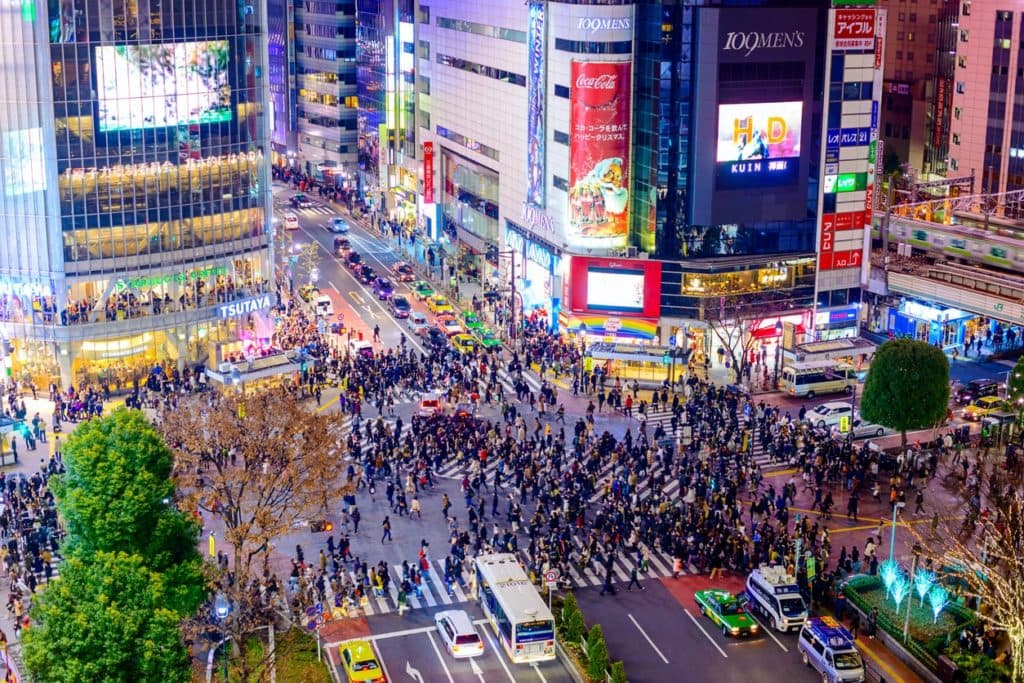
The 109 Forum Vision placement in Shibuya carried 30-second spots and remained on air until August 11, later than the other announced placements. Shibuya offers a different mix of youth culture, shopping, entertainment, domestic visitors and international tourism.
The longer spot provides more creative time, but duration alone does not guarantee comprehension. Advertisers still need the brand, destination and core invitation to register quickly. Any later storytelling should reward attention rather than delay the identity of the advertiser.
In a multi-screen plan, Shibuya can provide fame while the station networks provide frequency. Treating them as interchangeable digital impressions would miss their distinct jobs.
The audience case behind the campaign
Brand USA cited a forecast of approximately 2.07 million Japanese visitors to the United States in 2026, up by about 100,000 from 2025. It also said Japan was expected to become the second-largest overseas source market for U.S. travel in 2026 and noted $8.3 billion in visitor spending during 2024.
Those figures explain why Tokyo justified a premium, multi-environment plan. The campaign was not attempting to create a travel market from nothing. It was designed to accelerate an established, high-value route at a moment of projected growth and expanding air connectivity.
This is an important media-planning distinction. Large-format fame works best when supported by a credible commercial pathway: available routes, travel intent, distribution partners and a landing experience capable of converting interest into planning.
Five lessons for destination marketers
Consumer media, travel-trade activity and transport access should reinforce each other. A destination campaign becomes more credible when the advertised journey is practically bookable.
Stations can deliver repetition, business districts can support trade activity, and iconic screens can generate fame. Do not ask every placement to achieve every objective.
Multiple passageway screens make it possible to reveal different landscapes or messages across a route. Creative should still work if a traveller notices only one frame.
A landmark execution should be planned for both the in-person audience and the photograph or video that travels beyond the site. That means testing camera angles, daylight, night visibility and the cleanest moment to capture.
A generic tourism homepage can waste the specificity built by localised media. Landing pages should reflect the audience's language, entry questions, seasonal interests and available air routes.
- Build around the full traveller ecosystem: Consumer media, travel-trade activity and transport access should reinforce each other. A destination campaign becomes more credible when the advertised journey is practically bookable.
- Give each environment a defined job: Stations can deliver repetition, business districts can support trade activity, and iconic screens can generate fame. Do not ask every placement to achieve every objective.
- Use sequences where people walk: Multiple passageway screens make it possible to reveal different landscapes or messages across a route. Creative should still work if a traveller notices only one frame.
- Design the hero asset for earned reach: A landmark execution should be planned for both the in-person audience and the photograph or video that travels beyond the site. That means testing camera angles, daylight, night visibility and the cleanest moment to capture.
- Connect the CTA to the market: A generic tourism homepage can waste the specificity built by localised media. Landing pages should reflect the audience's language, entry questions, seasonal interests and available air routes.
How to evaluate a similar Tokyo plan
A proposal using the same neighbourhood names could still produce a very different campaign. Buyers should request:
The high profile of Shinjuku or Shibuya does not remove the need for asset-level verification.
- Exact screens, station passages and exits
- The relationship between panels and pedestrian flow
- Spot length, loop and share of voice
- Operating hours and audio restrictions
- Japanese-language creative and claim review
- 3D production specifications and viewing zones
- Photography and filming permissions
- Audience estimates by placement, not only citywide totals
- Proof-of-play and outage terms
- Separate media, adaptation and spectacular-production costs
 Tokyo
Tokyo