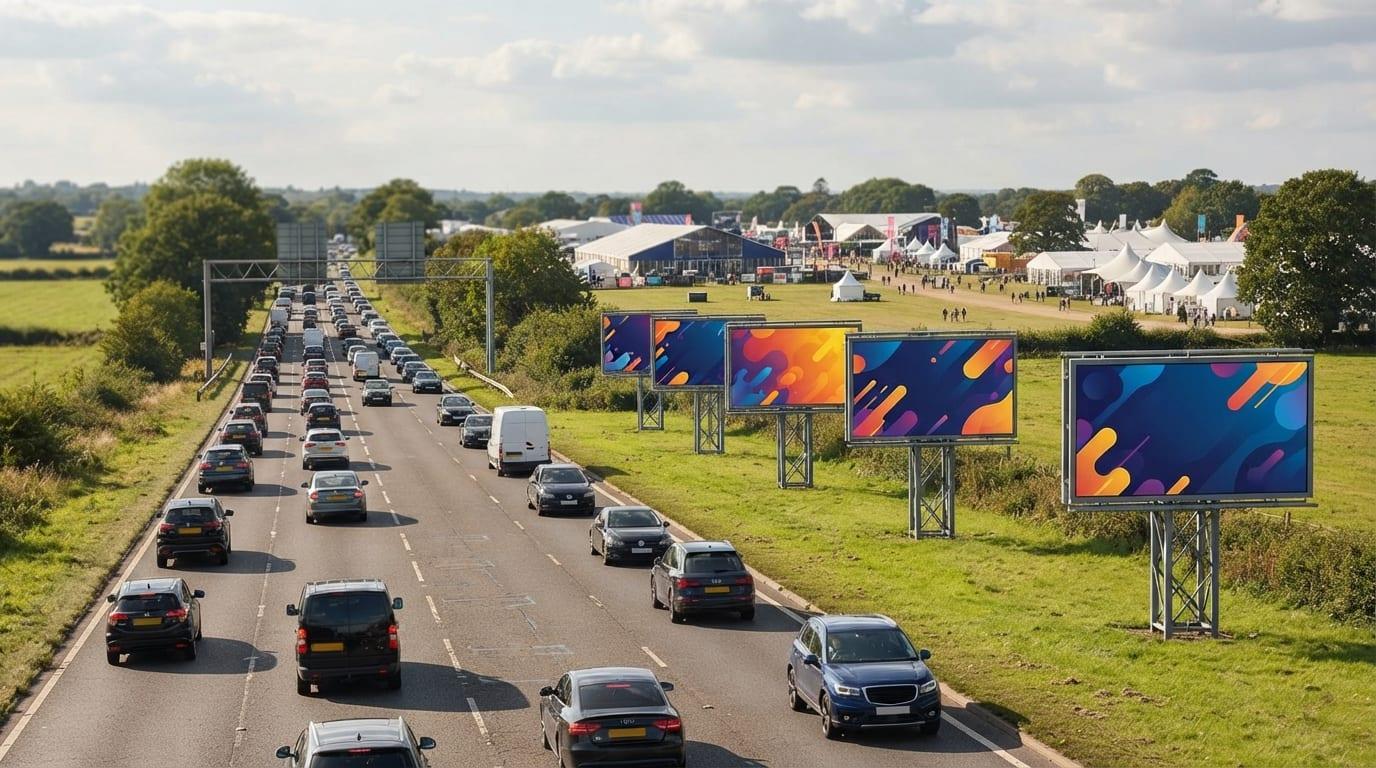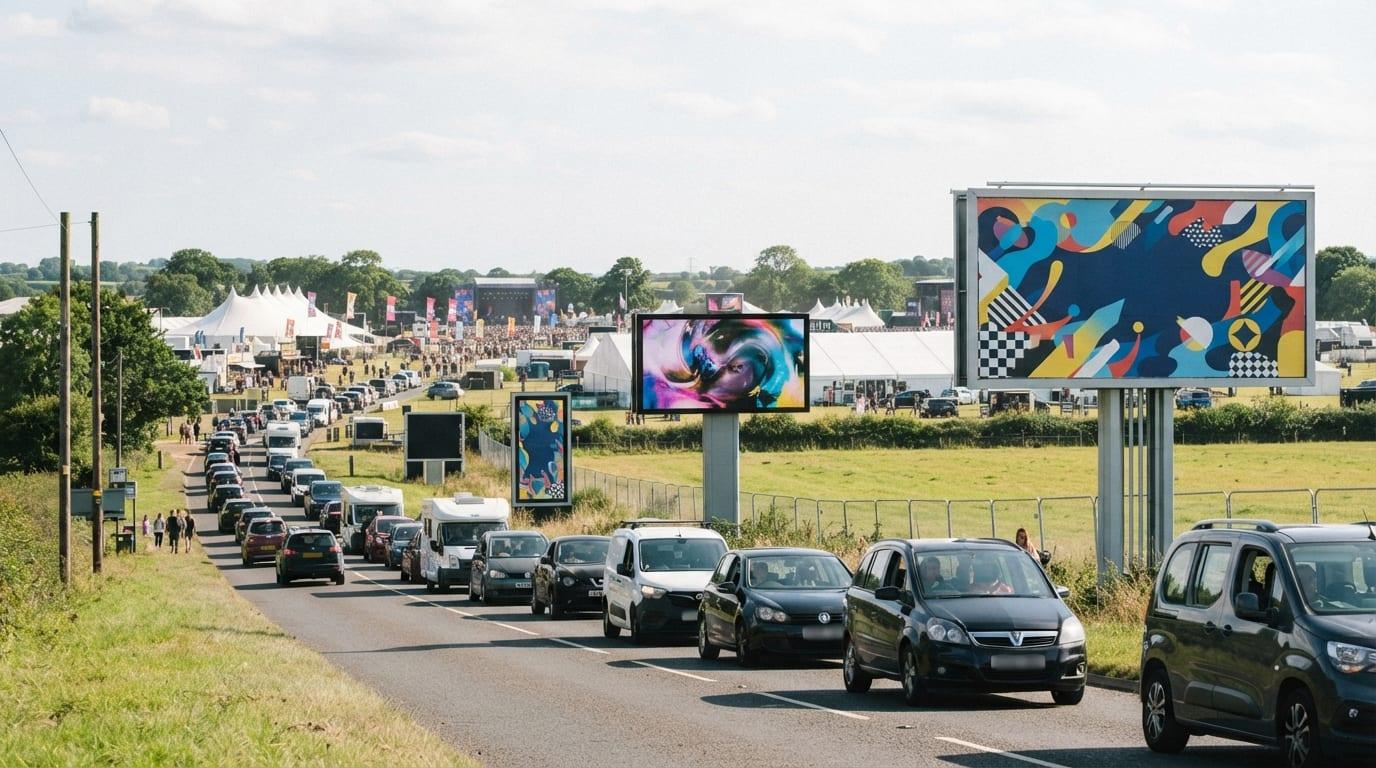
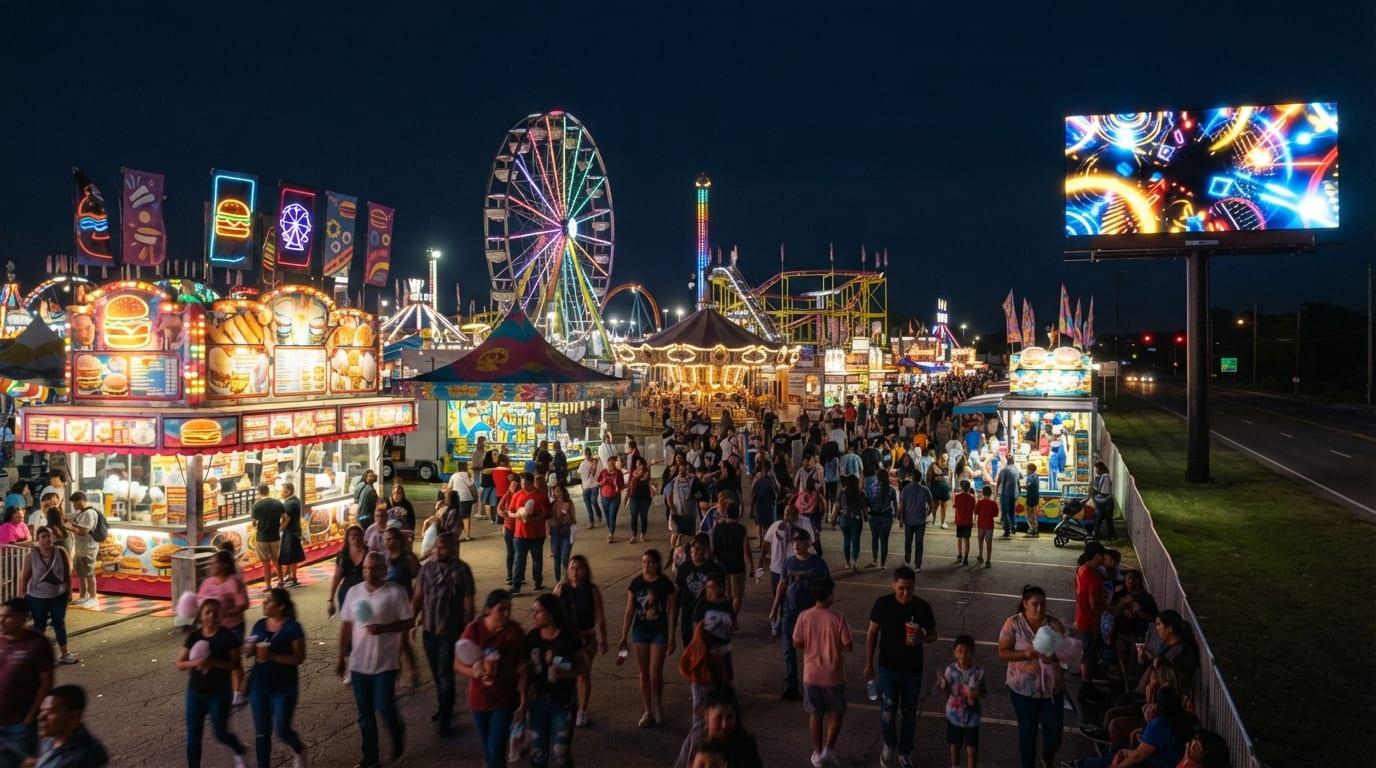

One of the most overlooked details on official event sites is the schedule, and the Wisconsin State Fair is a good example of why it matters. According to the fair’s hours, the event stays open until midnight on Thursday through Saturday. That single detail changes the outdoor planning conversation.
Daytime audiences at a fair are often more family-driven and utility-oriented. They are thinking about arrival, comfort, food, activities and navigation. Nighttime audiences, by contrast, may lean more toward entertainment, rides, social energy, indulgence and a longer dwell period. The setting is the same, but the commercial mood shifts.
For digital OOH, this kind of difference creates a strong case for dayparting. A health-conscious family-services message may make more sense in the late morning or afternoon, while nightlife, entertainment, rideshare, snack or convenience-led creative may fit better in the evening.
Static placements can still work well here, but the insight is particularly valuable for digital planning because it supports different creative logic across the same geography. That is one of the clearest examples of digital OOH’s operational edge over fixed poster thinking.
The wider lesson for buyers is that event OOH should not stop at the question of where. It should also ask when. The same site can mean different things at different hours.
What this means for advertisers
The practical value of this story is not just the headline. It gives advertisers a clearer view of how OOH inventory is being packaged, how audience context affects value, and how creative and timing can materially change the effectiveness of a campaign. For Billboard Guide readers, the useful habit is to read each story as planning intelligence: what does it suggest about inventory quality, commercial timing, audience behavior or creative standards?
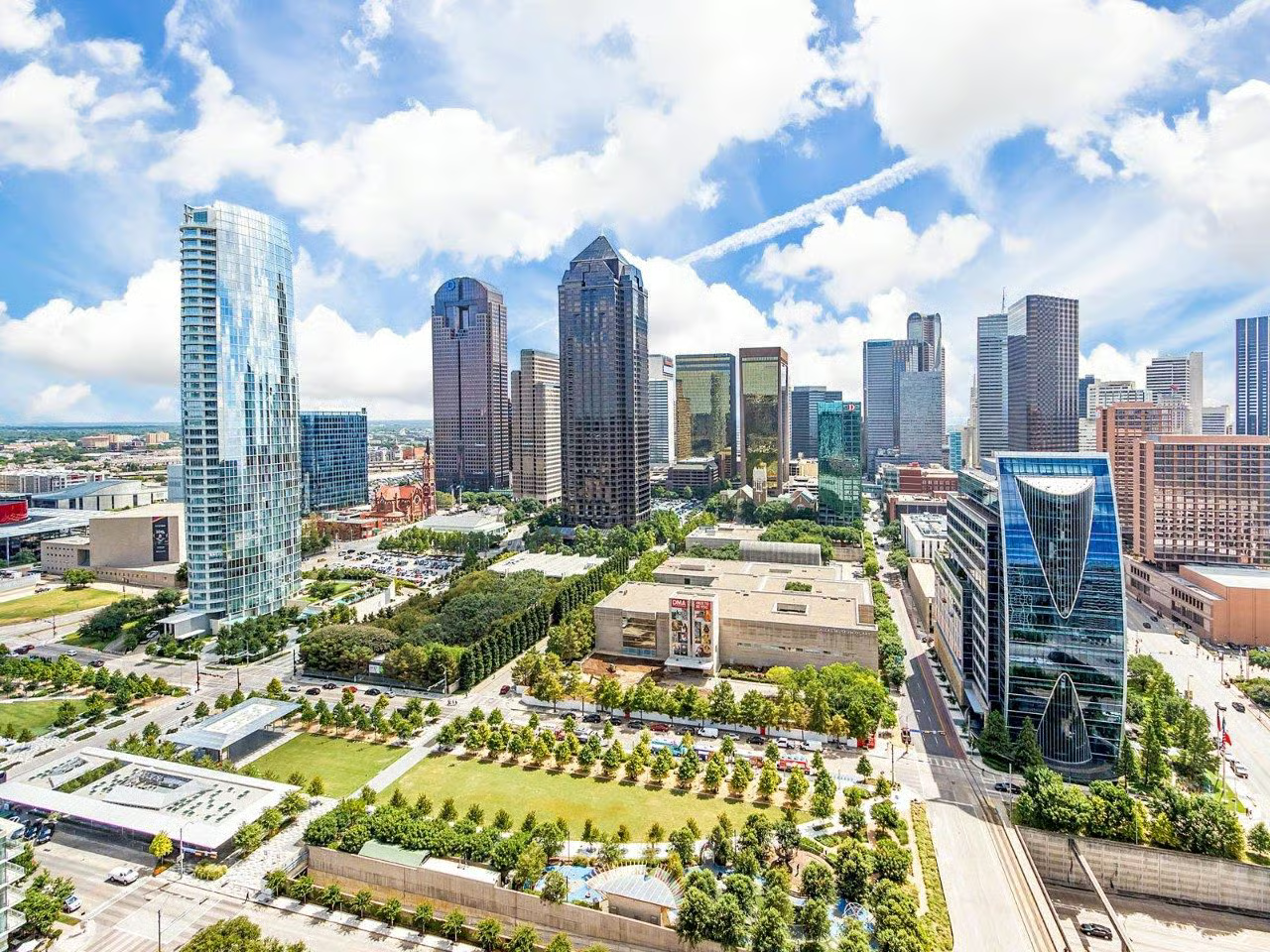 Dallas