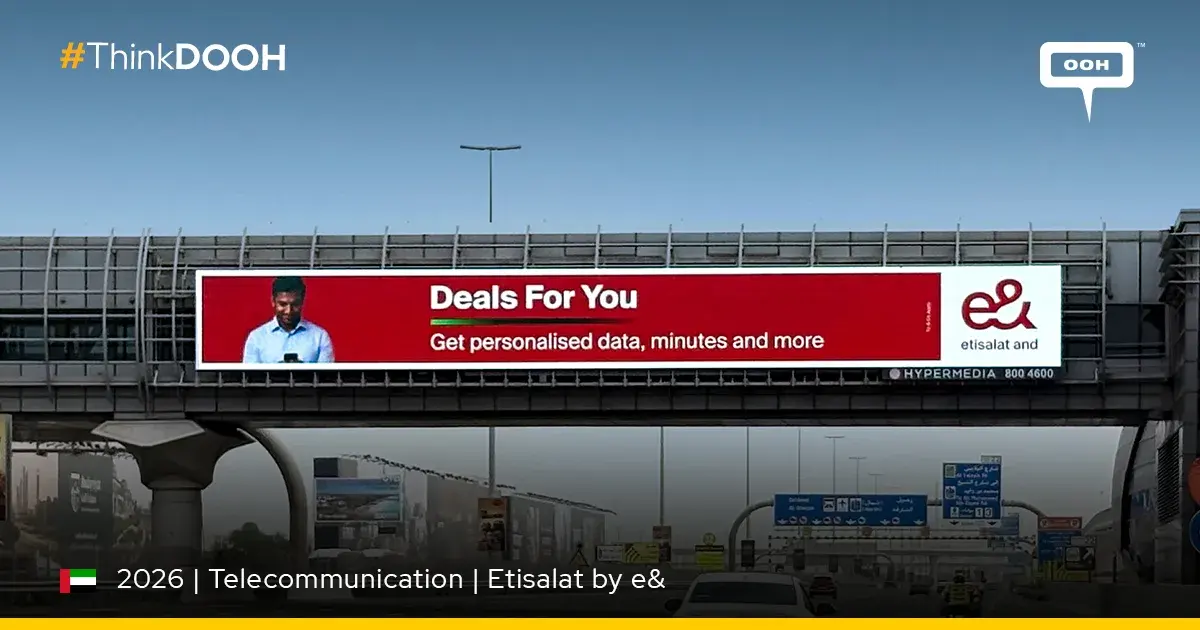


Smiles, e& UAE’s rewards app, has partnered with Flyby to install connected advertising boxes on its Dubai delivery e-bike fleet. The e& announcement was published on 7 September 2026, with invidis covering the rollout on 11 September.
The Smart Delivery Boxes combine digital advertising screens with fleet tracking. According to e&, campaigns can use location and time controls, update remotely and receive reporting on runs, impressions and locations. Dubai is the initial market, with expansion to other emirates planned.
The development gives advertisers another moving-media option. It does not establish how many people will see a particular campaign or how much additional business it will generate.
A moving screen changes the geography of the buy
BillboardGuide’s assessment is that the important planning distinction is between buying a fixed face and buying delivery across a moving fleet. A fixed billboard has a known position. For an e-bike campaign, the locations reached depend on where the vehicles travel during the booked period.
That makes route coverage part of the media product. A buyer should ask how much delivery is expected within the desired area, during which hours, and what happens when the fleet’s movements differ from the forecast.
BillboardGuide’s moving and dynamic OOH learning resource provides context for evaluating vehicle-based formats alongside fixed inventory.
Geofencing needs a clear delivery commitment
A location trigger can determine which message plays when a vehicle enters an area. It does not, by itself, guarantee that enough vehicles will enter that area to meet a campaign objective.
For a hypothetical restaurant promotion, a suitable brief would identify the intended neighborhood, relevant hours and a realistic message for people encountered along the routes. The buying agreement should then explain the delivery commitment and reporting available for that brief.
Advertisers should establish:
- The active fleet and expected coverage for the campaign dates.
- How geographic boundaries and time windows are applied.
- Whether delivery is sold by plays, screen time, impressions or another measure.
- How shortfalls, connectivity interruptions and inactive vehicles are treated.
- Whether campaign reporting can be reviewed by area and time period.
Small screens need a disciplined creative hierarchy
A delivery-box display has a different viewing opportunity from a large roadside screen. Creative should be developed for its actual dimensions, orientation and likely exposure time.
A useful starting point is one recognizable brand, one clear image and a short message. A locally relevant execution might feature a nearby offer, but any location reference needs to remain accurate wherever the asset is eligible to play.
Response mechanisms also need to fit the encounter. A QR code should be assessed against a safe stopping opportunity and practical scanning distance before becoming the campaign’s main route to action.
Fleet tracking and audience measurement answer different questions
Knowing where an e-bike traveled helps verify movement. A playback record helps verify that an ad ran. Estimating who could see it requires an additional audience methodology.
Buyers should request that methodology before comparing the proposal with fixed-screen inventory. BillboardGuide’s guide to OOH metrics beyond impressions offers context for examining visibility and audience relevance alongside volume.
For advertisers, the next useful evidence is campaign-level reporting that connects the selected areas with actual delivery. The Dubai advertising guide can help place the new moving format within a broader local media plan.
 Dubai
Dubai