
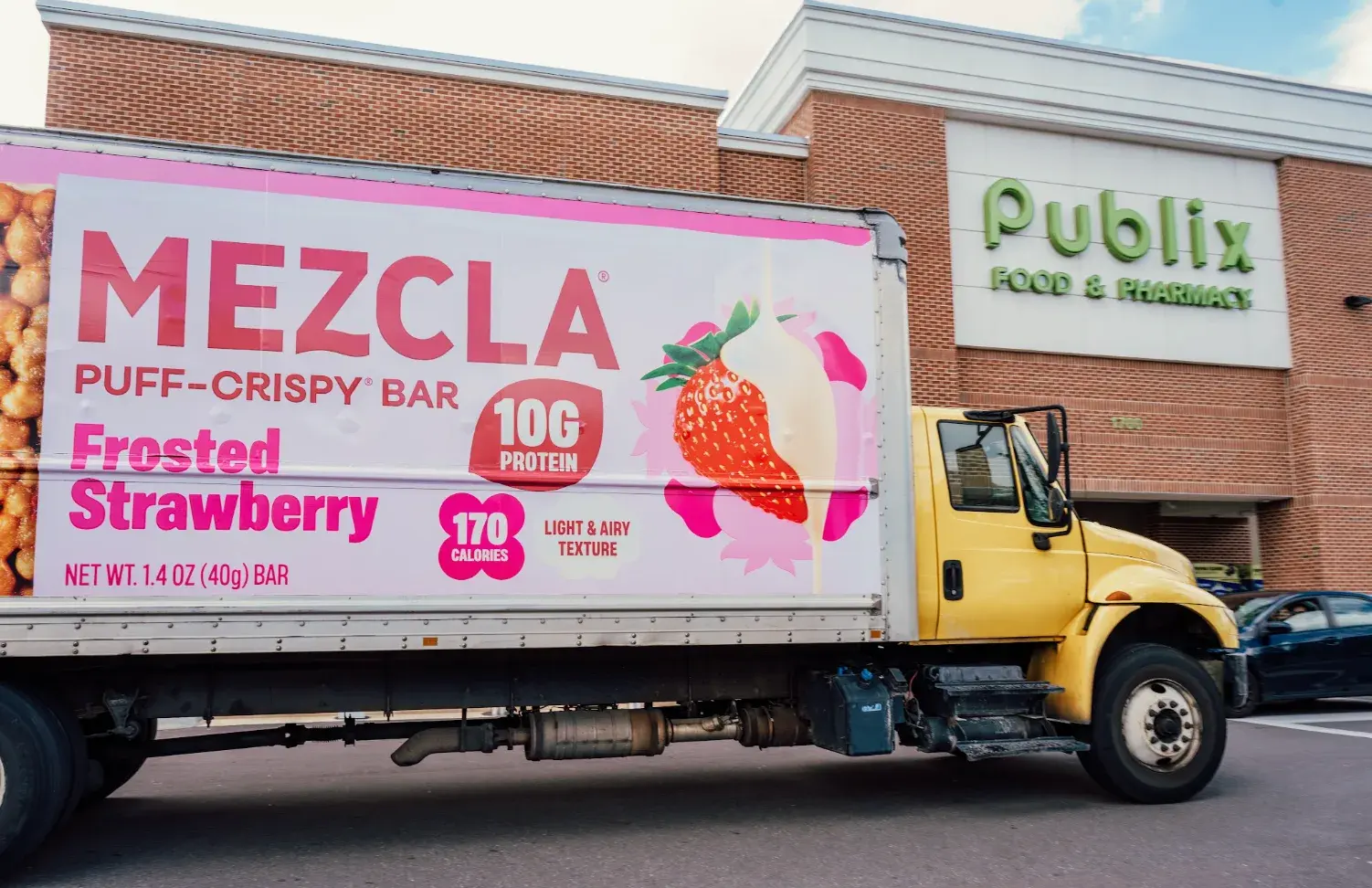

Snack brand Mezcla has partnered with Adgile Media Group on a truckside outdoor campaign in Tampa, Florida, supporting its retail presence at Publix.
Adgile’s campaign account, listed in its blog index on 15 September 2026, describes the activity as Mezcla’s first mobile billboard campaign. It uses refreshed brand creative on a reported 25-foot mobile billboard following a packaging and identity update.
The source establishes the campaign’s market and retail objective, but does not provide a full route schedule, campaign budget or independently verified sales outcome.
The packaging update belongs in the media brief
BillboardGuide’s interpretation is that a packaging change creates a useful reason to review outdoor creative. An advertiser asking people to recognise a product in a store should ensure the pack shown in the campaign matches the product they will encounter there.
That requires coordination between brand, distribution and production teams. A media launch date should account for when the refreshed packs reach the participating stores. If old and new packaging overlap, the creative needs to remain accurate during that transition.
For another snack brand, the central question is whether the street encounter leaves a useful product memory. The pack, brand name and category cue should work together without requiring a viewer to study the vehicle.
A retail objective needs a store map
Supporting distribution is a specific planning task. The team needs to identify which stores carry the product and how the proposed route relates to those stores’ catchments.
The route brief should therefore combine a verified participating-store list with the areas the vehicle is expected to cover. Naming a retail chain alone does not establish that every branch carries every product or that all locations have stock during the flight.
BillboardGuide’s grocery and supermarket advertising guide provides related context for store availability and retail approvals. The Mezcla execution is street-based truckside media, rather than a reported in-store screen campaign.
Buy the route and operating hours
A mobile billboard proposal should identify more than the size of the advertising surface. Buyers need the operating dates, expected route, hours, stopping arrangements where relevant and evidence that the campaign ran as contracted.
For a retail brief, those details help establish whether the vehicle is present in the intended trading areas at useful times. They also allow the buyer to assess substitutions if a route becomes unavailable.
BillboardGuide’s moving and dynamic OOH learning resource offers a starting point for evaluating mobile formats. The correct buying question is how this particular vehicle campaign delivers the brief in Tampa, rather than how mobile media performs in general.
Test the artwork as a moving surface
Vehicle creative should be reviewed from the angles people will actually encounter. A side panel may offer a substantial canvas, but movement, obstructions and the vehicle’s shape can affect what is readable.
A useful production review checks the brand name, product image and any retailer reference across the finished panel layout. Information placed near a seam or vehicle feature should be inspected in the installed artwork, not only in the design file.
For another advertiser, the goal is a clear encounter that can contribute to later recognition. That is a creative objective to test, rather than a result established by campaign photographs.
Keep distribution gains separate from advertising effects
Retail sales can change when a brand enters more stores, changes packaging or runs promotions. A campaign assessment should account for those factors before attributing additional sales to outdoor exposure.
A suitable evaluation could combine route-delivery evidence with sales data from comparable stores and periods, using an agreed method to examine incremental response. Adgile’s report does not establish that such a study was conducted for Mezcla.
BillboardGuide’s OOH measurement article explains why exposure, recognition and sales require separate evidence. The campaign’s immediate value as a planning example is the connection between a refreshed brand identity, a named market and a retail-distribution objective.
 Dallas