
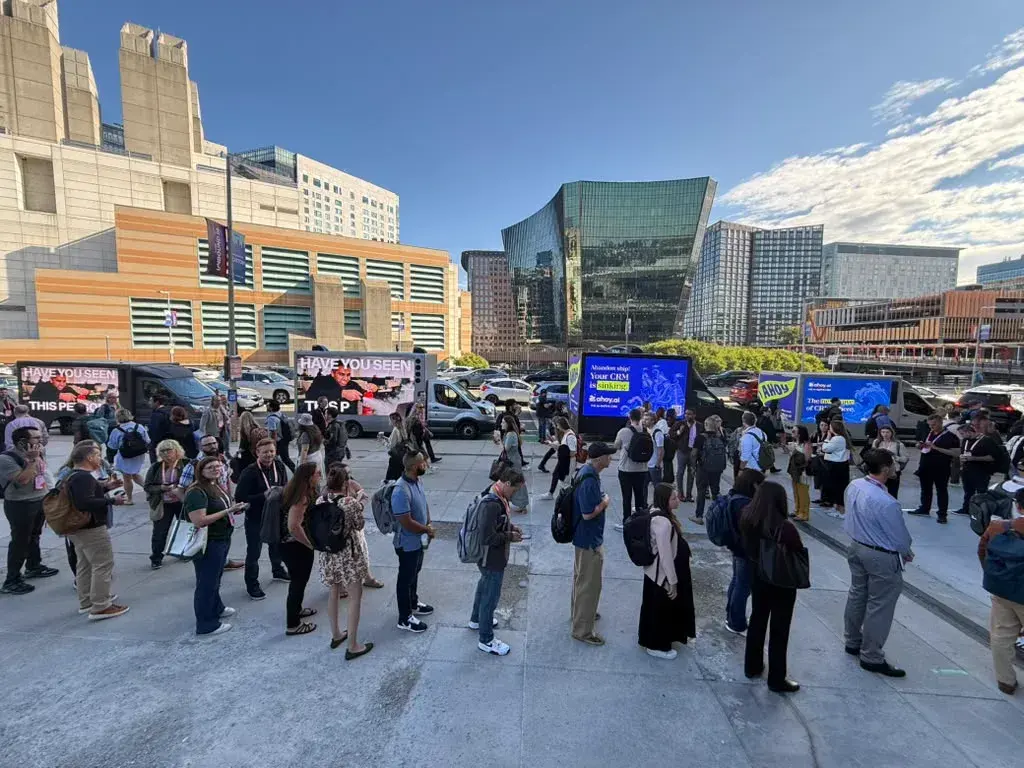

Lovable and Ahoy used dedicated mobile LED billboard trucks around UNBOUND 2026 in Boston, according to a case study published by Boost Outdoor Media on 19 September. The operator says it ran four trucks in total, with two allocated to each brand near the convention venue.
HubSpot’s official event information places UNBOUND on 16–18 September in Boston. The outdoor case study, published after the conference, offers a view of how brands can plan around an audience gathered for a specific occasion.
What the operator describes
Boost identifies placements beside the Menino Convention and Exhibition Center and says each brand had dedicated vehicles and creative. It describes Lovable’s messages as addressing repetitive work, while Ahoy’s creative focused on CRM problems.
The account and campaign photographs document the operator’s description of the execution. They do not provide an independently audited reach total or a study proving additional sales from the truck activity.
An event audience gives the location a purpose
Billboard Guide’s analysis is that conference advertising starts with a particular audience and timetable. The value of proximity depends on whether a placement intersects with relevant attendee movement and whether the message fits the reason people are there.
A route plan should therefore consider the actual venue entrances and operating schedule. It should identify where advertising is intended to appear and how timing relates to arrivals, breaks and departures.
These are recommendations for similar campaigns, rather than a complete reconstruction of the vehicles’ routes. The published case study does not supply a timestamped itinerary for every truck.
Dedicated vehicles make the creative allocation clearer
The separate allocation to each brand gives buyers a useful commercial question: what portion of a mobile display’s time is committed to their creative?
A proposal should state whether the screens are dedicated or shared, how content is scheduled and which locations and hours are included. Vehicle count alone cannot establish the delivered media weight without those details.
Creative still needs to work at street level. A conference audience may understand an industry problem, but viewers may only have a short encounter with the message. One clear idea and an identifiable brand can help make that encounter useful.
BillboardGuide’s creative checklist provides a starting point for reviewing readability and message hierarchy.
Nearby advertising and official sponsorship are separate agreements
An outdoor placement close to a conference does not, by itself, establish official sponsor status or access to conference-owned inventory. Buyers should clarify any relationship with the event and make sure the rights described in a proposal match the planned activity.
This article does not infer sponsorship status for either brand from the truck case study. The point for planners is to specify what they are buying: vehicle media, a venue placement, an event partnership or a combination of those services.
BillboardGuide’s industry events directory can support early calendar planning, with organiser information used to confirm each event’s details.
Measure delivery before claiming business impact
For a mobile campaign, location and time records can help establish where the media ran. Creative logs and installation photographs can provide additional delivery evidence.
Effectiveness requires a further step. Qualified enquiries, event-related landing-page visits or recall may be relevant, depending on the brief. The evaluation should account for other activity at the conference and explain how any result is linked to the outdoor placements.
BillboardGuide’s OOH measurement analysis helps frame that distinction. The next useful evidence from this campaign would be a fuller delivery account and a documented assessment of response.