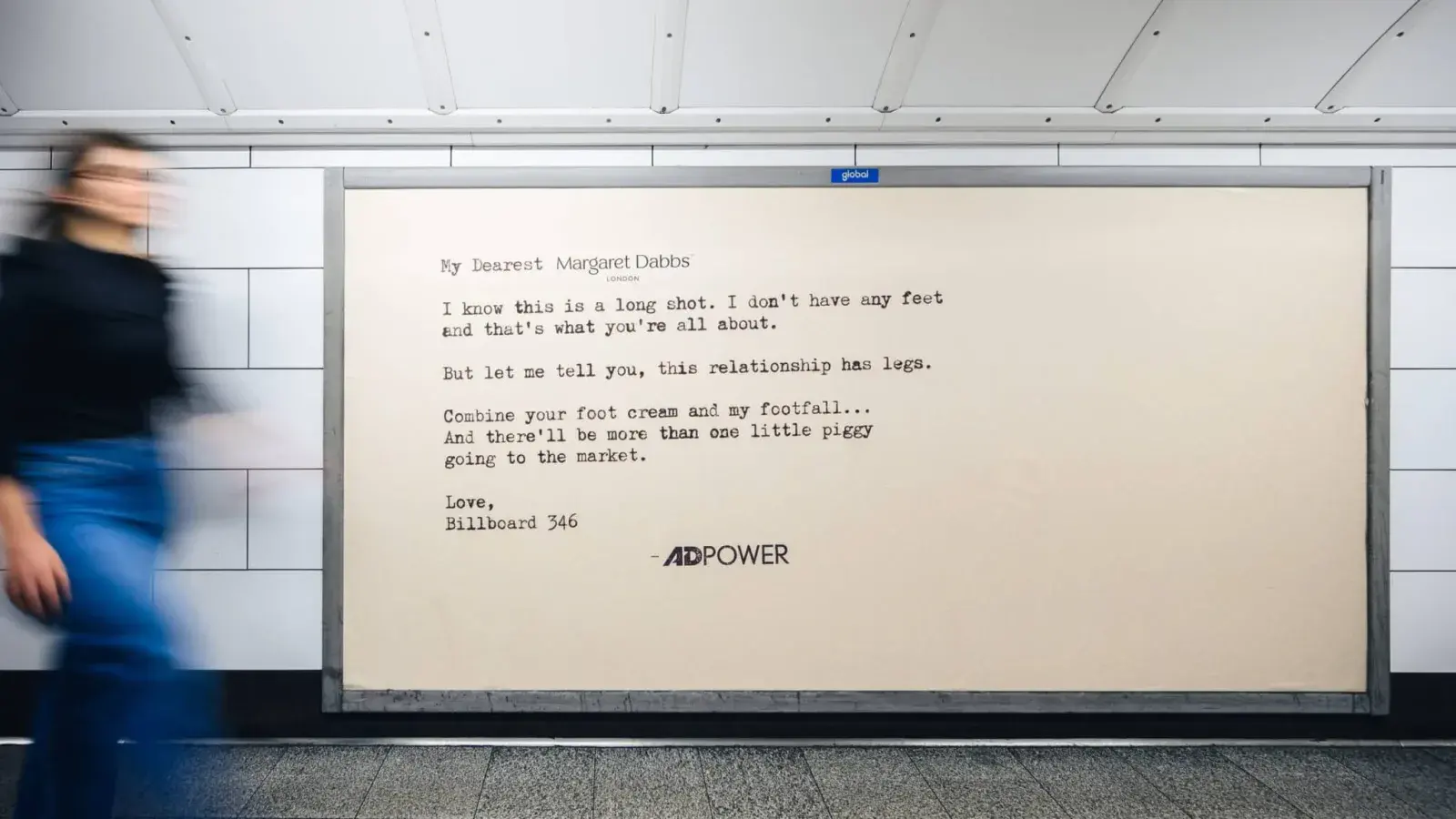

Global’s self-service advertising platform AdPower is using personalized outdoor creative to invite 100 UK small and medium-sized brands into a relationship with outdoor and audio advertising.
The campaign, called Love Letters, was announced by Global on 9 September 2026 and covered by Creative Bloq on 11 September.
Created with Stink Studios, the campaign uses individually typed letters photographed for billboard artwork. Global names brands including Bread Ahead, Daye, AKT and Ocean Bottle. Creative Bloq reports that placements sit near recipients’ offices or stores.
The prospective customer becomes the creative subject
BillboardGuide’s interpretation is that the campaign makes AdPower’s sales proposition tangible. Instead of explaining outdoor advertising only through a presentation, it gives a prospective customer an example featuring their own business.
That creates two audiences for the execution. The recipient sees a direct invitation, while people passing the billboard encounter a public demonstration of the platform’s offer. The artwork needs to work for both: a private reference may delight the business but still needs enough context for an unfamiliar viewer.
For another B2B advertiser considering personalized OOH, that is the central creative test. The recipient should recognize the thought behind the message, and the wider audience should understand who is speaking and why.
Location is part of the personalization
A personalized headline gains practical relevance when the intended recipient has a credible opportunity to encounter it. The planning work therefore extends beyond copywriting into site selection, timing and the recipient’s relationship with the location.
The approach should be assessed against a clear commercial objective. An advertiser might want a meeting, a trial or a qualified inquiry. A photograph shared by the recipient can be useful supporting evidence, but it is a different outcome from a new customer.
The BillboardGuide London advertising guide provides context for evaluating local inventory when building a geographically focused campaign.
Handcrafted appearance still needs outdoor readability
A photographed letter can communicate care and individuality. Its layout still has to function as outdoor artwork: readable type, useful contrast and a hierarchy that directs attention to the important message.
Before adapting a letter-based idea, test the artwork at the expected distance and viewing speed. Long copy may suit a placement where people can pause, while a brief roadside encounter may require a much shorter execution.
The campaign also raises a useful production question: which elements can vary without weakening the identity of the overall series? Establishing a stable layout makes individual messages easier to recognize as part of one advertiser’s campaign.
Self-service access is one part of a buying decision
An easier booking process can help a smaller business get started, but the campaign still needs a suitable location, realistic schedule and complete budget. Creative adaptation, delivery expectations and reporting should be understood before booking.
BillboardGuide’s coverage of QR-to-screen self-service advertising offers another example of lowering the steps required to buy media. The formats differ, but both prompt buyers to examine what happens after access becomes simpler.
Measure the response to the invitation
For a campaign aimed at prospective business customers, a useful evaluation could track replies, qualified discussions, trials and eventual bookings against the targeted account list. These are suggested measures, not results reported for Love Letters.
The broader lesson is that a demonstration of the medium can become the sales message. Its value depends on whether the demonstration leads the intended business to a clear and relevant next step.
 Dubai
Dubai